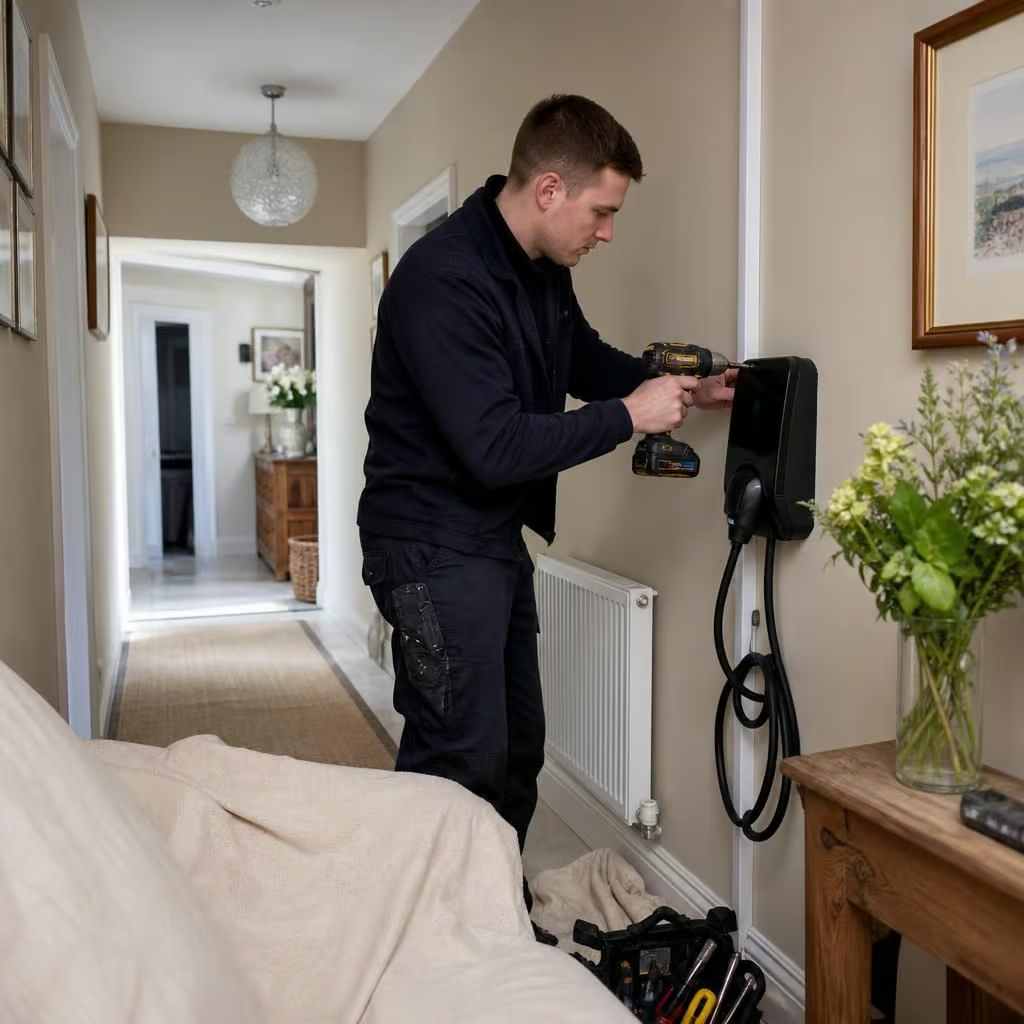
Will EV charger installation disrupt my home?
EV charger installation is usually contained to the parking and electrical supply areas, rather than major building work. We agree the cable route beforehand, protect the work area and work tidily; drilling and a brief interruption to the electricity supply may be needed.
The main factors affecting disruption are the charger position, the cable route and the condition of the existing electrical installation. A charger close to the consumer unit and parking space usually involves less work than one at the far end of a property.
Before installation, we agree where the charger will go and trace the route back to the consumer unit. We look at the walls, floors, ceilings, loft spaces and external surfaces involved. This lets us identify where access is needed and choose a route that avoids unnecessary disturbance.
Your preferred position may not be the most practical one. A route through a garage, utility area or accessible loft space can keep most of the cable out of living areas. If the cable needs to cross a visible wall, we discuss whether surface trunking or another suitable finish is preferable to opening up the wall.
Older homes need a little more care. Solid walls, thick floors, listed features and previous alterations can make cable routing less straightforward. We take account of the building before deciding how to fix and protect the cable. We do not assume that a modern-looking route will suit an older property.
Some preparation can make the installation easier:
- Clear access to the consumer unit and the proposed charger position.
- Move fragile items away from walls and areas where engineers will work.
- Tell us about hidden pipes, cables or previous building work that may affect the route.
- Make sure the parking space is accessible if the cable needs to be tested from the vehicle position.
We protect nearby surfaces while working and remove the dust and packaging created by the installation. Small fixing holes may remain where the cable, charger or protective equipment is mounted. We do not normally redecorate or carry out major plaster repairs, so we identify any likely making-good requirement before work begins.
The electricity may need to be isolated while we connect and test the charger. We explain when this is needed so you can plan around the interruption. Once the work is complete, we test the circuit, charger and protective devices before putting the supply back into normal use.
If the existing consumer unit, earthing arrangement or cable route needs attention, that can change the amount of work involved. We show you what has been found and provide a written quotation before starting additional work. You can then decide whether to proceed rather than discovering an unexpected charge after the installation.
The final handover should leave you with a securely mounted charger, a protected cable route and the relevant test paperwork. We also explain the basic controls and charging procedure, so you know what has been installed and what to do if the charger shows a fault.
For an installation in a home with unusual construction, limited access or a detached parking space, a survey is the sensible first step. It allows the route and electrical requirements to be settled before installation day, reducing avoidable disruption.
If the cable route passes through an occupied room, we keep the work to the smallest practical area. Furniture only needs moving where it obstructs the route, and the rest of the home remains usable while we work.
Surface-mounted cable protection can often avoid cutting into plaster or decorative finishes. On older, listed or solid-wall properties, we explain the visual result of each route before any drilling begins, so you can choose between a shorter installation and a less visible finish.