
Will my home need an earth rod for an EV charger?
Not always. It depends on your electricity supply’s earthing arrangement and the charger’s protective requirements; we’ll assess this before installation and fit and test an earth rod if it’s needed.
No. An earth rod is only needed for some properties and charger arrangements. We first identify the incoming supply type, check the main earthing and bonding, and confirm which protective measures the charge point supports. That tells us whether an electrode is necessary.
Many homes have a PME supply, where the protective earth and neutral are combined in part of the electricity network. A broken supply neutral could then raise the voltage on bonded metalwork at the property. An EV charger adds an outdoor connection, so the installation needs protection against this particular fault.
There are several ways to meet that requirement. Depending on the supply and the charger, we may use an earth electrode, a suitable open-PEN protective device, or protection built into the charging equipment. We select the method that suits the whole installation rather than fitting a rod automatically.
An earth rod creates an independent connection with the ground. We install an electrode in a suitable position, connect it to the charger’s earthing arrangement, and test the completed installation. The electrode may be driven into the ground or installed by another suitable method where ground conditions or access make that necessary.
The position matters. A rod needs to be placed where it can provide effective earthing and where its cable can reach the relevant equipment safely. Paving, concrete, drainage, buried services and the distance from the charger can all affect the installation. We agree the route with you before work starts and keep any disturbance to the area proportionate.
A rod is not a substitute for checking the rest of the electrical system. We inspect the consumer unit, supply tails, main bonding and existing circuits. We also check that the charger has the correct dedicated circuit, isolation and residual-current protection. If the consumer unit or bonding needs upgrading, we include that work in the quotation rather than leaving an unsafe gap.
Older and rural properties can need closer investigation. Previous alterations may have left mixed earthing arrangements, older consumer units or bonding that no longer meets current requirements. A property with an overhead supply, an outbuilding or a long cable run to the parking space can also affect the design. We assess those details during the electrical survey.
The charger manufacturer’s instructions form part of the design too. Some charge points include equipment that detects the relevant fault condition; others need an external protective device or a different earthing arrangement. We confirm the selected charger’s requirements before ordering materials, so the installation does not depend on a last-minute change.
Installing an earth rod usually involves a small amount of external work and may require access between the charger and the main electrical equipment. We protect the work area, route cables neatly and reinstate disturbed surfaces as far as the agreed work allows. The final testing records that the earthing and protective devices operate correctly.
If an electrode is required, our written quotation explains why and identifies any related work, such as consumer unit changes, bonding improvements or additional protection. If it is not required, we still document the checks and the protective method used. That gives you a clear record for future electrical work or property paperwork.
We carry out EV charger electrical work to the applicable wiring requirements as NICEIC-registered electricians. The important result is not simply having a visible rod; it is having an earthing arrangement, protective devices and charger circuit that work together safely.
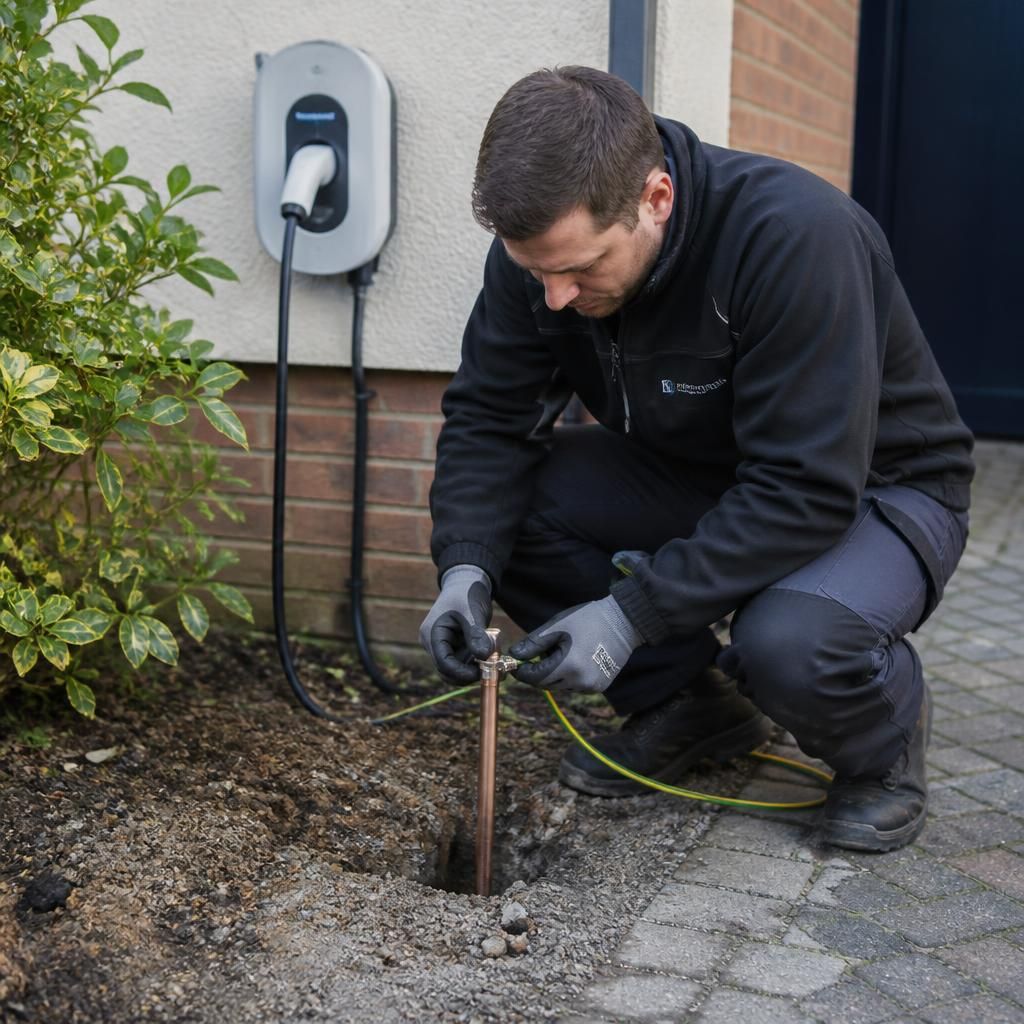
An earth rod doesn’t mean your home has been operating without an earth. It provides an additional protective route for the EV charger when the incoming supply needs one.
That’s why the decision can’t be made from the charger’s location alone. We assess the supply arrangement and the equipment together, then explain the protective method included in the design. You’re not left guessing whether a rod is necessary or paying for one that serves no purpose.