
Is my home suitable for EV charger installation?
Most homes are suitable for an EV charger, but we need to check the electricity supply, consumer unit, parking position and cable route first. An assessment will show whether your home needs electrical upgrades or network approval before installation.
The age or style of your home does not usually decide whether EV charging is possible. The important questions are how the electricity supply is arranged, where the charger can go, and whether the cable can reach the car without creating a hazard.
An older or rural property can still be suitable. Solid-wall houses, barn conversions and homes with detached garages may need a more involved installation, but they are not automatically ruled out. We look at the existing wiring, the position of the meter and consumer unit, the route to the parking space, and any outbuildings or boundaries between them.
The electricity supply needs enough capacity for the charger and the rest of the home. We assess the incoming supply and the likely demand from items such as electric heating, an immersion heater, a heat pump or a battery system. Where several high-demand appliances may run together, load management can control the charging rate so the supply is used safely. That may allow charging without an unnecessary supply upgrade, but we recommend it only after checking the installation.
The existing consumer unit may need work before a charger can be connected. The dedicated circuit needs suitable protection, earthing and isolation. In an older installation, we may find that the board, cabling or earthing arrangement needs upgrading first. We explain what is needed and why, rather than connecting new equipment to wiring that is not suitable.
Properties with older electrical systems need particular care. An inspection can identify damaged cables, outdated protective devices or other faults that are not obvious during normal use. We are NICEIC-registered and ECA members, so the electrical work is carried out to the relevant installation requirements and the certification is completed as part of the job.
The parking arrangement can make a difference even when the property itself is suitable. A charger on the front wall may work well for a short driveway. A detached garage, rear parking area or longer drive may need a longer cable route, surface preparation or underground ducting. We plan the route so the cable is protected and does not lie across a footpath or become a trip hazard.
If the car is parked on a shared drive, communal area or land that is not owned by the householder, permission may be needed before work starts. Flats and leasehold properties can also involve freeholder, management company or parking-space restrictions. We identify these practical issues during the assessment, but the property owner or resident may need to obtain consent.
A charger does not always have to be mounted on the house. A suitable garage wall, standalone post or other fixed position may provide a better connection to the parking space. We consider protection from vehicle impact, access to the charging socket, cable storage and the effect of the position on other users of the drive.
Outdoor installation is possible when the chosen equipment and mounting position are suitable for external conditions. The cable entry, isolation point and charger enclosure still need proper protection from water, impact and accidental damage. For a garage or outbuilding, we check whether the existing supply can support a separate circuit and whether the route between buildings needs additional protection.
Solar panels or a home battery do not prevent EV charger installation. They can affect how the charger should be controlled, particularly if you want to use surplus solar generation or avoid charging alongside other large electrical loads. We review the existing system so the charger works safely with it rather than treating each item as a separate installation.
Planning and building-related restrictions can also matter. A standard domestic charger is often straightforward, but listed buildings, conservation areas, flats and properties with shared access may have additional requirements. We raise these points before recommending a mounting position. Listed or historic properties may need a less visible cable route or a different charger location to avoid unnecessary alteration.
The charger itself should match the way you use the car. We discuss whether a tethered cable or a socketed unit is more practical, where the car is normally parked, and whether more than one vehicle may need to charge. A fixed cable can be convenient for regular charging, while a socketed unit may suit a household that wants to choose or change its charging cable.
The installation process starts with a review of the property and the proposed parking position. We then identify any board alterations, cable protection, trenching, permissions or network requirements. You receive a written quotation before work begins, including any preparatory electrical work that the assessment has identified.
On installation day, we fit the dedicated circuit, protect and route the cabling, mount the charger and carry out the required tests. We explain the basic controls and leave the paperwork for the completed electrical work. If the preferred position is not practical, we explain the reason and set out the alternatives instead of forcing an unsuitable layout.
A home may need preparatory work before it is ready for a charger, but very few properties can be judged properly from the building type alone. A site assessment gives you a clear answer based on the supply, parking arrangement, cable route and any permissions affecting the property.
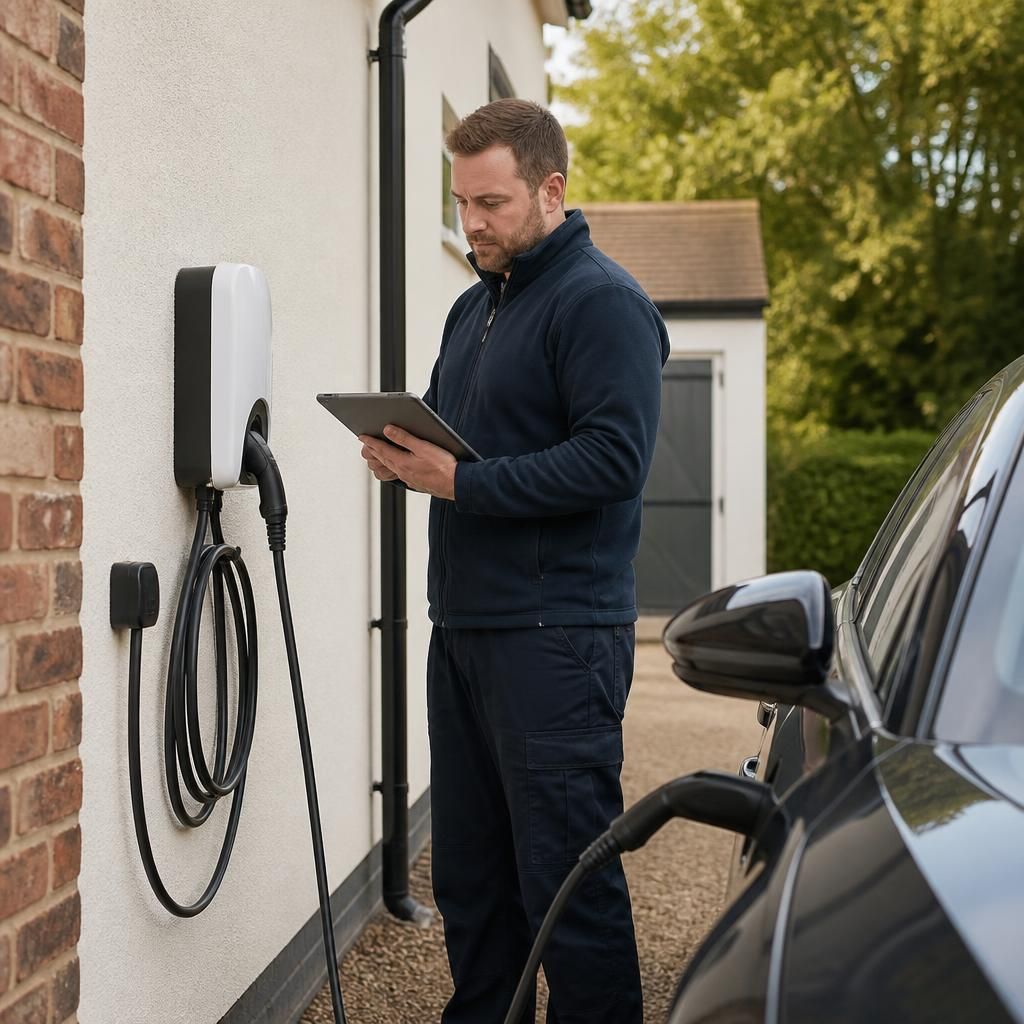
Your car’s charging capability also affects which installation makes sense. A higher-rated charger won’t make a vehicle charge faster than its onboard charger allows. We check the car’s requirements alongside the property, so the recommendation suits both the electrical supply and the way you charge. If you change vehicles later, a socketed charger may give you more flexibility than a fixed cable.