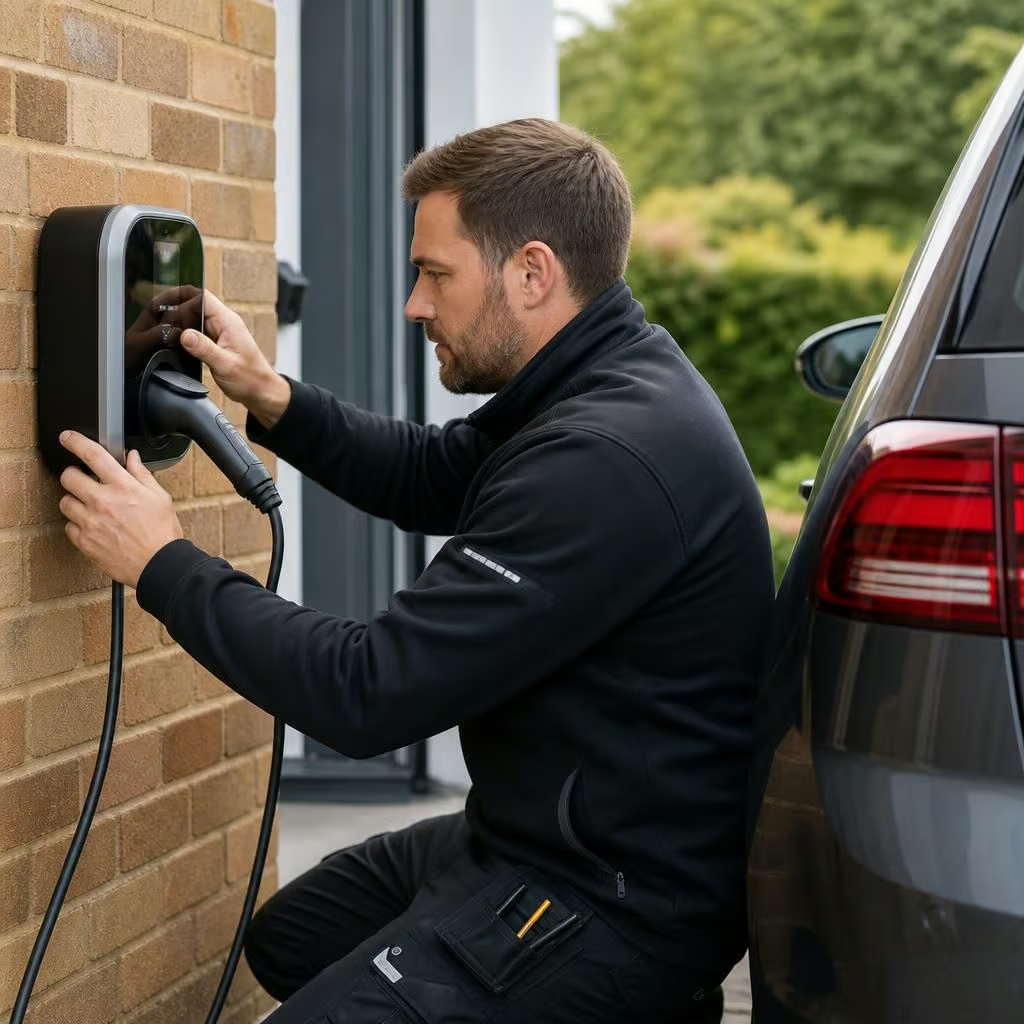
What information does an EV charger installer need for an accurate recommendation?
We need details of your electric car, where you park, the route from the parking space to the consumer unit, and your home’s electrical supply. Tell us how often you charge and whether you may add another EV or other high-demand equipment, so we can recommend a suitable charger and installation arrangement.
The most useful information is how you plan to charge, what your vehicle can accept, and how the property’s electrical supply is arranged. We use those details to decide the charger output, control features, protective equipment and installation method. A site survey then confirms that the recommendation works safely in practice.
Tell us how you expect to use the charger. Daily mileage, typical arrival times and how long the car remains parked affect the charging capacity you actually need. Someone who charges overnight can usually take a different approach from someone who needs to add range between short visits. If more than one driver may use the charger, tell us how often both vehicles could need charging at the same time.
Your electricity tariff also matters. If you plan to charge during cheaper periods, the charger must support the relevant smart controls and have a reliable connection where it is installed. Tell us if the property already has solar panels, a battery or an energy management system. We can then consider how charging should work alongside those systems rather than treating the charger in isolation.
We need the vehicle’s AC charging limits. The maximum rate accepted by the car, the charging connector and the cable supplied with it all affect the recommendation. A higher-rated charger will not make a car charge faster than its own onboard equipment allows. If you are changing vehicles soon, tell us the likely replacement so we can avoid choosing equipment that limits your future options.
The electricity supply needs checking, not just the socket position. We assess the incoming supply, earthing arrangement and available capacity before deciding how the charger can be connected. The property may need network approval or notification, particularly where the proposed load could affect the local supply. We handle the technical assessment and explain any requirement before work begins.
Inside the house, the existing consumer unit must have suitable protection and enough capacity for a dedicated circuit. We check its condition, the earthing and bonding, and whether an additional protective device can be fitted correctly. An older installation may need electrical work before the charger can be connected. We explain that clearly rather than leaving an unsuitable installation hidden behind a new unit.
The building and ownership arrangements can change the installation method. Tell us if the property is listed, in a conservation area, rented, leasehold or managed by a residents’ association. A flat, shared parking area or detached garage may require permission from a landlord, freeholder, management company or neighbouring landowner. We can identify where approval is needed, but the property owner or leaseholder may need to obtain it.
We also need to understand the physical construction around the proposed installation. Solid walls, insulated façades, timber frames, outbuildings and long external runs each need different cable protection and fixing methods. If the route passes through a fire compartment, under a driveway or across a shared area, we plan the penetrations, protection and making-good before pricing the work.
Charger features should follow your habits rather than the other way round. We discuss whether you prefer a tethered lead or a socketed unit, how much cable reach is practical and where the equipment can be mounted without creating a trip or vehicle hazard. We also consider smart charging, access controls and load management where they solve a genuine problem for the property.
Useful information to provide before the survey includes:
- the vehicle’s maximum AC charging rate and the cable supplied with it;
- your usual charging pattern, including overnight parking and any second vehicle;
- your electricity tariff and any plans to use solar generation or battery storage;
- the age and recent history of the electrical installation, including known faults or alterations;
- whether you own the property and need consent from a landlord, freeholder or management company;
- any restrictions affecting a driveway, garage, shared parking area or external wall.
We confirm the recommendation during the survey. That includes the charger type, circuit arrangement, protective devices, cable protection, mounting position and any network or property permissions. The quotation sets out the work before it starts, including any changes needed to the existing electrical installation, so you can compare the full cost rather than the price of the charger alone.
After installation, we test the circuit and charger, complete the required certification and show you the controls that affect charging. That leaves you with a setup chosen for the car, the property and the way you intend to use it, rather than a generic unit fitted without checking the wider installation.
A charger does not use the supply in isolation. If it could run alongside an electric shower, cooker, heat pump or battery, we consider those demands during the survey. That helps us decide whether the proposed circuit needs additional control rather than simply selecting the highest-rated charger.
Tell us about large electrical appliances and any planned changes to the home. We can then explain how charging may be managed when several loads operate together, and include any necessary equipment in the recommendation rather than discovering it after installation.