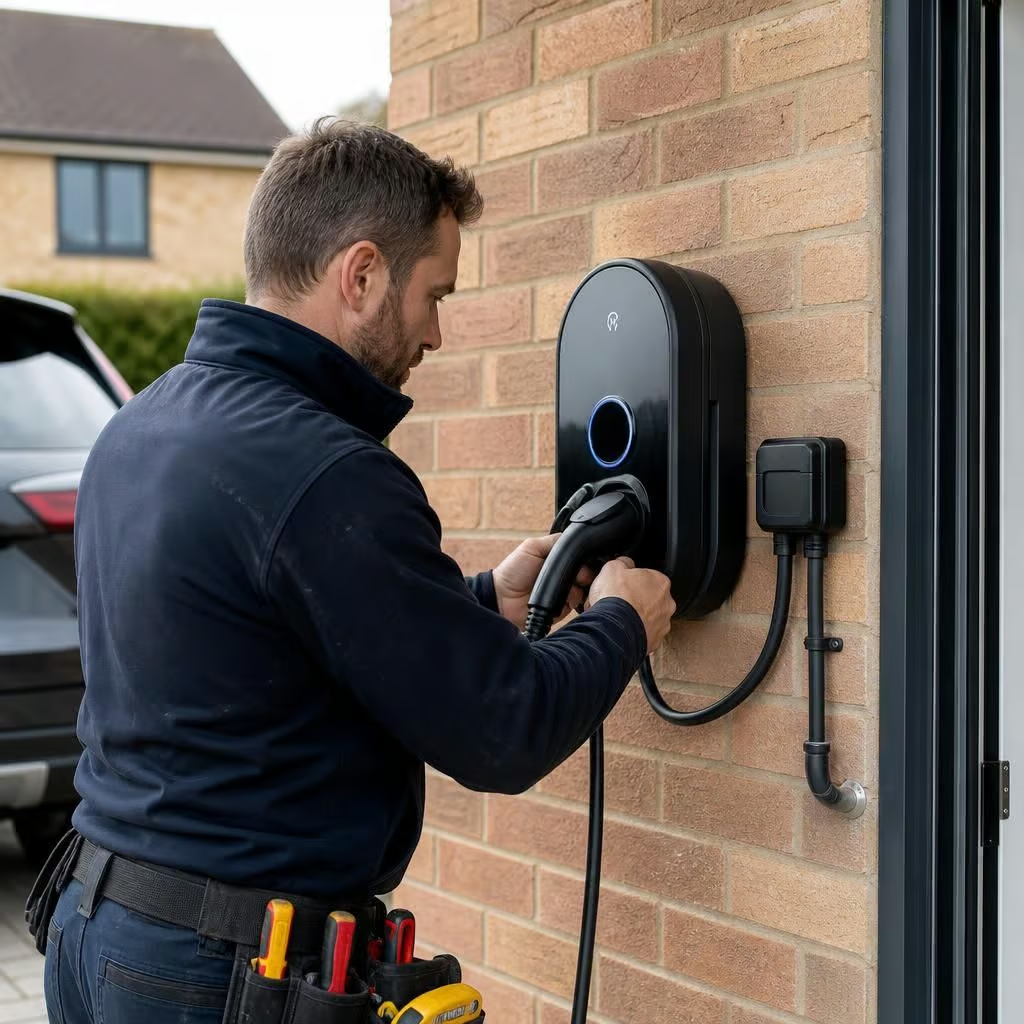
What qualifications should an EV charger installer have?
A qualified EV charger installer should have recognised electrical credentials, experience with charge-point installations, and the ability to inspect, test and certify the work correctly. We use NICEIC-registered electricians with ECA recognition, so the installation is assessed as part of your home’s electrical system rather than treated as a standalone fitting.
A suitable EV charger installer should have a recognised electrical qualification, current training in EV charging equipment and the ability to inspect, test and certify the complete installation. The right person understands more than how to connect the charge point. They can decide whether the home’s supply, earthing arrangement and existing electrical equipment can support it safely.
There is no single qualification that proves an installer is suitable for every EV installation. Look for a combination of the following:
- Electrical training at the appropriate level. The installer should be qualified to work on domestic electrical installations, understand protective devices and be competent to test the new circuit.
- EV-specific training. This should cover charge point connections, cable sizing, RCD protection, earthing arrangements, smart charging and the installation instructions for the equipment being fitted.
- Current wiring regulations knowledge. EV chargers place particular demands on an electrical installation. The installer should work to the current edition of BS 7671 and the IET Code of Practice for Electric Vehicle Charging Equipment Installation.
- Experience with domestic supplies. A charge point may expose limitations in an older consumer unit, a long cable run or a supply with restricted capacity. Practical experience helps the installer recognise these issues before work starts.
Scheme registration is useful because it gives you a way to check that the business has been assessed for the type of electrical work it carries out. It is not a substitute for asking what the survey includes, which protection will be used and what paperwork you will receive.
Your home may have a PME earthing arrangement, an older consumer unit or other equipment that needs attention before charging can begin. A competent installer should explain the relevant risk and the proposed protection in plain English. That might involve additional earthing measures, a protective device suited to the charge point or an upgrade to part of the consumer unit. The correct answer depends on the installation, not simply on the charger model.
Smart charge points also need more than a power connection. The installer should understand the requirements for smart functionality, communications and load management. If the home has solar panels, a battery or electric heating, they should discuss how charging could interact with those systems without assuming that every property needs the same arrangement.
Before booking, ask for:
- the installer’s electrical qualification and evidence of EV charging training;
- the registration details of the electrical business;
- a clear description of the survey and any work included in the quotation;
- confirmation of who will inspect and test the completed circuit;
- details of the certificates, building regulations notification and operating information you will receive;
- an explanation of any recommended consumer unit, earthing or cable-route changes.
A low price can leave important work outside the quotation. Check whether it includes the cable route, wall penetrations, protective equipment, testing, certification and making good. A written quotation should show what the installer has allowed for, so you can compare like with like.
At Alderminster Group, we assess the charge point as part of the home’s complete electrical installation. That matters when the cable route is long, the consumer unit is older or the property has other high-demand equipment. Our electricians carry out the installation, testing and handover so you know how the charger is protected and which documents belong with the work.
The result should be a charge point that is properly matched to the property, not simply one that has been mounted on the wall and switched on.
A certificate matters most when it leads to clear responsibility. Ask who will assess the installation, who will carry out the work and who will inspect and test it. If different people are involved, the handover between them should be explained before you book.
The completed job should leave a traceable record: test results, the charge point’s settings, operating instructions and any required building regulations notification. Keep these with the property documents. They can help a future electrician understand the circuit and show what work was carried out.