What affects the cost of installing an EV charger at home?
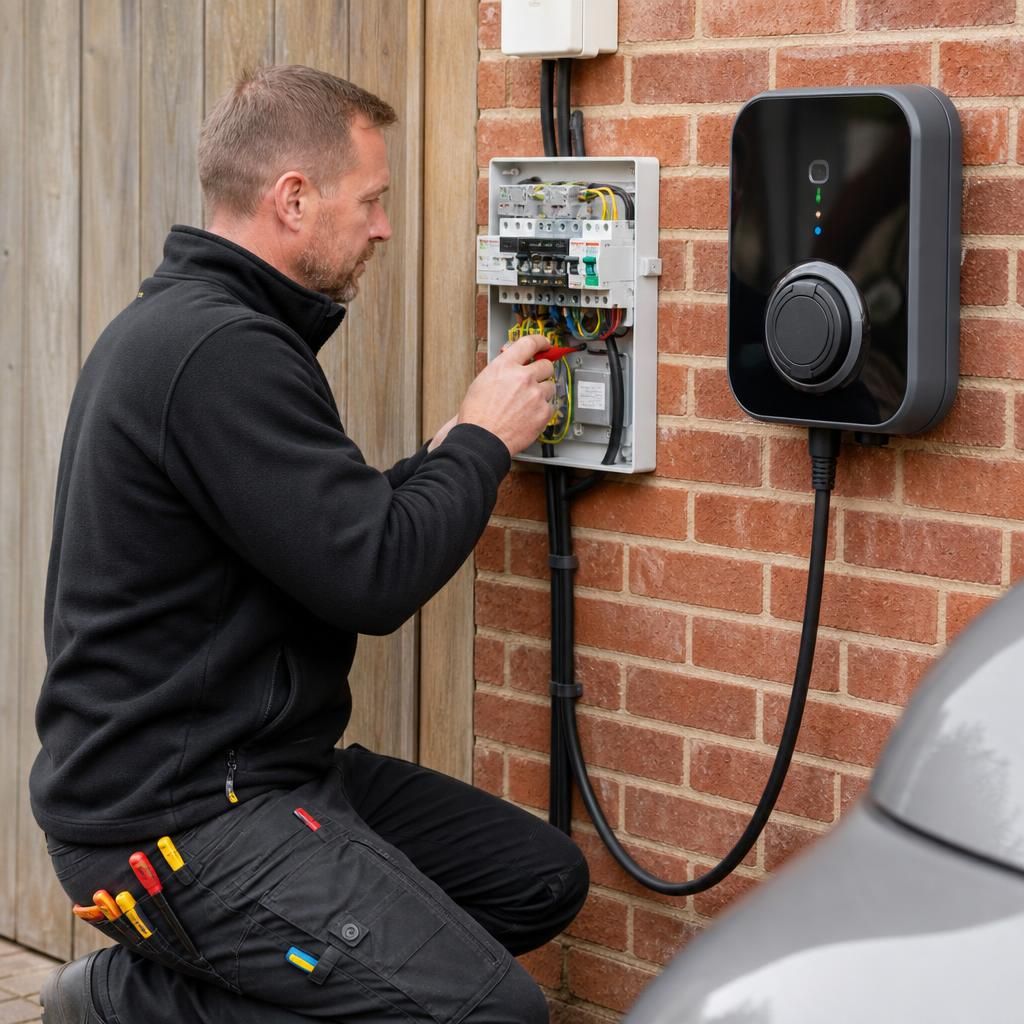
The cost of installing an EV charger at home depends on the charger, the cable route and the changes your electrical system needs. We assess those details at the survey, then provide a written quotation before work starts.
There is no single installed price for a home EV charger. The final cost reflects the charger’s specification, the way it will be used, and any work needed to connect it safely to the property.
The charger itself is only one part of the cost. A tethered model has a fixed charging cable attached, while an untethered model uses a separate cable that you store in the car. Smart features can also affect the price. These may include app control, scheduled charging, user access controls, load management or the ability to coordinate charging with solar panels and battery storage.
A higher-powered charger may need a different electrical supply arrangement from a standard domestic installation. We check the available supply before recommending equipment, rather than specifying a charger that the property cannot use properly. If the local electricity network needs to be notified or consulted, we identify that requirement as part of the design.
The position of the charger affects the installation work. A unit on an external wall close to the electrical intake usually needs less labour than one on a detached garage, outbuilding or driveway post. The route may involve drilling through masonry, working through a loft or cupboard, protecting cable outdoors, or installing ducting beneath a driveway. Listed buildings and older properties may need a more carefully considered route and finish.
Parking arrangements matter as well. A charger positioned where the cable can reach the vehicle without crossing a public footway may need a different mounting arrangement from one serving several parking positions. If the parking space is away from the house, we assess the distance, ground conditions and protection needed for the cable before pricing the work.
The electrical installation can add work where it needs updating. We look at the consumer unit, earthing, bonding, spare capacity and the protective devices needed for the charging circuit. The charger must have suitable protection against electrical faults and direct-current leakage. If the existing equipment does not provide that protection, the quotation includes the necessary upgrade rather than leaving it as an assumption.
Load management can be useful when the property has several large electrical loads. It can regulate the charger alongside equipment such as an electric heating system, immersion heater or battery, reducing the risk of the total demand exceeding what the installation can support. The required hardware and configuration form part of the cost where this is appropriate.
Solar and battery connections can change the design. If the aim is to charge from surplus solar generation, the charger needs to communicate with the relevant energy system. We consider the existing inverter, battery controls and consumer unit arrangement before confirming what can be integrated. That may involve additional control equipment or commissioning work, but it avoids treating the charger as an isolated appliance when the household energy system is connected.
The survey also considers practical details that are easy to miss from a photograph:
- the wall construction and whether it can support the charger securely;
- the route through the house, garage, loft or outbuilding;
- the need for external conduit, ducting, a post or groundworks;
- the position of the electricity meter and consumer unit;
- access for testing, maintenance and future cable replacement; and
- whether the planned equipment fits the property’s supply and intended charging pattern.
We can then separate the quotation into the charger, installation, protection, cable route and any additional work. That makes it clear which costs come from the equipment choice and which come from the property itself. We provide a written quotation before work starts, with no surprise charges.
Our NICEIC-registered electricians test the completed circuit and charger before handing it over. You should receive an explanation of the controls, any app setup and the information needed to use the charger safely. If the property needs more electrical work than a straightforward installation, we explain why before you make a decision.
If you expect to add solar panels, a battery or an outbuilding supply later, mention it before we price the charger. We can then allow for a sensible cable route and space for equipment, rather than paying for avoidable alterations later. That does not mean adding equipment you do not need now; it means making today’s installation work with the changes you are already considering.