
What should I prepare before installing an EV charger at home?
Before installing an EV charger at home, check where your car will park, how the cable can reach it, and whether your electrical supply and consumer unit can support the charger. We assess those points with you, then confirm any permissions, safety work and installation costs before work begins.
Before the survey, have your vehicle details, property information and any access or ownership restrictions ready. This lets us assess the right charger, prepare for any extra work and give you a clear plan before installation starts.
Have the vehicle details to hand
The charger needs to suit the car’s connection and charging capability. Keep the make, model and registration details available, along with any information about the charging equipment recommended by the vehicle manufacturer. If you have more than one electric vehicle, tell us how you expect to use them. That may affect the charger type and how charging is managed.
It also helps to decide whether you prefer a tethered charger with a permanently attached cable or an untethered unit that uses a separate lead. Your choice affects where the cable is stored and how convenient the charger is to use.
Consider how you charge
Think about when the car normally returns home, how far you drive and whether you need a full charge by a particular time. These details help us discuss smart charging settings rather than treating the charger as a standalone electrical appliance.
If you already have solar panels or a home battery, tell us before we specify the charger. We can consider how the systems should work together and whether the proposed equipment can use surplus generation or coordinate with battery charging. The final setup still depends on the existing equipment and its controls.
Gather information about the property
Useful information includes:
- the age and type of the electrical installation, if known;
- the position of the electricity meter and consumer unit;
- details of previous electrical upgrades or alterations;
- whether the home has solar panels, battery storage or other high-demand equipment;
- the ownership arrangements for the house, drive or garage; and
- any restrictions attached to a lease, shared access or managed development.
For a rented property, ask the landlord or managing agent for consent before arranging the work. Leasehold properties may also require written approval, even when the parking space is allocated to the property. A listed building, conservation area or shared drive can introduce additional requirements, so raise this at the outset rather than after the charger has been chosen.
Check the proposed location carefully
Walk through the route between the electrical equipment and the charging position. Note gates, walls, outbuildings, planted areas and surfaces that could affect the work. If the charger will be on a detached garage or another building, tell us how that building is supplied and whether any existing cable runs are known.
Take clear photographs of the meter, consumer unit, garage or outbuilding, and the intended charging position. Include wide shots that show the route between them. Photographs do not replace an inspection, but they help us understand the starting point and identify questions before the survey.
Keep the area around the meter, consumer unit and proposed charger accessible for the assessment. Move stored items, vehicles or garden equipment where possible. We need to trace the installation properly rather than base the specification on an obstructed view.
Check connectivity for a smart charger
Many smart charging functions depend on a reliable internet connection. Check whether Wi-Fi reaches the proposed charger location. A weak signal may need a different arrangement, such as improved network coverage or another approved connection method. Do not assume that a strong signal inside the house will reach a garage, driveway or outbuilding.
Have the details for your electricity account available if the charger or energy tariff requires them. We can explain which settings belong to the charger and which belong to the vehicle or energy supplier. That avoids changing several controls without knowing which one manages the charging schedule.
Prepare for the electrical assessment
We’ll inspect the existing installation, earthing and protective equipment before confirming the design. An older property may need electrical work before the charger can be connected safely. We’ll explain what we find and separate essential work from optional improvements.
Do not remove covers from the consumer unit or attempt to test the supply yourself. A charger creates a substantial electrical load, so the installation needs to be assessed by a competent electrician. Our NICEIC and ECA electrical work is carried out by our own team, with the necessary testing and certification completed as part of the installation.
Once we have the vehicle information, property details and access arrangements, we can confirm the charger specification and installation method. You’ll know what needs to happen before the work begins, rather than discovering requirements on the day.
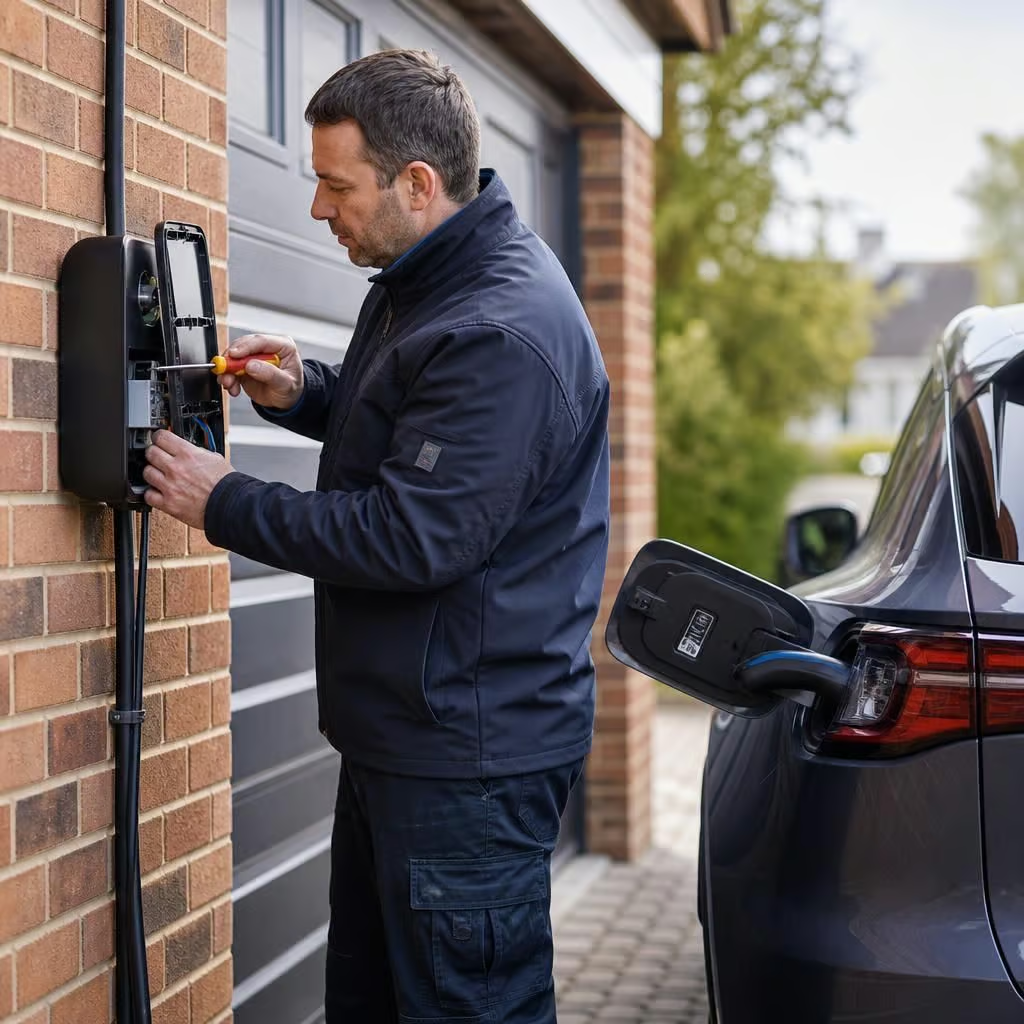
If the house has an older supply or several high-demand appliances, the charger needs to be considered as part of the whole electrical system. We look at how its load sits alongside electric heating, an immersion heater, an induction hob, solar panels or a battery.
If the proposed installation raises a question about available supply capacity, we flag it before work starts. We’ll explain whether the design needs further checks, load management or other electrical work, so the final specification is based on the property rather than the charger alone.