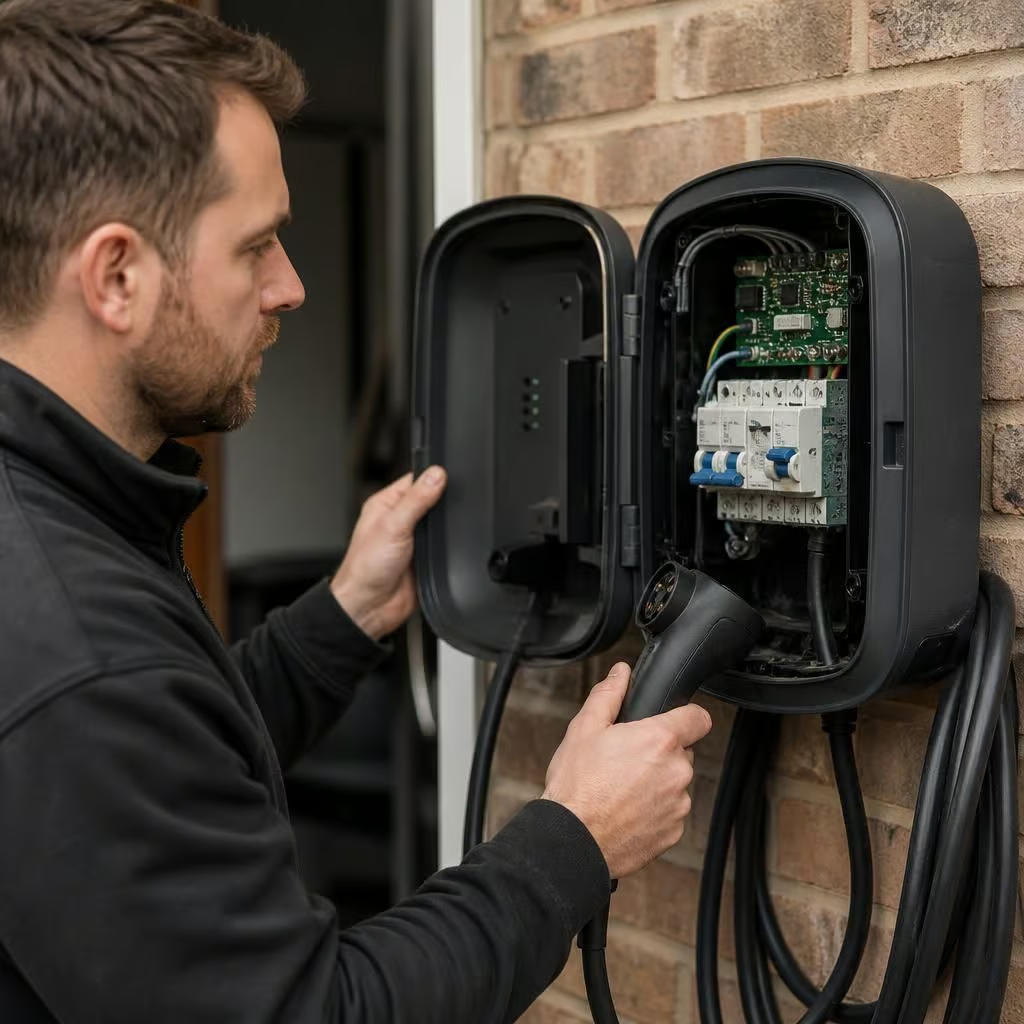
Will my EV charger need ongoing maintenance?
Most home EV chargers do not need frequent routine servicing, but you should keep the unit and cable clean, dry and undamaged. We can inspect the charger and its electrical connections if you notice faults, damage or changes to the installation, or when the property’s wider electrical system is checked.
Most domestic EV chargers do not need a scheduled service every year. Ongoing care usually means following the manufacturer’s instructions, keeping the charging equipment in good condition and arranging an electrical inspection if its behaviour changes.
There is no single maintenance interval that suits every home charger. An outdoor unit exposed to rain, frost or accidental knocks may need closer attention than an indoor unit. Heavy use, a long cable route or changes to the property’s electrical system can also affect what needs checking.
What you can do yourself
- Keep the charging lead stored so that vehicles, doors and garden equipment cannot crush or cut it.
- Keep the area around the charger clear, particularly where the unit is mounted in a garage or beside a driveway.
- Clean the outside with the method recommended by the manufacturer. Do not use a pressure washer or allow water into the connectors.
- Pay attention to warning messages in the charger’s app or display. A recurring message needs investigating rather than repeatedly resetting the unit.
- Install software or firmware updates when the manufacturer provides them and the instructions confirm that they apply to your model.
Do not dismantle the charger or remove its covers. Internal testing and repairs involve the electrical supply, protective devices and the charger itself, so an electrician should carry out that work.
When a professional check is worthwhile
A check makes sense after repeated charging interruptions, unexplained loss of power or a change in charging performance. It is also sensible after electrical alterations at home, such as a consumer unit replacement, solar installation or additional high-load equipment. Changes to the car, charger settings or a home energy-management system may require the installation to be reviewed as well.
If the charger is part of a let property, a property sale or a wider electrical inspection, we can include it in the planned testing and provide the relevant findings in writing. The recommended timing depends on the installation, its use and the manufacturer’s instructions rather than an automatic annual rule.
What we check during an inspection
Your charger may be working normally while a problem develops elsewhere in the installation. We check the charger, the dedicated circuit and the protective equipment together, because safe operation depends on all three.
- We inspect the mounting, cable route, connections and signs of water entry or heat damage.
- We test the circuit protection and the residual-current protection that disconnects the supply if it detects a fault.
- We check the earthing arrangement and confirm that the installation remains suitable for the charger’s operating settings.
- We test charging and investigate any fault codes, nuisance disconnections or communication problems.
- Where load management or solar charging is installed, we check that the charger responds correctly to the available electrical supply.
We use the inspection to identify the cause rather than simply reset the equipment. A loose connection, damaged cable, failed protective device or unsuitable setting may need repair before the charger is used again.
Electrical work on a home charging point should be carried out by a suitably registered electrician. Our NICEIC and ECA-registered electrical team can assess the full installation, explain any remedial work and provide a written quotation before work starts. You are not signing up to a routine maintenance contract simply because we installed or inspect the charger.
Keep the installation records and manufacturer information with the rest of your household paperwork. They help an engineer understand the circuit, protection and settings if a fault develops later.
A home charger usually needs attention when its condition or surroundings change, not because a calendar date has arrived. Before using it after a long period of storage, check the casing, cable and connector for cracks, cuts or signs of heat. If building work, landscaping or vehicle damage has affected the cable route, stop using the charger until we can inspect it.