How much access do installers need inside my home?
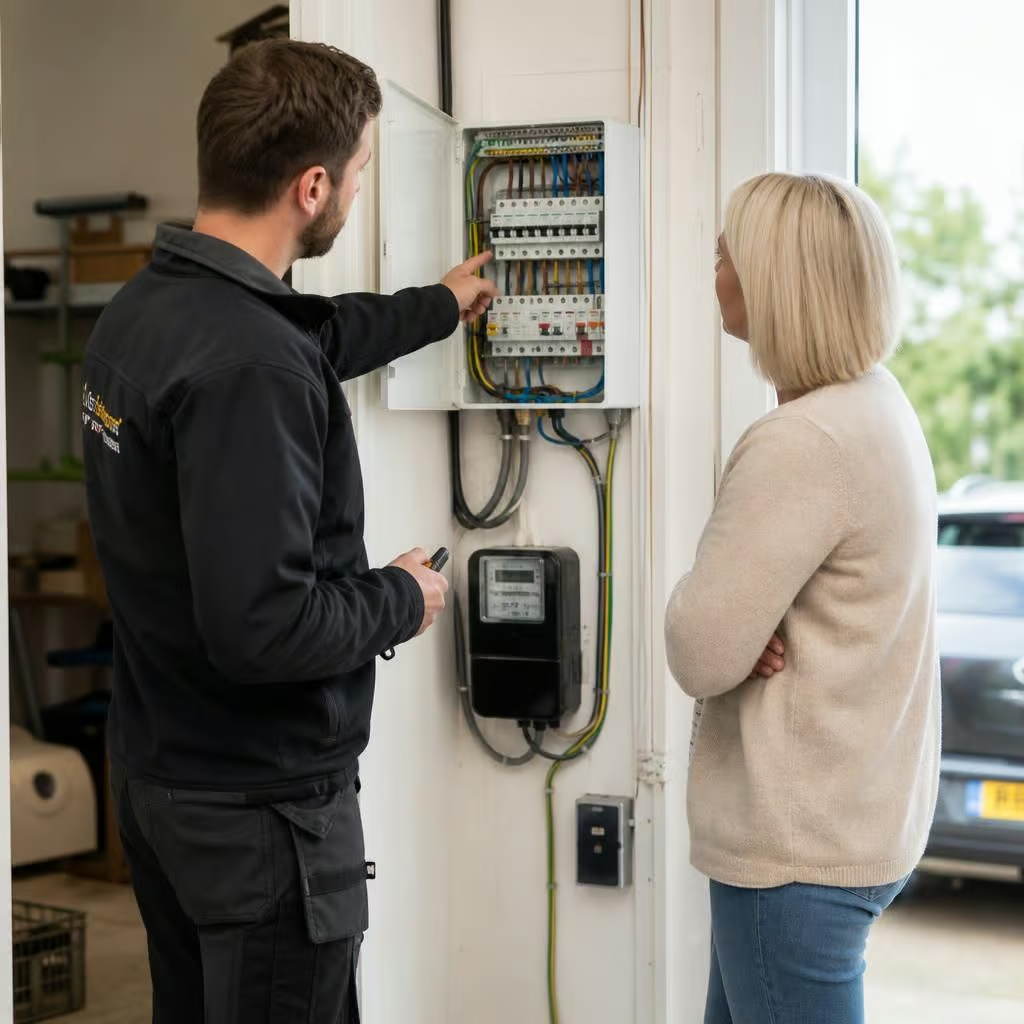
For most home EV charger installations, we need access to the consumer unit, meter area and the cable route, as well as the outdoor parking point. We’ll tell you what needs clearing before the survey and limit indoor work to the areas needed for the cable and protective equipment.
For most home EV charger installations, we need access to the meter, consumer unit and any rooms or spaces along the proposed cable route. The amount of access depends on where the charger will sit, how the cable can travel and whether the existing electrical equipment can accept the new circuit.
Before installation, we’ll need to look at the route from the incoming electricity supply to the charger. This may mean access to a meter cupboard, utility room, hallway, garage or another room where the cable will pass. If the route uses floor voids, a loft or a cupboard, those areas need to be clear enough for us to inspect and work safely.
We may also need access to the outside wall, garage or parking area where the charger will be fitted. This lets us confirm the cable entry point, mounting surface and position of the charging unit. We’ll agree the route with you before work starts, including any visible trunking or changes needed to keep the installation safe and tidy.
During the survey, access is usually needed for inspection rather than preparation work. We check the position and condition of the consumer unit, the meter arrangement, earthing and the available cable route. We also look for obstacles such as insulation, stored belongings, fixed units or restricted access behind plasterboard. These details help us identify the practical installation method before we give you a final quotation.
On installation day, please move stored items away from the equipment and route where possible. The engineer may need room to open the consumer unit, work around the meter and use access equipment safely. A clear path from the entrance to the work areas also helps us protect floors and avoid moving furniture unnecessarily.
We don’t normally need access to every room in the property. If the cable can follow an external wall or an already accessible route, the work may stay within the meter and consumer-unit area, plus the charger location. If the agreed route passes through a room, loft or cupboard, we’ll need access to that particular area instead.
Some homes have restricted meter cupboards, concealed wiring or a consumer unit in a difficult position. If the proposed route cannot be inspected safely, we’ll explain the issue and discuss another route or any additional work before proceeding. We won’t start work on the assumption that hidden spaces are clear.
Where access could affect the quotation, we’ll identify that before installation. For example, a longer route, extra containment or changes to the consumer unit may alter the work required. You can then decide whether to continue with the agreed approach rather than being faced with an unexpected change during the installation.
Someone responsible for the property should be available to confirm access and approve the final charger position. If the property is rented, the landlord or property manager may also need to approve drilling, cable routes or work to the electrical installation.
We leave the work areas tidy and test the charger and its protective equipment before we finish. The paperwork records the electrical work completed, so you know what has been installed and where the new circuit connects to the property.
If the meter or consumer unit is behind a locked door, arrange access before we arrive. This includes cupboards, garages, loft hatches and rooms managed by a landlord or agent. We can’t safely complete the connection or testing if essential equipment is inaccessible.
Tell us beforehand about anything that affects entry, such as a vulnerable occupant, pets or restricted areas. We can then plan the work around the home rather than discovering a barrier on installation day.