
What affects commercial EV charging station cost?
Commercial EV charging station cost depends mainly on the number and power of charge points, the site’s available electrical capacity, and the cable routes or groundworks needed. We confirm these requirements during a site survey, then provide a written quotation covering the equipment and installation work.
Commercial EV charging station cost is shaped by the way the site will be used, the electrical work needed to support it, and the standard of control and access required. A staff car park, a depot for vans and a public charging site can all need different equipment and installation work, even when they have a similar number of parking spaces.
The charging pattern affects the design. Cars that remain parked for several hours can usually charge differently from vehicles that need a quick top-up between journeys. We look at when vehicles arrive, how long they stay and how many need charging at once. That helps avoid paying for more rapid charging capacity than the site actually needs.
Fleet use can also make load management important. If several vehicles charge together, a control system can share the available supply between charge points. This may reduce the need for a larger electrical upgrade, but it can affect how quickly individual vehicles charge. We explain that trade-off before the equipment is selected.
The existing electrical installation can add work that is not visible from the car park. We inspect the intake position, distribution boards, earthing arrangement and spare ways before we price the installation. Older commercial premises may need new switchgear, circuit protection or alterations to bring the installation up to the required standard. A three-phase supply may also be relevant for some higher-powered charging arrangements.
Where the existing supply cannot support the planned charging load, the network operator may need to assess a connection change. That can introduce design, application and site-work costs outside the charger hardware itself. We identify this during the survey rather than treating it as an unexpected addition after work has started.
The site’s physical layout affects labour and civil engineering. A charge point near the intake is generally simpler to install than one across a busy yard or car park. We consider buried services, drainage, finished surfaces, access routes and the position of existing structures. Reinstating tarmac, concrete or block paving can make a noticeable difference to the quotation.
Work can be more involved where cables cross vehicle routes, public areas or land outside the customer’s control. In those cases, the design may need protective ducting, traffic management, bollards or permission from another landowner. We set out the assumed route and any exclusions in the written quotation.
Access and payment requirements change the equipment and commissioning work. A private staff facility may only need user identification through an app or RFID card. A public facility may need card payment, customer instructions, remote monitoring and integration with a charging network. A fleet depot may need driver access controls and records for each vehicle.
The charge point itself is only part of that arrangement. We allow for the communications equipment, account setup and configuration needed for the intended users. Ongoing subscriptions, transaction charges and maintenance are separate budgeting questions, so we explain which costs arise during installation and which continue afterwards.
Future expansion should be considered before the first charge point is installed. Installing spare ducting, leaving room in distribution equipment or planning the control system for additional bays can reduce disruption later. It may increase the initial project cost, but adding this work during construction is often less disruptive than reopening a finished car park.
That does not mean every site should be built for its maximum possible size. We compare the present vehicle numbers with realistic expansion plans. The right approach may be to install fewer charge points now, while preparing the electrical and physical layout for later additions.
Compliance requirements form part of the price, not an optional extra. Commercial charge points need suitable protection, isolation, earthing and testing. The design may also need to account for impact protection, lighting, signage and safe access around the bays. We inspect and test the completed electrical work, then provide the relevant paperwork for the site records.
Our NICEIC and ECA-registered electrical team handles the electrical design and installation in-house. That gives the person responsible for the premises one team to discuss the supply, charge points, protection and certification with, rather than having to coordinate separate contractors.
A reliable comparison between quotations depends on what each contractor has included. Ask whether the price covers:
- the site survey and electrical design;
- any distribution board or switchgear alterations;
- network operator applications or connection work;
- ducting, excavation, surface reinstatement and traffic management;
- protection against vehicle impact;
- communications, user access and payment configuration;
- testing, commissioning and certification; and
- preparation for additional charge points later.
A low equipment price can become a higher project cost if it excludes these items. We survey the site, record the assumptions and provide a written quotation before work starts. If the property needs an upgrade or the proposed charging pattern has limitations, we explain the reason and the practical alternatives.
For a useful commercial EV charging station cost assessment, we need the site address, a plan or photographs of the parking area, the number and type of vehicles, expected charging times, user access requirements and details of the existing electrical supply. A site visit then confirms the route, equipment position and installation work needed.
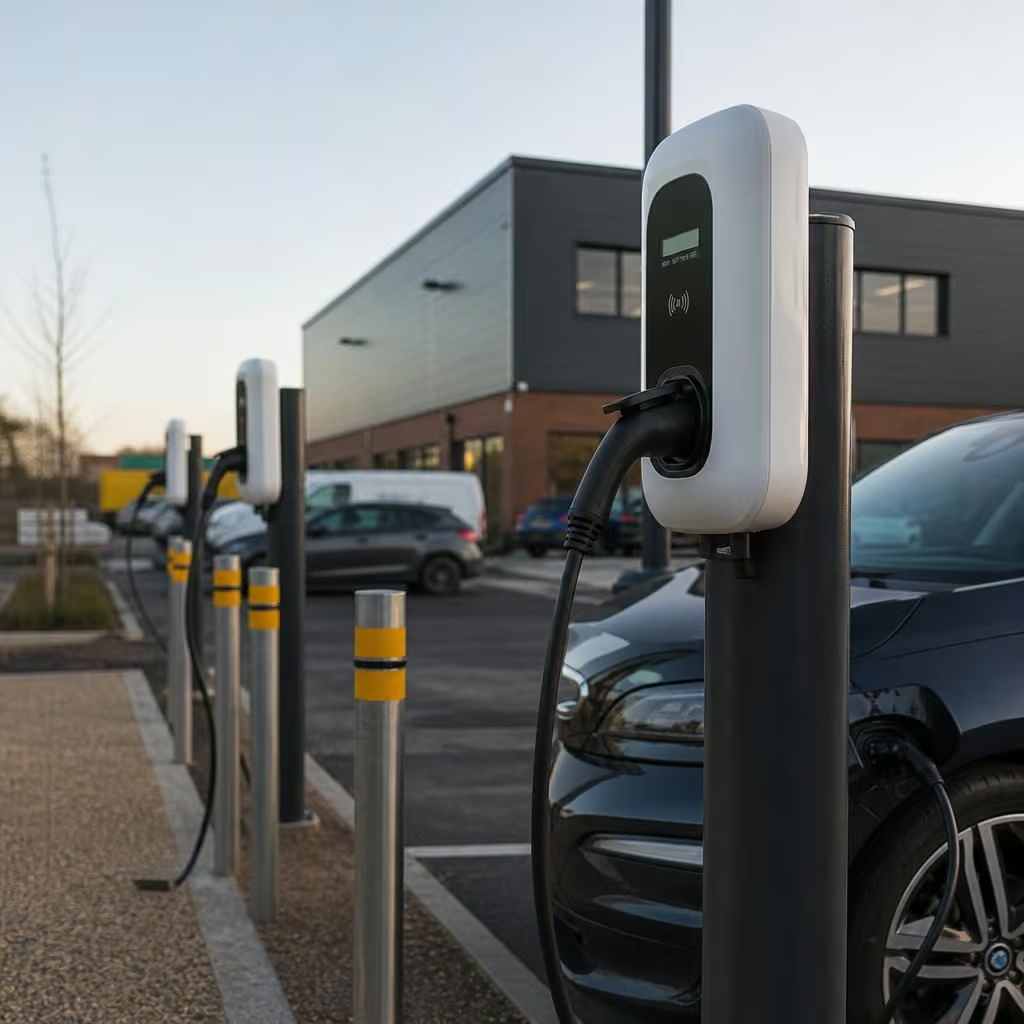
The charger’s power rating can change the equipment and electrical work needed. A higher-powered unit may require different protection, a larger supply or a three-phase connection. That cost is only justified when vehicles need to leave again quickly.
For vehicles parked during working hours or overnight, a lower-powered arrangement may meet the operational need without paying for unnecessary charging capacity. We compare the fleet’s routes and dwell times with the available supply, then price equipment that fits how the site will actually be used.