
What information do you need to price a commercial EV charging station?
To price a commercial EV charging station, we need the number and type of chargers, expected vehicle use, parking layout, available electrical capacity and the cable route. A site survey then confirms whether the existing supply, distribution board, groundworks, access and any permissions are suitable.
An accurate commercial EV charging station price needs two kinds of information: the physical facts about the site and the way drivers will use the chargers. The first set helps us cost the electrical and groundwork requirements. The second helps us specify equipment that fits the business rather than creating unnecessary capacity.
Start with the intended operation. The number of vehicles is only part of the calculation. We also need to know when vehicles arrive, how long they remain parked and whether several vehicles may charge at the same time. A workplace with cars parked all day has different requirements from a depot where vans return together, or a customer car park where drivers need a shorter stay.
- Tell us whether the chargers are for staff, visitors, customers, tenants, a fleet or a mixture.
- Explain whether drivers need unrestricted access, staff-only access, membership control or payment by the public.
- Include any planned increase in fleet size or parking demand.
- Tell us if the business needs records of energy use by vehicle, driver, department or tenant.
These details affect the number and output of charge points, the need for user authentication, the choice of charging management system and the likely electricity demand. They can also show where a lower-powered installation with managed charging is more suitable than installing maximum capacity for every bay.
Describe the existing electrical installation. The available supply is not judged only by the main fuse or the size of the incoming cable. We look at the capacity already used by lighting, heating, machinery, refrigeration, workshops and other large loads. A site that appears to have spare capacity may have a high demand at the same time vehicles are expected to charge.
Useful information includes recent electrical test reports, the main switchboard rating, the position of distribution boards and any known restrictions from the electricity network operator. If the supply needs upgrading, the price may include design work, an application to the network operator, new equipment and additional cabling. We identify that requirement before work starts rather than leaving it as an unexpected extra.
Explain how the chargers will be controlled. Load management can reduce the risk of charging pushing the site beyond its available electrical capacity. It can allocate power between vehicles, pause charging during busy periods or prioritise selected vehicles. The price depends on the number of charge points, the control system and any link with existing building or energy management equipment.
Networked chargers may also need a data connection, user accounts, payment processing or remote monitoring. Tell us who will manage access and what information the business needs to download. A private fleet, employee charging scheme and public-facing car park may require different software arrangements and ongoing service costs.
Give us enough detail about the installation route. The distance from the electrical supply to each parking bay affects cable quantities and installation time. So do changes in level, internal walls, service yards, roads and areas where vehicles or pedestrians cross the route.
- Mark the proposed charger positions on a plan or site photograph.
- Show where cables may run and identify any areas that cannot be excavated.
- Tell us about drainage, gas, water, telecoms and other buried services.
- Identify surfaces that may need cutting and reinstating, such as tarmac, concrete or paving.
- Note any restricted delivery access, working-height limits or requirements for traffic management.
Groundworks, ducting, protective barriers, bollards, wheel stops, signage and lighting can all form part of the installation price. The cost is different when a cable can follow an accessible wall from when it must cross a live roadway or pass beneath a paved courtyard.
Include the site’s permissions and working constraints. A landlord, managing agent, freeholder or other authority may need to approve the equipment and cable route. Commercial premises may also have planning, lease, conservation or estate-management restrictions. Tell us who owns the building and parking area, and whether another contractor controls any part of the proposed route.
Health and safety requirements can affect the method and price. Examples include induction procedures, segregated working areas, permits, security arrangements and restrictions on isolating the electrical supply. If the site must remain operational, we can plan the work around access and operational requirements shown in the brief.
Allow for future changes. A price based only on the first two chargers may not provide the most sensible infrastructure for a growing fleet. We can consider spare capacity in the distribution equipment, ducting for later circuits and a layout that allows additional bays to be connected without disturbing completed surfaces. That does not mean installing equipment the site does not need now; it means identifying the cost of preparing for a realistic next stage.
Once we have the operating brief and the site information, our survey checks the cable routes, electrical equipment, charger positions, access and groundwork requirements. We then separate the quotation into the charging equipment, electrical installation, civil work, controls and any network or supply-related items. You receive a written quotation before work starts, with the assumptions and exclusions visible rather than hidden in a single total.
Our NICEIC and ECA registration relates to the electrical installation and the certification that follows it. The finished paperwork records what was installed and tested, which matters when a landlord, insurer, facilities manager or future contractor needs evidence of the work.
For an initial price, send the operating brief, a marked-up plan, photographs of the electrical supply and parking area, and any available electrical reports. A firm commercial EV charging station quotation still depends on what we find at the site survey.
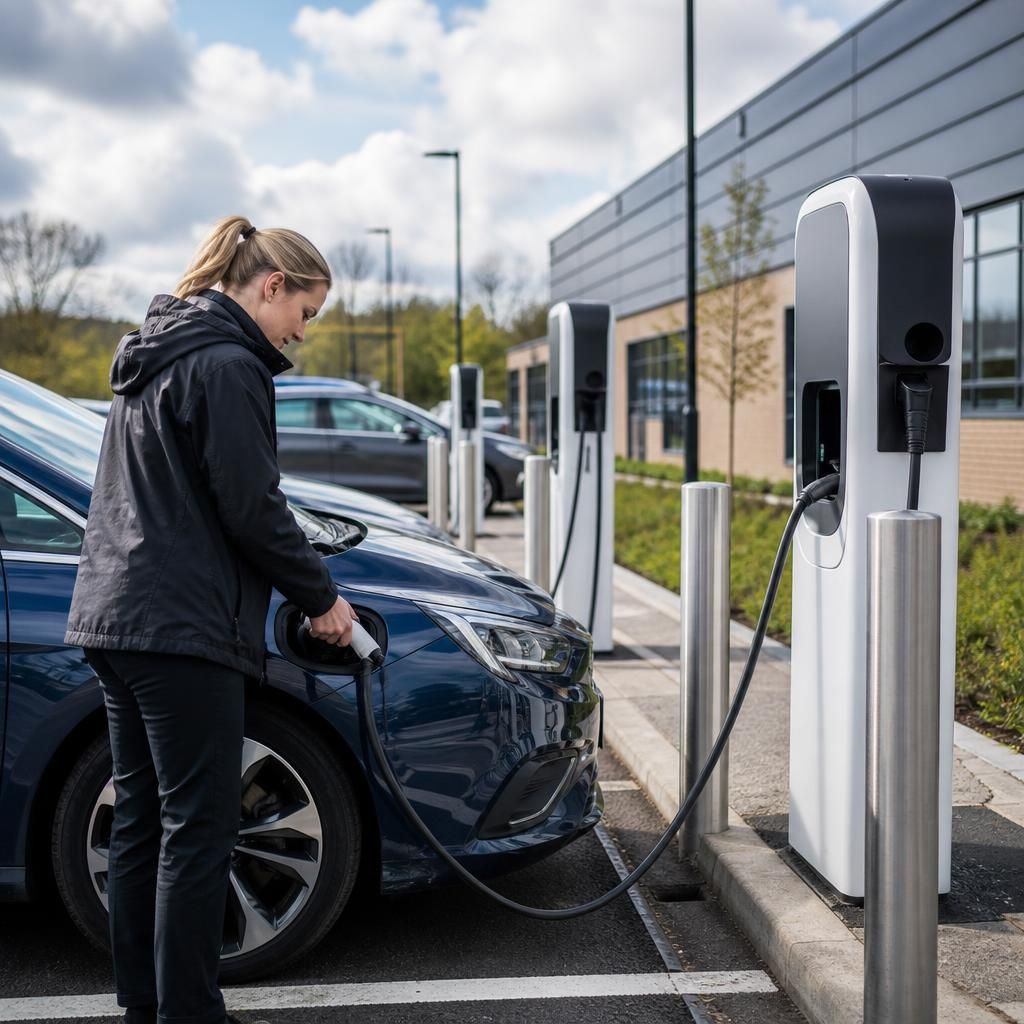
The vehicles’ charging capability affects the equipment we price. Send us the makes and models, or confirm whether the station will serve cars, vans or mixed vehicles. We can then assess whether standard AC charging is suitable, whether higher-output equipment is justified and what connector arrangements drivers will need. This avoids paying for charging capacity that the vehicles cannot use.