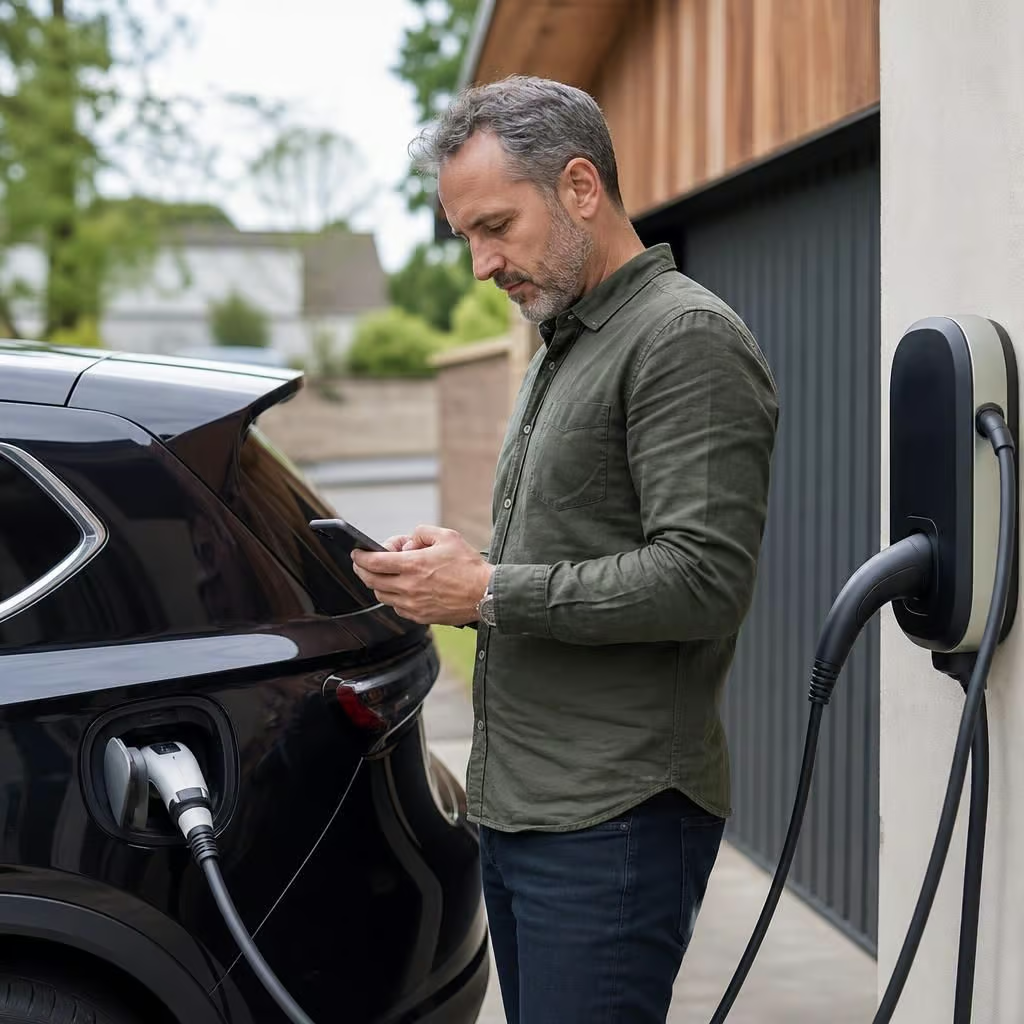
Which tariff is cheapest for charging an EV at home?
There isn’t one tariff that is cheapest for every home. An off-peak EV tariff may cost less for overnight charging, but compare its unit rates, standing charge and any higher daytime rate with your complete household usage.
The cheapest tariff is the one that gives you the lowest total household cost after your EV charging is moved into its genuinely low-cost periods. An EV tariff with the lowest advertised overnight rate may not be cheapest if it has a higher standing charge, raises the daytime unit rate or does not fit your charging routine.
Start by checking how much electricity your car takes from the meter, rather than relying only on the battery’s stated capacity. Charging losses mean the electricity supplied at the socket is higher than the energy stored in the battery. Your annual driving distance, car efficiency and charging pattern therefore affect the comparison.
Use your recent electricity bills and estimate:
- how much electricity your household uses in a typical year;
- how much additional electricity the car needs;
- which hours you can normally charge at home;
- how often you need a daytime or rapid public charge instead; and
- whether your car or charger can follow the tariff’s charging schedule.
Then compare the whole bill for each tariff. Include the standing charge, every unit rate, any separate peak and off-peak periods, and any fees or conditions attached to the plan. A tariff with a very low overnight rate can still cost more overall if your home uses substantial electricity during the day.
Time-of-use tariffs are usually worth considering when you can charge consistently in the cheaper window. This works well when the car is parked at home overnight and the charger can be programmed to start and stop automatically. It is less useful if you regularly return when the low-rate period has ended, need to leave before charging finishes or rely on daytime charging.
Some EV tariffs offer a short, particularly low-cost period rather than a broad overnight window. Check its exact start and finish times. A charger that begins charging immediately after you plug in may use the higher rate unless its schedule is set correctly.
A smart tariff may also require a smart meter and a compatible car or charge point. The supplier may control charging through its app or through an integration with the vehicle. Check what happens if the connection fails, if you override the schedule, or if you need the car charged by a particular time. A tariff is only useful if its control system works with the equipment at your home.
A standard single-rate tariff can be cheaper for some households. This may apply when you cannot shift much of your household use into the off-peak period, when the EV is charged at different times each day, or when an EV plan’s standing charge and daytime rate are higher. Convenience has a value too: a slightly higher rate may suit you better if it avoids missed charging windows.
To compare plans properly, calculate the annual cost rather than comparing the EV rate alone:
- Multiply each tariff’s unit rate by your estimated household and EV electricity use in the relevant time period.
- Add the standing charge for the full year.
- Allow for charging that happens outside the cheap window.
- Include any tariff fees, exit charges or conditions that apply.
- Compare the result with your current tariff and with a suitable standard-rate alternative.
Use your actual bill where possible. A supplier’s example may assume that nearly all EV charging takes place overnight, while your car may often be charged during the day. Seasonal changes also matter if winter driving, heating or other household demand changes how much electricity you use.
Solar panels and a home battery can change the best choice again. If your car is usually at home during daylight, some charging may use solar generation instead of imported electricity. A battery may move electricity into the evening, but charging the battery from the grid is not automatically cheaper once charging losses and tariff rates are included. Compare the combined effect on the home rather than treating the car separately.
At Alderminster Group, we can discuss tariff timings when we assess an EV charge point. Your incoming supply, charger position, cable route and available load affect how easily scheduled charging can work. If the charger needs load management, we explain how it protects the home’s electrical supply while other appliances are running.
Tariffs change, so recheck the rates and terms before switching and again when a fixed period ends. The best plan is not a permanent label; it is the one that matches your household demand, charging equipment and ability to use the cheaper periods.
A tariff can depend on the supplier controlling the charging session through an app or vehicle connection. Before switching, check whether that arrangement will still work if you change supplier, replace the car or stop using the tariff. You should still be able to charge manually if the service is unavailable.
If you are choosing an EV charge point, we can explain how scheduled charging fits with the equipment at your home. We check the electrical supply, cable route and any load management needed, so you know what the tariff can and cannot control before you commit to it.