
Will my existing electrical supply support an EV charging station?
Your existing electrical supply may support an EV charging station, but the answer depends on its capacity, condition and the demand from the rest of the property. We check the incoming supply, consumer unit and available capacity before recommending a safe installation or explaining what upgrade or load-management work is needed.
In most homes, the existing electrical supply can support an EV charger. The important question is whether the supply can carry the charger alongside the home’s other electrical demand, safely and within the limits set by the distribution network operator (DNO).
A charger adds a substantial continuous load. Cooking, electric heating, immersion heaters, heat pumps, solar batteries and other high-demand equipment may already be using part of the available capacity. We assess the whole installation rather than looking at the charger in isolation.
The main supply and cut-out
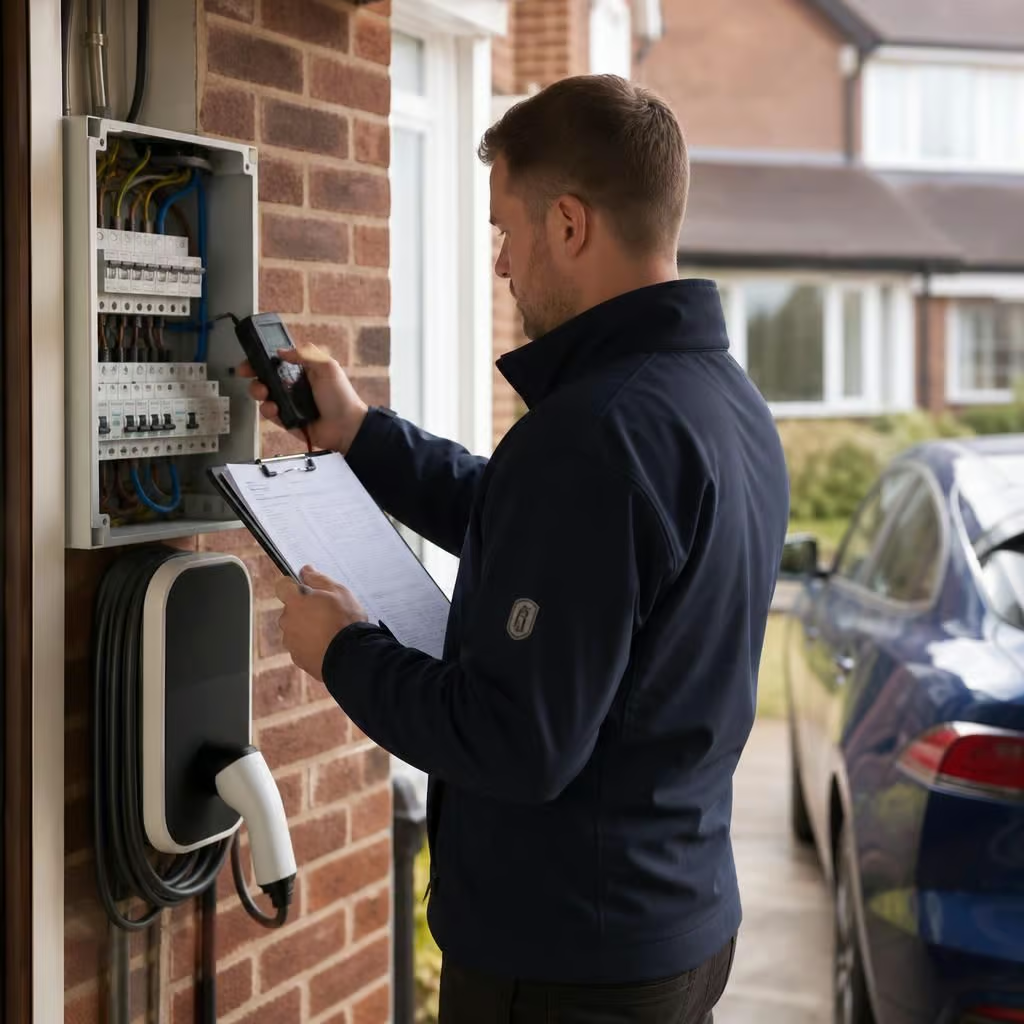
The service head, incoming cable, main fuse and meter tails determine how much electricity can enter the property. We inspect these components and check the rating and condition of the equipment. We don’t remove or alter the DNO’s sealed equipment, but we can identify when the supply needs their approval or further investigation.
Some properties have a supply that is adequate on paper but has outdated equipment, damaged cables or limited capacity at the connection point. That matters particularly in older homes, converted buildings and properties that have accumulated electrical equipment over many years.
If the available capacity is limited, the next step isn’t automatically a costly supply upgrade. We may recommend a charger with dynamic load management. This monitors the home’s demand and reduces or pauses charging when other equipment is using more power. Charging then resumes as capacity becomes available.
Load management can be useful where a household wants an EV charger but has no spare capacity for every appliance to run at full demand at the same time. We explain how the arrangement affects charging before any work starts, so the decision is based on how the home is used.
The consumer unit and earthing
The consumer unit must provide suitable protection for a dedicated EV charging circuit. We check its age, condition, spare ways, protective devices and the earthing arrangement. Older units may need upgrading if they cannot provide the required protection or cannot safely accommodate the new circuit.
We also check the earthing and bonding. Certain earthing arrangements need additional protection at the charger, particularly where the incoming supply uses a PME arrangement. The correct approach depends on the installation and the charger, so we specify the protective equipment after inspecting the property rather than assuming that every home needs the same upgrade.
Where remedial electrical work is needed, we set it out in the quotation before installation. That may involve replacing unsuitable protective devices, improving bonding, upgrading the consumer unit or correcting an existing defect. We won’t treat an unsafe part of the installation as acceptable simply because the charger itself is new.
What happens during the assessment
- The incoming supply: We inspect the service head, meter tails, main switch and visible supply equipment.
- The existing demand: We consider electric heating, cooking, hot water, batteries, solar equipment and other significant loads.
- The consumer unit: We check whether it can safely accept a dedicated circuit and the necessary protection.
- The earthing: We establish which earthing arrangement is present and what protection the charger requires.
- The cable route: We plan the route from the consumer unit to the charging position, including the equipment needed at each end.
- The network connection: If the supply may need approval or an alteration, we explain the DNO process and what it means for the installation.
The survey also gives us the information needed to distinguish a genuine capacity problem from a cable route or consumer-unit issue. A supply may be adequate while the existing consumer unit still needs work. Equally, a modern consumer unit does not prove that the incoming supply has enough spare capacity.
When a supply upgrade may be needed
If load management cannot provide a suitable arrangement, we may recommend applying to the DNO for a service upgrade or other change. The DNO, rather than the installer, decides whether the network can support the requested connection and what work is required.
We include any known electrical preparation in the written quotation. If the DNO needs to assess or alter the connection, that sits outside the charger fitting itself and may affect the final programme and cost. We explain this before you commit to the installation.
Some properties have a three-phase supply, although most domestic installations do not. If yours does, we assess how the available phases and existing loads affect the charger. We don’t assume that three-phase equipment is necessary or that it will automatically make installation straightforward.
After the electrical work
Once the circuit and charger are installed, we test the protective measures, charging circuit and controls. We check that the charger communicates correctly with any load-management equipment and that the installation operates as intended alongside the home’s supply.
Electrical work is carried out by our NICEIC-registered electricians, with ECA membership providing an additional indication that the work is assessed against recognised electrical standards. You receive the relevant installation and testing paperwork, along with any information needed for the charger controls.
The result may be a direct connection, a charger managed around the home’s demand, or preparatory work before charging can be connected safely. The right choice comes from the condition and capacity of the particular property, not from fitting the same arrangement everywhere.
If you’re planning other electrical changes, tell us before the charger is specified. A future heat pump, battery or electric heating system could alter the available capacity and the best charging arrangement.
We can consider those plans during the assessment, so the charger installation doesn’t create avoidable work later. You’ll know whether the proposed setup suits the home as it is now and how planned additions may affect it.