
How can I compare quotes for a home EV charger installation?
Compare quotes on more than the charger: check the cable route, consumer unit work, protection, testing, certification, warranty and any follow-on costs. A clear quote should separate the equipment from the electrical work, explain what is included, and show the total price before installation begins.
The best quote is not necessarily the lowest one. Compare what each installer has allowed for, what the charger can do, and what documentation you will receive when the work is complete. A reliable quote should let you understand the total cost without guessing which parts of the installation sit outside it.
Start by comparing the charger itself
Two chargers may both be described as 7kW models but offer different features. Check whether each quote is for a tethered charger with a permanently attached cable or an untethered unit that needs a separate charging lead. Consider where you will store the lead and how often you want to connect it.
Your charging routine may also affect the right equipment. If you want scheduled charging, check how the charger connects to its app and whether the relevant functions depend on a home internet connection. If you have solar panels or may add them later, ask whether the charger can work with solar generation and what additional equipment or settings that would require.
Ask each installer to state the exact charger model, included accessories and manufacturer warranty. A quote that only says “smart EV charger” does not give you enough information to compare it with another proposal.
Check the assumptions behind the price
Your home may need more work than a standard installation example suggests. A detached garage, outbuilding or parking space away from the house can involve a longer cable run, groundworks, protective conduit or different mounting arrangements. A charger on an outside wall may need careful cable positioning so the cable does not cross a path or create a trip hazard.
Ask the installer to record the assumptions used in the quote. These might include the proposed charger position, the expected cable route, the surface it will be mounted to and whether access to the relevant electrical equipment is straightforward. If those assumptions change, you can see why the price might change too.
A useful quotation should also explain how changes are agreed. Ask whether the installer will discuss additional work with you before carrying it out. This matters if the survey reveals damaged wiring, difficult access or a mounting surface that needs repair.
Look at how the home will use the available electrical capacity
Several high-demand appliances may operate at the same time as the car charges. If the proposed installation includes load management, ask what it monitors, which appliances it takes into account and what happens to charging when demand rises. A lower charging rate at certain times may be preferable to an installation that requires more extensive electrical work.
If you are comparing different charging rates, check that the quote reflects your actual driving pattern. A faster charger may cost more to install without making a practical difference if the car is connected for several hours overnight. The useful comparison is the charging arrangement that suits your home and routine, not simply the highest available rating.
Compare the safety and compliance work
Electrical safety is part of the installation, not an optional extra. Ask what inspection and testing the installer will complete, which certificate you will receive and whether any required notification is included. The paperwork should identify the work carried out and give you a record for future reference.
For electrical work, NICEIC and ECA registration provide a useful check on the contractor’s competence and processes. We use the test results to confirm that the installation is safe to use, rather than treating the charger fitting as a simple appliance connection.
If the property has older wiring or a dated consumer unit, ask how the installer has allowed for that condition. The cheapest quote may assume that existing equipment is suitable without explaining how this has been established. A clear proposal tells you what has been checked and what would happen if the existing installation does not meet the requirements for the charger.
Read the aftercare terms carefully
Compare what happens if the charger develops a fault, the app stops connecting or the equipment needs a firmware update. Check whether the installer or the manufacturer handles each type of problem, and whether the quoted price includes any setup needed to connect the charger to your home network.
Look at the warranty period and its conditions rather than treating the word “warranty” as sufficient. Some conditions may relate to installation, maintenance or use of the equipment. Keep the quote, installation certificate, charger instructions and warranty details together.
Ask questions that reveal the difference between quotes
- Which exact charger model and cable arrangement are included?
- What features are included, and which require a separate subscription or home internet connection?
- What assumptions have been made about the charger position and access?
- How will charging be managed if other appliances use a high level of electricity?
- What testing, certificates and notifications are included?
- Who deals with equipment faults, connectivity problems and warranty claims?
- How will any change to the quoted work be explained and agreed?
We discuss these points before installation so the quotation reflects how the charger will work at your property, not just the price of the unit. That gives you a more useful comparison and makes the final decision about the equipment, cost and installation requirements.
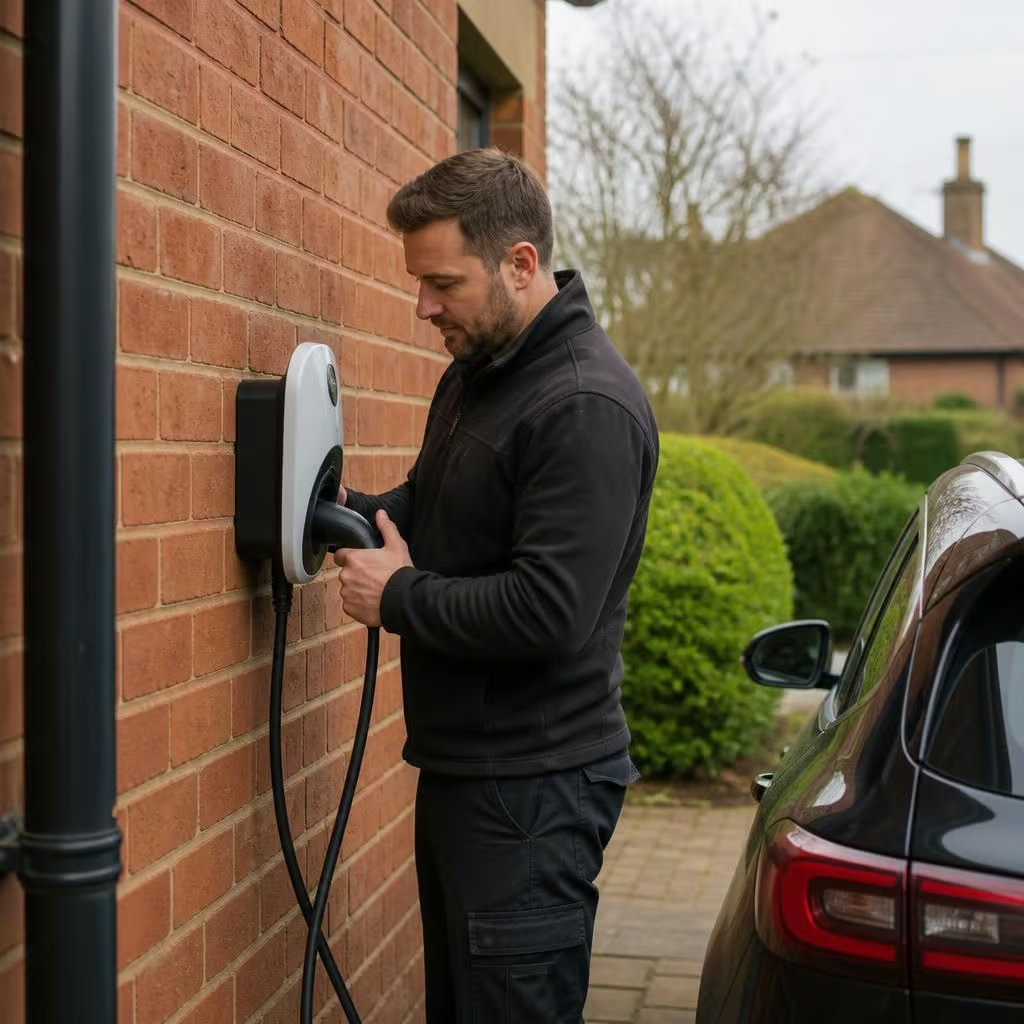
A 7kW charger won’t always deliver 7kW to the car. The vehicle’s own AC charging limit may be lower, so compare the charging rate your car can actually use. We check the car’s requirements against the proposed equipment and electrical supply, then explain any limit before you choose. That prevents you paying more for capacity your vehicle cannot use.