How long does a home EV charger installation take?
A straightforward home EV charger installation is usually completed in one visit. The exact time depends on the cable route, the position of the consumer unit and whether the electrical supply needs upgrading, which we check before quoting.
The main factors are the cable route, the position of the charger and the condition of the existing electrical installation. A straightforward property needs less preparation than one with a long route, limited access or an older consumer unit.
Your parking space may sit close to the consumer unit, or the cable may need to pass through several rooms, an external wall or a loft space. We work out the route before installation and explain where the cable will run. This helps you decide whether a shorter route, a different charger position or surface-mounted containment is the better choice.
If the cable crosses a wall or floor, we agree the access points with you first. We protect the working area, keep drilling and chasing to what is necessary, and make good the immediate installation area. Listed buildings, solid-wall homes and barn conversions can need more careful routing because the construction may limit where cables can go.
The existing consumer unit is another important part of the assessment. Your home may need additional protective equipment, spare capacity or an upgrade before the charger can be connected safely. We identify that work during the electrical inspection rather than discovering it after the charger has arrived.
Where the incoming supply has limited capacity, the charger may need load management. This allows charging to reduce or pause when the home is using a high level of electricity, such as when an electric shower, cooker or heat pump is running. If the supply needs attention beyond the work at the consumer unit, the network operator may also need to be involved, which can add a separate stage to the programme.
Before installation, we consider:
- the distance between the charger and the consumer unit;
- the wall, garage or post where the charger will be fixed;
- the route through the house, loft, garage or outside areas;
- the condition and available space in the consumer unit;
- the capacity of the home’s electrical supply;
- the position of the meter and other electrical equipment; and
- how the charger will connect to Wi-Fi or its monitoring application.
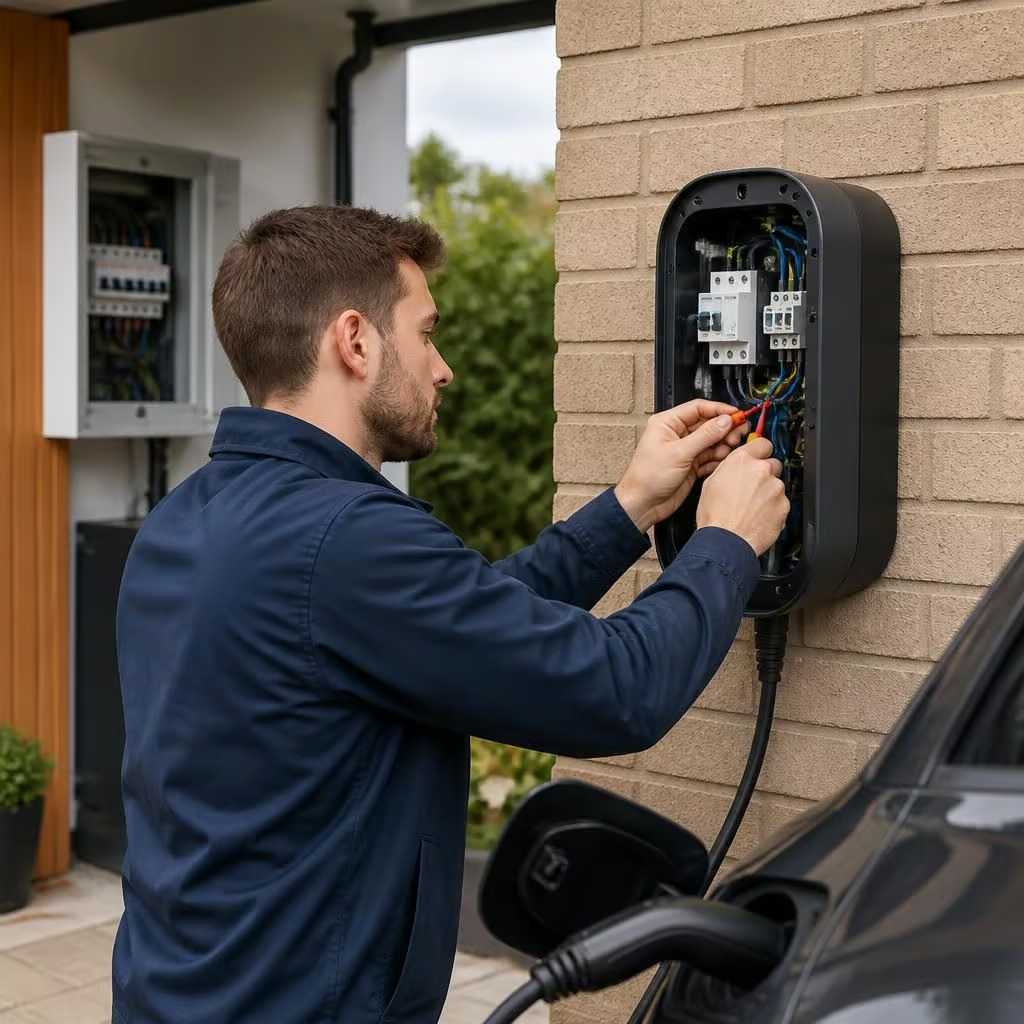
On the installation day, we isolate the relevant circuits, install the cable and protective equipment, fix the charger securely and make the final connections. The engineer then tests the circuit, checks the protective devices and confirms that the charger operates correctly. We don’t treat the charger as ready simply because it powers on; the installation must also be tested and recorded properly.
Your home may need extra time if the cable route involves a detached garage, a driveway crossing or an outbuilding. Trenching, ducting and external containment need to be agreed in advance. Access matters too. Furniture, stored items or locked gates can prevent the engineer from reaching the consumer unit or the proposed cable route.
The charger itself can also affect the work. A unit with app controls, solar charging functions or load management needs additional configuration after the electrical connection. We check the settings with you and explain the controls, so you know how to start and stop a charge and where to see its status.
Electrical work is carried out by our NICEIC- and ECA-registered team. That means the circuit is designed, installed and tested against the requirements for domestic electrical work, with the relevant installation records provided afterwards.
If the survey identifies a problem, we explain what it is before work starts. You receive a written quotation for any additional electrical work, so a longer installation is not presented as an unexpected charge at the end. Once the route, equipment and supply requirements are agreed, we can give you a clearer timescale for the fitting.
Installation involves a temporary interruption to the relevant electrical circuits. We explain which parts of the home may be without power before we begin, so you can plan around the work.
Your charger is not handed over until the circuit has been tested and the controls have been checked. We then show you the basic operation, including how to begin or stop a charge and where to view its status.