Is a smart home EV charger worth the extra cost?
A smart home EV charger can be worth the extra cost if you can use off-peak electricity, solar power or automatic charging controls. If you mainly charge at set times and do not need those features, a simpler charger may be the better-value choice.
The extra cost pays for control rather than faster charging. A connected charger can decide when to charge, respond to electricity prices and coordinate with solar generation. It still charges at the same maximum rate as a comparable 7kW unit, so smart features matter most when they change how and when the electricity is bought.
Scheduled charging
A basic charger can often follow a simple timer. A smart charger can use a charging schedule linked to the vehicle, the charger app or an electricity tariff. That means the car can charge during the hours you choose without relying on a separate timer every day.
This is useful if your car is normally plugged in overnight but doesn’t need to be full immediately. The charger can wait for the cheaper period, then stop before the vehicle is due to leave. You still need to check that the tariff and the charger work together. A tariff’s cheapest period may change, and not every app handles changing prices in the same way.
Remote control and information
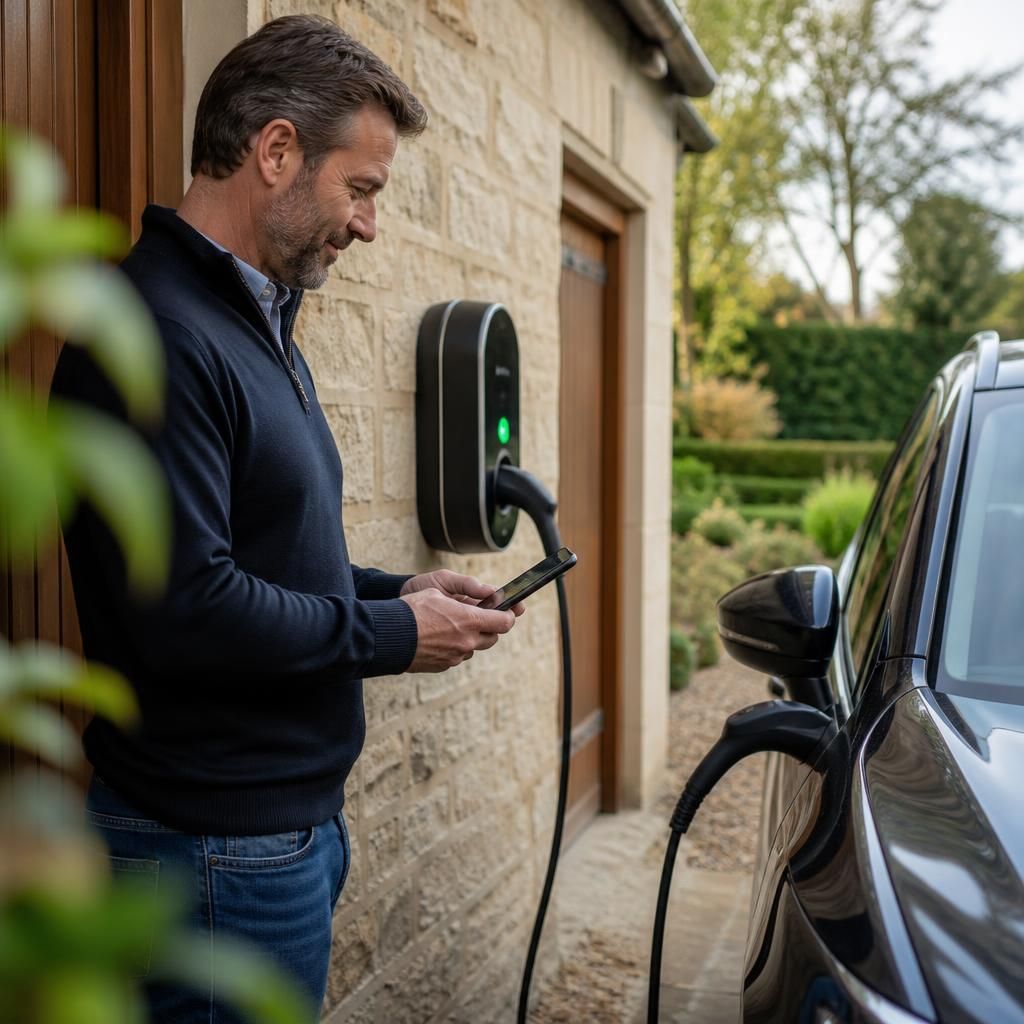
A smart charger gives you an app or online account for starting, stopping and monitoring a session. You can see whether the car is charging, review energy use and check the session history without going to the driveway.
That information can help when you are comparing the cost of home charging with public charging. It can also show whether a schedule is working as expected. The app becomes less useful if the connection is unreliable, so check how the charger behaves when the home internet or the manufacturer’s service is unavailable. A charger should still have a straightforward way to charge the car when smart control is temporarily lost.
Using electricity from solar panels
If your home has solar PV, a smart charger may be able to direct surplus generation into the car. This can reduce the amount of solar electricity sent to the grid, although the result depends on the car’s battery level, household demand and the export terms available to you.
Solar charging needs more than a convenient app setting. The charger must receive reliable information about generation and household consumption, and it needs a setting that prevents the car from drawing more grid electricity than you intend. Some systems can charge from solar only, while others combine solar with grid electricity to reach a target by a chosen time. Ask which behaviour the proposed system provides.
A smart charger doesn’t replace a battery assessment. If a home battery, solar inverter and charger are fitted together, we need to consider how they share available power. Otherwise, the car could charge from the grid while the battery is being charged or discharged in a way that doesn’t suit your aims.
Managing the home’s electrical load
Charging a car can add a substantial load to the electrical installation. A smart charger may include load management, which adjusts or pauses charging when other household demand is high. That can be useful where the supply or consumer unit needs the charging load to be managed carefully.
Load management is not a reason to skip the electrical survey. We still check the incoming supply, earthing, consumer unit, cable route and the proposed charger position. A smart function cannot correct an unsuitable cable, poor earthing or an installation that needs upgrading.
Where the charger is installed at a rural property, the cable route may be longer or may cross an outbuilding or driveway. The extra cost of a connected unit should be considered alongside the installation work, because the charger itself may not be the largest part of the final quotation.
Features that may not justify the price
A smart charger is less compelling when you have a simple driving routine, a standard electricity tariff and no solar generation. If the car is plugged in at the same time each night, a basic timer may provide all the control you use.
Some features sound useful but rarely affect the decision. Usage graphs, notifications and multiple user accounts can be convenient, but they don’t automatically reduce charging costs. The app also needs continued support. Check whether important features depend on a subscription, a separate energy tariff or a particular vehicle connection.
Vehicle compatibility matters too. The car controls some charging functions, while the charger controls others. Check the proposed combination before choosing a unit, especially if you expect to change vehicles or add a second electric vehicle later.
What to check before paying more
- Which charging schedules does the charger support?
- Can it work with your electricity tariff, and does that depend on an app or separate account?
- Can it use surplus solar generation, and can you choose solar-only or mixed charging?
- What happens if the broadband connection, app or manufacturer’s service stops working?
- Is load management included, and what equipment does it require?
- Are there subscription charges for the features you expect to use?
- Will the charger remain useful if you change vehicle or install solar panels later?
The installation still needs to meet the requirements for domestic electrical work, regardless of how many smart features the charger has. Our NICEIC and ECA electrical work covers the assessment, cabling, protective devices and connection, with the controls configured as part of the installation. We provide a written quotation before work starts, so the cost of the charger, additional electrical work and any optional features are clear separately.
For a home with solar panels, a variable tariff or changing charging needs, the extra control can justify the higher purchase price. For a straightforward overnight routine, spending less on the charger and putting the money towards a suitable installation may be the more sensible choice.
If the car is usually away during cheaper tariff periods, or you rarely leave it plugged in, many smart features may go unused. We look at your driving routine, electricity tariff and plans for solar before treating the extra cost as worthwhile.
The useful comparison is the total installed price against the controls you will actually use. We set out the charger, cabling and any additional electrical work separately, so you can decide if automated charging justifies the difference rather than paying for features that will sit unused.