How long does EV charger installation take?
A straightforward home EV charger installation can often be completed in one visit, but the time depends on the cable route, consumer unit and any upgrades needed. We confirm the likely duration after assessing the property, so you know what to expect before booking.
Most domestic EV charger installations are completed in one visit. The time depends mainly on the cable route, the condition of the electrical supply and any work needed before the charger can be connected.
A straightforward installation has a short route between the consumer unit and the charger. If the consumer unit has capacity, the earthing arrangement is suitable and the cable can be run without major building work, the fitting is relatively simple. We still inspect, test and commission the installation before we leave.
Your charger may take longer to fit when it sits on a detached garage, outbuilding or boundary wall. We may need to run cable through a loft, under floors or along an external wall. A long route can also require additional protection, careful cable support or weatherproof containment.
The electrical supply can affect the programme more than the charger itself. An older consumer unit may need upgrading before it can safely supply an EV charge point. We may also need to check the earthing and bonding, available capacity and the position of existing circuits. These points are identified during the assessment rather than discovered halfway through the installation.
Home charging can sometimes be coordinated with solar panels or battery storage. That may require extra connections, monitoring equipment or an agreed charging strategy. We explain what the equipment will do and include the relevant work in the quotation, so the installation time is based on the complete job.
Before booking, we look at:
- the distance between the proposed charger position and the consumer unit;
- whether the cable can be routed internally, externally or underground;
- the condition and capacity of the consumer unit;
- the earthing and bonding arrangements;
- the location of existing services, paving, planting and outbuildings;
- whether the property needs access equipment or trenching; and
- whether solar, battery storage or load management will form part of the installation.
Commercial installations normally need more planning than a single home charge point. Several chargers, longer cable routes, parking layouts and limited electrical capacity can all add work. A landlord, facilities manager or business may also need phased installation, user access controls, load management or paperwork for the property file. We assess the site first and set out the expected programme with the quotation.
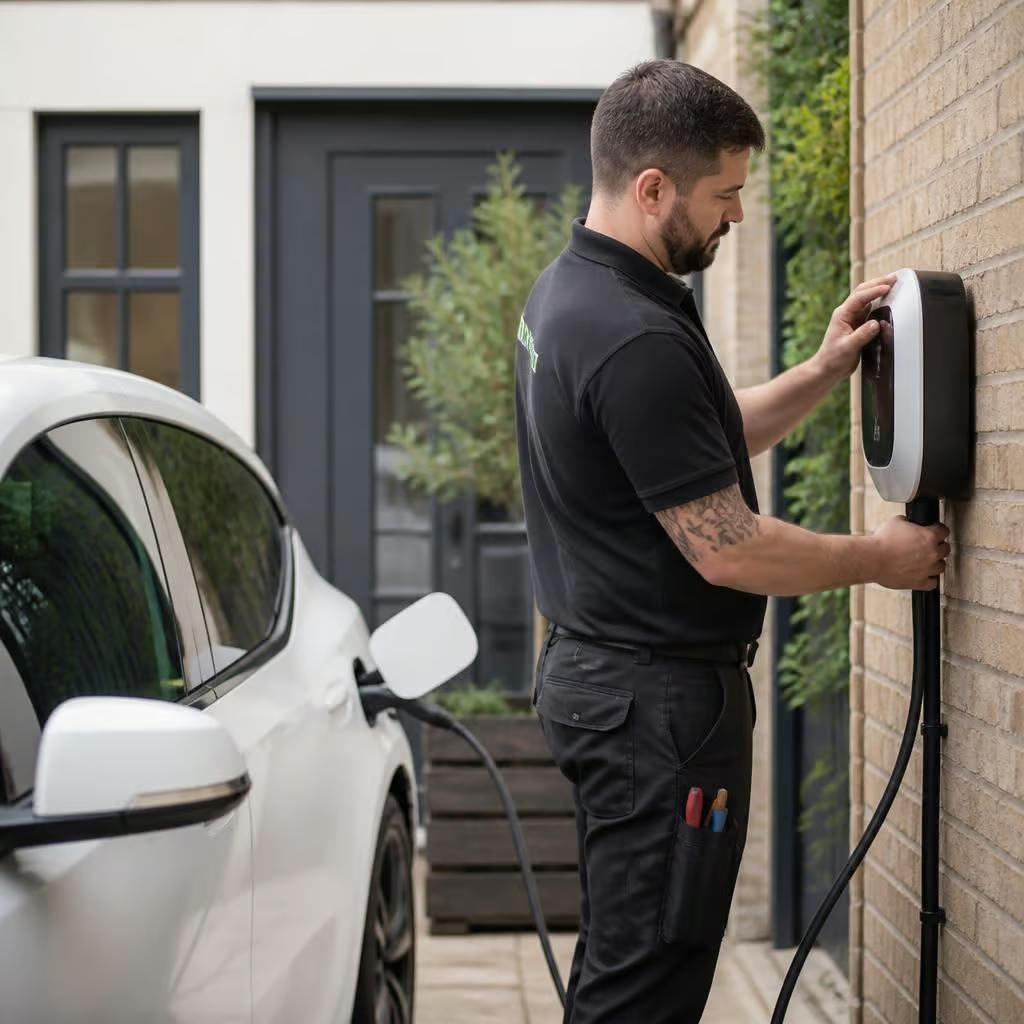
On the day, we protect the working area, install the cable and charger, connect the protective devices, then test the complete circuit. We configure the charger and any app or smart charging functions included in the specification. You’re shown how to start and stop a charge and what to do if the charger reports a fault.
Electrical work is completed and tested by our NICEIC-registered electricians, with the relevant certification provided for the installation. If the existing supply needs attention, we explain why before carrying out additional work. That prevents an apparently quick installation from leaving an unsuitable consumer unit or an unsafe cable route behind.
We confirm the expected duration after assessing the property. Our quotation is issued before work starts, so you can see whether the installation includes consumer unit changes, extra cable work, trenching or other preparation.
The engineer’s time on site is only part of the installation programme. If the charger is on shared land, an approval is needed, or the electricity supply requires a separate application, those steps must be arranged before fitting can begin.
This matters on older homes and properties with unusual boundaries. We identify any permission, access or supply issue during the assessment and explain how it affects the planned date. You can then distinguish between a few hours of installation work and a job that needs preparation beforehand.