
Is a smart EV charger worth buying?
Yes, a smart EV charger can be worth buying if you want to schedule charging, make better use of a time-of-use tariff or coordinate charging with solar generation. If you usually charge at one predictable time and don’t need those controls, a simpler charger may suit you better and cost less.
For many households, a smart charger is worth the extra cost because it gives you control over when and how the car charges. The charger itself does not make electricity cheaper. The value comes from using the right tariff, making use of solar generation and avoiding unnecessary charging at expensive times.
The first benefit is scheduled charging. You can set the car to charge during selected periods instead of starting as soon as it is plugged in. This matters if your electricity tariff has cheaper overnight periods or different prices throughout the day. We look at the tariff, the vehicle’s charging settings and the charger’s app together, because conflicting schedules can leave the car charging at the wrong time.
A smart charger can also show charging activity remotely. You may be able to check whether the car is connected, see how much electricity it has used and stop or start a session from an app. That is useful when the car is parked away from the house or when you want to check that it has charged before a journey.
Smart charging becomes more useful when you have solar panels. A compatible charger can be set to use surplus solar generation rather than sending all of it to the grid. The exact result depends on the size of the solar system, the weather, the time of day and how much charge the car needs. Solar generation will not always cover the full charging load, so the settings need to allow for electricity from the grid when necessary.
If you have a home battery, the controls need more care. A charger set to use surplus solar could draw electricity from the battery once the panels stop producing enough. We check how the solar inverter, battery and charger communicate, then set the controls around the way you want the energy to be used. That might mean prioritising the home, the battery or the car.
Some smart chargers can manage the electrical load in the property. This is useful where the cooker, immersion heater, heat pump or other high-demand equipment could operate at the same time as the car. Load management reduces the risk of the charger taking more power than the property’s supply or wiring can safely support. It may also avoid unnecessary changes to the incoming supply, although we confirm that during the electrical assessment rather than assuming it will apply.
Smart control does not increase the car’s maximum charging speed. The speed still depends on the vehicle, the charger rating, the electrical supply and the cable. A smart charger mainly changes when charging happens and how the electricity is managed.
The extra features are less valuable if you charge infrequently, use a flat electricity tariff and have no solar system. A simpler charger may then do everything you need. Paying for smart functions only makes sense if you will use the scheduling, monitoring or energy-management controls.
Check the ongoing costs as well as the purchase price. Some chargers include their main controls without a subscription, while others may link certain features to an app, energy tariff or service plan. The charger should still provide a sensible way to charge if the internet connection fails. We explain what will continue to work locally and what depends on the app or cloud service.
The electrical condition of the property also affects the decision. An older consumer unit, limited spare capacity, an unsuitable earthing arrangement or a long cable route can add work to the installation. Those issues are not caused by the charger being smart, but they need resolving before any EV charger can be used safely. We assess the consumer unit, cable route, protective devices and earthing before recommending equipment.
On a rural or older property, the cable may need to pass around outbuildings, across a long drive or through an area with limited access. We explain the route and any additional work before installation. A dedicated circuit is normally required, and the finished electrical work needs the appropriate inspection and certification. Our NICEIC-registered and ECA-accredited electricians carry out the assessment and installation as electrical work, rather than treating the charger as a standalone appliance.
A smart charger is not automatically the best choice for every home. It is more likely to earn its place when you have a suitable time-of-use tariff, solar panels, a battery or a need to control several high-demand appliances. If none of those apply, the main advantage may be the app and scheduled charging rather than a change to your electricity costs.
We can work out the practical value from your car, tariff, solar or battery system, parking arrangement and existing electrics. The recommendation should leave you with controls you will actually use, a safe cable route and a clear price for the work before it starts.
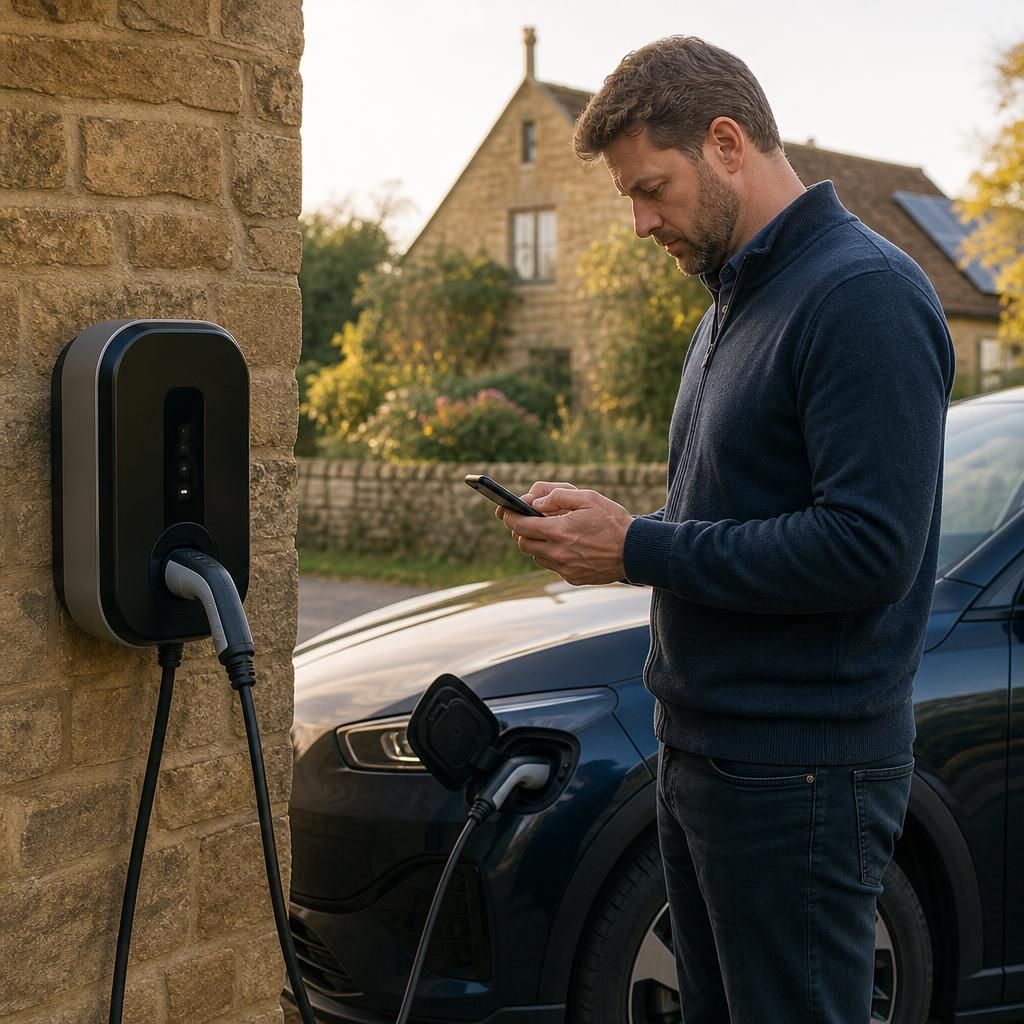
If the charger relies heavily on an app, check what happens when the internet connection or manufacturer service is unavailable. You should still be able to start a basic charge locally, without losing access to the car.
Before choosing, check whether tariff integration, remote control or software updates cost extra. We explain which features work through the charger itself and which depend on an app, account or cloud service, so you can judge the ongoing value rather than only the purchase price.
Find out whether a smart EV charger suits your home
Tell us about your car, electricity tariff, solar or battery setup and parking arrangement, and we’ll assess whether smart charging is worth the extra cost at your home. We’ll explain the suitable options and provide a written quotation before work starts.