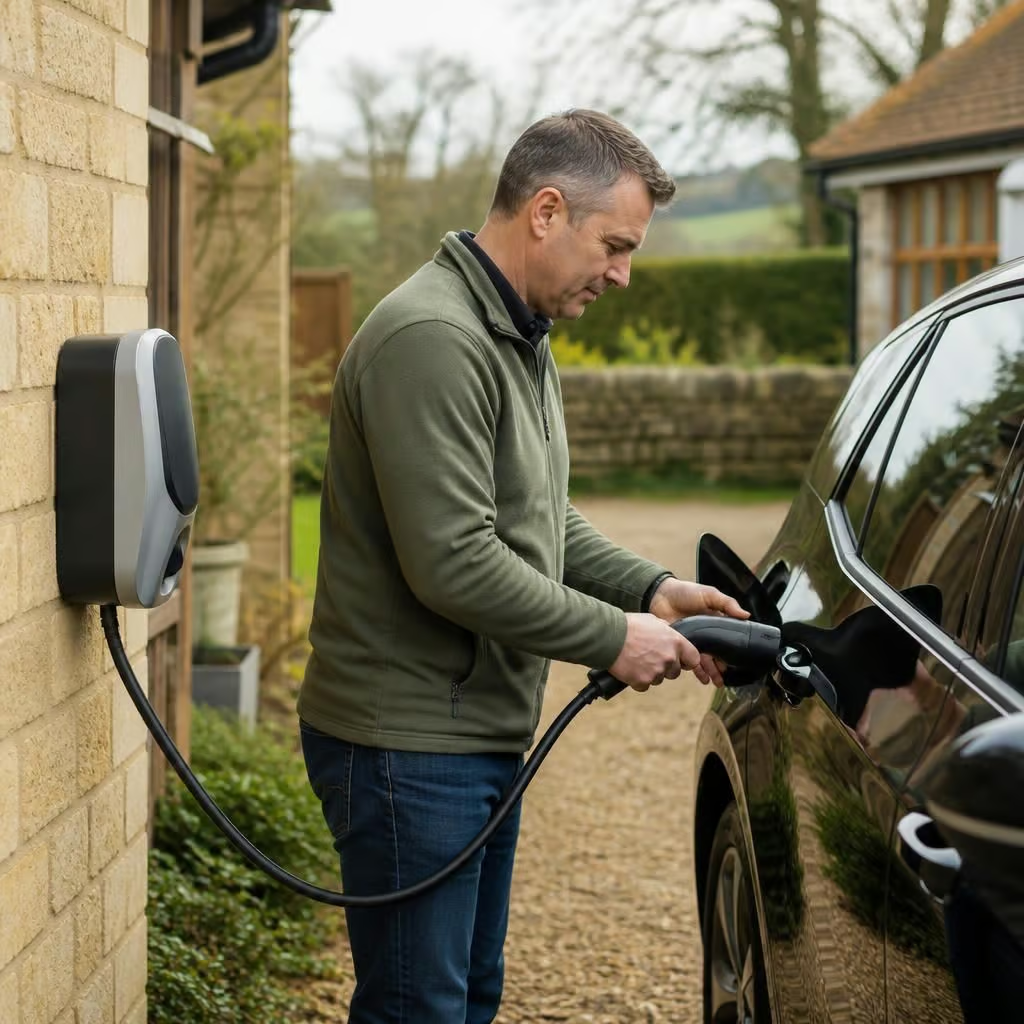
Should I buy a tethered or untethered EV charger?
A tethered charger has its own attached cable, so charging is quick and convenient, while an untethered charger has a socket and lets you use a separate cable. Choose tethered for everyday simplicity; choose untethered for a tidier appearance and greater flexibility if you change cars.
For a car that charges at the same home most nights, a tethered charger is usually the simpler choice. An untethered charger makes more sense when you want a cleaner wall, need to use different cables, or regularly charge more than one vehicle.
Choose tethered if convenience matters most. The lead is already connected to the charger, so you can park, take the connector from its holder and plug in. There is no cable to remove from the boot or store after each charge. This suits a private driveway where one car normally uses the charger.
The cable still needs somewhere safe to rest when it is not in use. A wall hook or charger-mounted holder keeps it off the ground and prevents it crossing a footpath. If the parking space is some distance from the wall, check the cable length before choosing the unit. A short cable can make an otherwise suitable charger awkward to use.
Choose untethered if you want flexibility. The charger has a socket instead of a permanently attached lead. You connect the cable when you charge, then remove it and store it in the car or indoors. That leaves the wall looking neater and avoids a loose cable hanging outside between charges.
An untethered setup can also suit a household with two electric cars using different charging cables. You may still need to move the cable between vehicles, but you are not committed to the lead attached to the charger. It is also useful if you often charge away from home and want to keep the same cable in the car.
Check what your car can use before comparing the charger. Most home AC charging uses a Type 2 connection, but we confirm the vehicle’s inlet and the cable rating before installation. A cable must support the current supplied by the charger, and the car may accept less power than the charger can provide.
The tethered or untethered design does not decide how quickly the car charges. The charging rate depends on the vehicle, the charger, the cable and the available electrical supply. Paying more for a different cable arrangement will not make a car charge faster if the vehicle limits the rate.
Think about security and storage. With a tethered unit, the lead remains outside unless you coil it away after every charge. The connector normally locks into the vehicle during charging, but the cable still needs sensible storage when it is not connected.
With an untethered unit, the cable is removable. That keeps it out of sight when stored indoors or in the boot, but you must remember to take it to the charger. Leaving a detachable cable outside can expose it to damage, theft and avoidable weathering. A lockable cable storage point may be worthwhile if the charger is in a shared or exposed area.
Look at the way you park, not just the charger wall. A tethered lead works well when the charging point is close to the vehicle’s usual charging position. It becomes less convenient if you sometimes reverse in and sometimes drive in, or if two parking spaces sit at different angles.
An untethered cable can offer more freedom over how you connect, provided it reaches the car without running across a walkway. We plan the charger position and cable route so the lead does not create a trip hazard or need to pass through a doorway. A longer cable may help, but it also needs careful handling and storage.
Consider the appearance of the installation. A tethered charger has a visible lead and connector, even when the car is away. On a front elevation or a period property, that may be an important consideration. An untethered charger gives a simpler finish between charges, although the socket and its cover remain visible.
The best-looking option is not always the easiest one to live with. If the charger is beside the parking space and you charge every evening, the attached lead may save more effort than the untethered socket saves in appearance. If the charger is visible from the house or road, storing a detachable cable may be the better compromise.
Do not assume untethered means cheaper overall. Compare the charger, the cable and the storage arrangement together. Some cars come with a suitable charging cable, while others may require you to buy one separately. A tethered charger includes its lead, but replacing a damaged attached cable may be less straightforward than replacing a separate cable.
The electrical work is broadly similar for both types. We check the consumer unit, earthing arrangements, cable route and distance to the parking space before recommending a position. Older houses, outbuildings and long driveway runs may need more planning than a charger fitted beside a modern consumer unit.
That assessment matters more than the choice of tethered or untethered on a rural property. A detached garage may need a different cable route, and an older supply may need electrical work before it can support the charger safely. Our NICEIC- and ECA-registered electricians explain any required changes before work starts and provide a written quotation.
Our practical recommendation: choose tethered for the least handling at a dedicated home parking space. Choose untethered for a tidier installation, a shared parking arrangement or regular use of the cable with different cars. If you are undecided, we can assess the parking layout, vehicle connection and cable route before you commit to the charger type.
If the charger is used by someone who finds a heavy cable awkward to lift, the difference is worth considering. A tethered lead removes the need to take a cable from the boot, while an untethered setup means lifting and connecting a separate lead each time.
We can position the holder or socket at a practical height and check that the lead reaches the car without sharp bends. That small detail makes daily charging easier, particularly when the charger is mounted on an outbuilding or beside a narrow parking space.