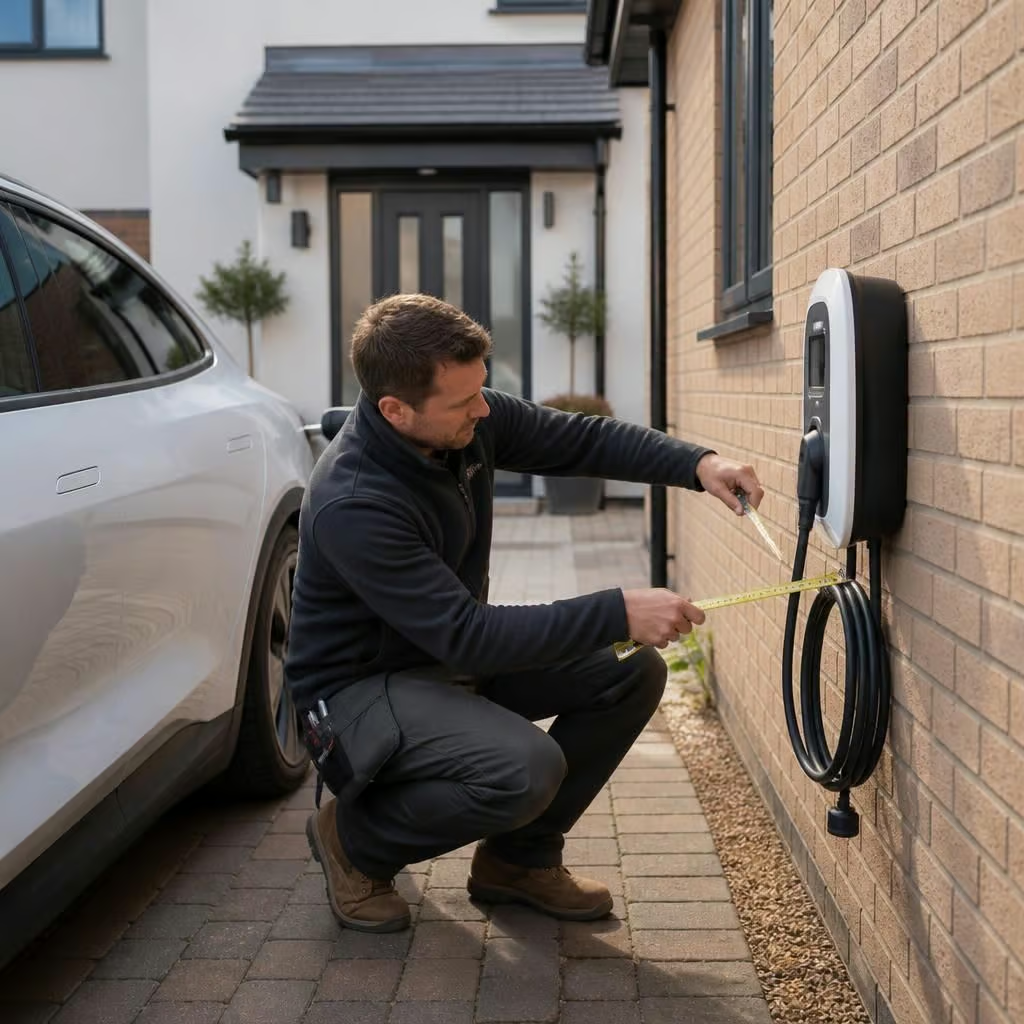
What information should I provide before buying an EV charger?
Before choosing an EV charger, provide the car’s make, model and battery requirements, along with your parking arrangement and where you want the unit installed. Details of the property’s consumer unit, electricity supply, cable route and existing solar or battery system help us recommend suitable equipment and plan the installation.
The useful information goes beyond the charger itself. Before choosing a model, gather details about how you drive, how you want to charge, the property’s existing electrical equipment and any renewable technology already installed. That lets us recommend a charger that fits the way you use the car, rather than choosing on appearance or maximum power alone.
Start with how you use the car. Tell us roughly how many miles you drive, when the car is usually at home and whether you need a full battery by a particular time. A driver who charges overnight has different requirements from someone who needs flexible daytime charging. The car’s battery size and maximum AC charging rate also matter. A charger with a higher advertised output cannot make the car charge faster than the car allows.
Give us the vehicle’s exact make, model and variant. Charging requirements can differ between versions of the same car. If you have more than one electric vehicle, include both vehicles and explain whether they may charge at the same time. That affects the equipment and the way we manage the available electrical capacity.
Explain how you want the charger to work. You may want scheduled charging, control from a phone, access to cheaper electricity periods or the ability to limit the charging load when other appliances are running. Tell us which of these matter to you before you buy. A smart charger is useful only when its controls suit your tariff, routine and home internet connection.
If you have solar panels or a battery, include the make and model of the existing system if you know it. We can then consider whether the charger should work alongside that equipment, rather than treating the car as a completely separate load. Solar charging also depends on how you want to use the electricity: you may prefer to charge from surplus generation, charge from the grid at selected times, or use either depending on the conditions.
Tell us about the property and its electrical history. The age of the consumer unit is useful, but so are any recent electrical works, previous inspection findings and known issues with earthing or protective devices. Mention additions such as an extension, outbuilding or existing high-load equipment. An induction hob, electric heating, immersion heater, hot tub or battery can all affect how much demand the installation needs to manage.
If the property is divided into flats, has a shared supply or is supplied through a private network, say so before an installation is planned. The electricity arrangement may need agreement from a landlord, managing agent, freeholder or network operator. A rented home may also require written permission from the property owner.
Bring the practical information that affects approval. If the property is listed, in a conservation area or subject to a lease, check whether restrictions apply to equipment mounted on the building. Tell us about any planning conditions or management rules you already know about. We can then take those constraints into account before you commit to a charger or installation position.
For a workplace, shared parking area or small commercial site, provide the number of vehicles, the number of spaces and who will use the chargers. Details of access control, billing, visitor charging and future expansion can change the right arrangement. A home charger and a shared charging installation should not be planned in the same way.
Information we normally confirm before work starts
- the car or cars to be charged and their charging limits;
- your usual charging times and any preferred tariff or schedule;
- whether you want app control, load management or solar integration;
- the existing solar PV, battery or other generation equipment;
- the electrical alterations already carried out at the property;
- any restrictions linked to ownership, a lease, planning or shared access; and
- who will approve the work and receive the electrical paperwork.
We use that information to decide whether the proposed charger is suitable, whether the supply needs additional protection or load management, and what installation work is involved. If the existing electrical equipment cannot safely support the proposed arrangement, we explain the necessary upgrade before work begins rather than adding unexpected work later.
Our NICEIC- and ECA-registered electrical team checks the installation against the property and the vehicle, not just the charger specification. You receive a written quotation before work starts, setting out the equipment and work included. The completed installation comes with the relevant electrical certification and instructions for using the charger.
Having this information ready does not commit you to a particular charger. It gives us enough context to compare suitable options, identify restrictions early and explain what the installation will involve before you make the purchase.
The best charger position depends on how the car sits on the drive, not simply on the nearest wall. A cable that crosses a path or has to stretch around the car can become awkward to use. Send us a photo showing the parking space, the house wall and the route between them. We can then discuss a position that keeps the cable manageable and avoids unnecessary surface work.
Include any gates, outbuildings, narrow side passages or changes in level along that route. These details affect how we protect and support the cable, and whether we need to run it through a wall or around the outside of the property. Sorting this out before you choose the charger helps prevent a model being bought for a position that cannot be used safely.