Where can an EV charger be installed on my property?
An EV charger can usually be installed on a driveway, inside a garage or beneath a carport, provided the cable can reach where you park. We check the parking position, cable route, mounting surface and electrical supply before recommending the safest practical location.
The best position is close to the space where you park, with a cable route that stays on your property and avoids trip hazards. We consider the charger’s connection to the car, the wall or structure supporting it, the electrical supply and how the cable will reach the charging point before we recommend a location.
Driveways and parking spaces
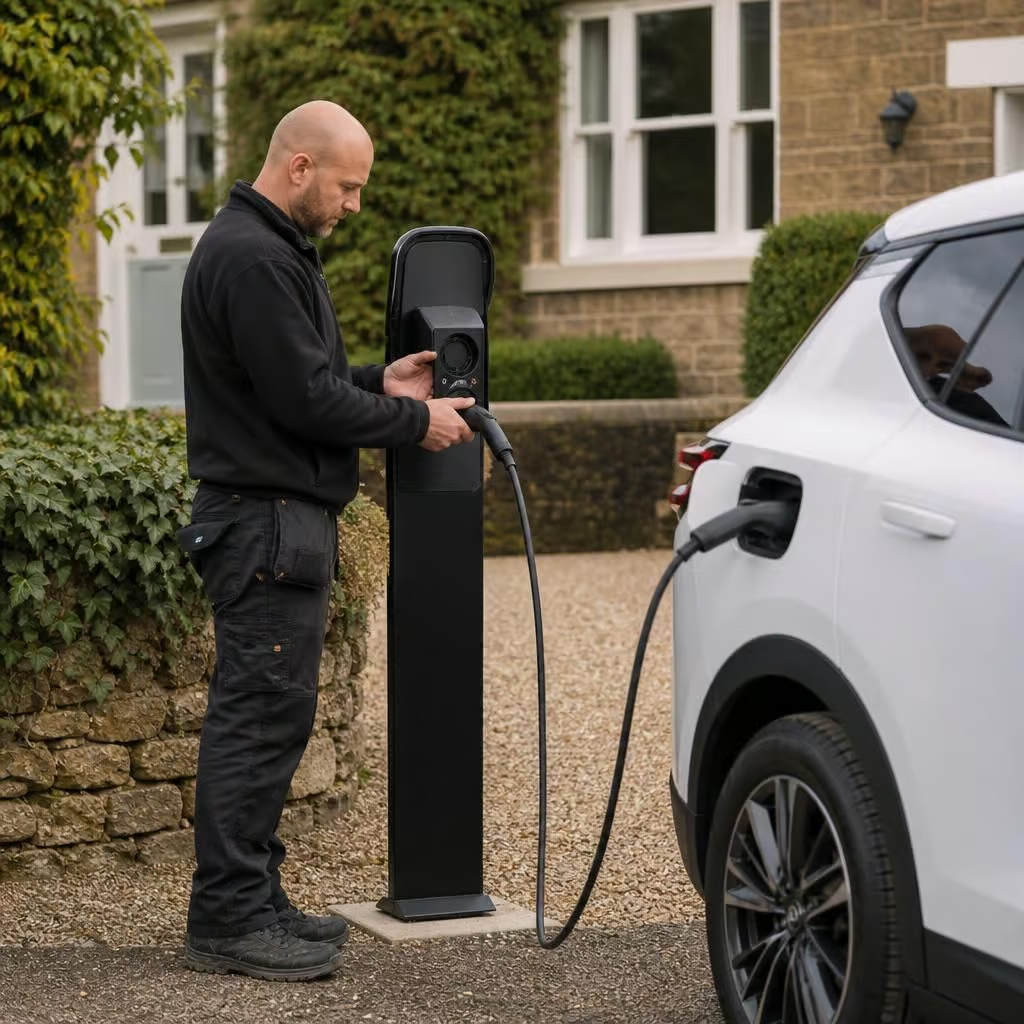
A driveway is usually the simplest arrangement when the charger can be fixed beside the parking space. The position needs enough clearance for the car, the charging cable and access to the charger controls. We also check that the cable will not cross a path or become trapped under wheels.
If the car is not always parked in exactly the same place, a position at the front or side of the house may work better than one at the rear. We look at where the vehicle’s charging socket sits, so the cable reaches without being stretched across the car or left across a walking route.
Garages and outbuildings
A garage can keep the charger protected from direct weather and may provide a shorter internal cable route. The wall must leave enough room to connect the car safely, and the garage supply must be suitable for the charging load. An older garage circuit may need changes before it can support an EV charger.
A detached garage, workshop or other outbuilding needs separate consideration. We assess how the building is supplied, how the cable can run between the property and the charger, and whether the route needs protection from vehicles, gardening equipment or future building work. We do not assume that an existing outbuilding socket can supply an EV charger.
External walls and carports
An external wall can be suitable when it faces the parking area and provides a solid fixing point. We choose a position that keeps the charging lead manageable and protects the unit from knocks. A carport can also work if its structure is strong enough and the installation remains accessible for inspection and use.
Outdoor equipment must be installed in a position appropriate for exposure to rain, frost and sunlight. We keep the cable route neat and protected, rather than leaving loose cable along the ground or around a corner where it could be damaged.
When the charger is not beside the parking space
Some homes have parking at the end of a garden, behind a side gate or away from the main building. In these cases, we plan the route before deciding on the charger position. The cable may run through a wall, along a suitable surface or below ground, depending on the property and the distance involved.
A buried route may require excavation and reinstatement of paving, gravel or planting. We explain any likely disruption before work starts. If the route would cross a public pavement, shared access or land that is not yours, we need to consider a different arrangement rather than leaving a charging lead across it.
Older and unusual properties
Solid walls, listed buildings, barn conversions and properties with later extensions can make the cable route less straightforward. We work around the construction of the building where possible, while avoiding damage to vulnerable finishes or historic fabric. A listed or protected property may also need additional consent for external equipment, so the proposed position should be checked before installation.
Shared drives and converted buildings need agreement about both the equipment and the cable route. If the parking space is communal or the charger would be fixed to a shared wall, we identify who needs to approve the work before a position is confirmed.
What we check before fixing the charger
- where the car can park without the cable crossing a footpath or access route;
- whether the wall, post, garage or carport can support the charger securely;
- how the cable will enter or pass around the building;
- whether the existing electrical installation can support the charger safely;
- how the cable will be protected from vehicles, weather and accidental damage; and
- whether access, shared ownership or the character of the property affects the proposed position.
The position may change after we see the actual route and electrical installation. A charger that looks convenient from the parking space can become impractical if the cable would cross a doorway, require excessive surface damage or leave no safe place to handle the lead. We set out the recommended route and any work needed in the written quotation before installation starts.
Electrical work for the installation is carried out by our NICEIC-registered electricians, with the relevant testing and certification completed when the charger is installed. Alderminster Group advises homeowners across Warwickshire, Oxfordshire, Gloucestershire and the North Cotswolds on practical charger locations for both modern and older properties.
If your parking space is on private land but no suitable wall faces it, we can assess a dedicated mounting post instead. The post needs a stable base and a protected electrical route, with enough room to connect the car without blocking access.
Homes without private parking present a different problem. A charging lead must not be left across a public pavement or shared access route, even if the charger is fixed to your house. We explain where the property boundary ends and identify whether a safe, permitted arrangement is possible before recommending a position.