
Which EV charging network standards should your charger support?
Choose a charger with an open OCPP connection, a standard Type 2 socket or tethered cable, and smart-charging support. ISO 15118 is useful for newer features such as Plug & Charge and vehicle-to-grid, but your car and chosen network must support them too.
The most useful standard for a networked EV charger is OCPP, preferably with a clear upgrade path to OCPP 2.0.1. It lets the charger communicate with a management platform rather than being permanently tied to one service. For a business installation, OCPI support can also matter because it allows charging platforms to exchange information about users, tariffs and sessions.
Your charger may look like a simple electrical appliance, but several separate standards sit behind a networked charging service. They govern communication with the charger, communication between charging platforms, the conversation between the vehicle and charger, and the way energy use is measured.
OCPP connects the charger to its management platform. Open Charge Point Protocol carries information such as start and stop commands, charging status, energy readings, fault messages and software updates. OCPP 1.6J is widely used and can be suitable for many home and commercial installations. OCPP 2.0.1 adds more detailed device management, transaction records, security features and support for newer charging functions.
The version alone does not tell you everything. A charger can claim OCPP support while allowing only a limited set of functions. We check which features are available, whether the platform accepts third-party chargers, and what happens if you later change the network operator. A genuinely open arrangement should not leave important controls locked behind one provider.
OCPI is mainly relevant when several charging platforms need to work together. It supports roaming between operators by sharing details such as charge-point availability, tariffs, location data and charging sessions. This is more important for workplaces, landlords, fleets and public-facing sites than for a private home charger. A home user normally needs a reliable management app rather than roaming across multiple networks.
Your site may need more than remote start and stop controls. A commercial operator might need separate user accounts, usage records, tariff rules, access restrictions and reports for each vehicle or tenant. We identify those requirements before recommending the charger and its platform, because a unit that works well for one household may not provide the records a managed property needs.
ISO 15118 governs a more advanced conversation between the vehicle and charger. It can support automatic identification, commonly called Plug & Charge, and may support more advanced energy functions where both the vehicle and charger are capable. It is not essential for every installation. A charger can still authenticate a user through an app, RFID card or another access method.
Plug & Charge also depends on the vehicle, charging service and digital certificates, not just the wall-mounted unit. Ask who manages those certificates, how they are cancelled if an account changes, and whether the chosen platform supports the vehicle functions you intend to use. Treat vehicle-to-grid charging as a separate requirement rather than assuming that ISO 15118 automatically provides it.
IEC 61851 deals with the basic control and safety relationship between the vehicle and charger. It helps manage the permitted charging current and confirms that the vehicle is connected correctly. This is different from OCPP: IEC 61851 helps the car and charge point charge safely, while OCPP allows the charge point to communicate with software over a network.
Security standards matter as much as compatibility. The charger should use encrypted communication, individual credentials and secure software updates. We also look for a documented process for changing passwords, removing former users and responding to a lost access card. A charger connected to a home Wi-Fi network should not rely on an unprotected default password.
Your internet connection may be unreliable in a rural property, garage or outbuilding. We check the signal at the proposed charger position and establish what remains available if the online service is temporarily unavailable. Local charging should not depend on an app responding to every button press. Network failure should not create an electrical fault, and the charger should return safely to normal operation when communication is restored.
Metering standards become important when someone needs to charge for electricity. A home user may only need an accurate energy history. A landlord, workplace or fleet operator may need readings that can support invoices or recover costs between users. We check whether the charger provides the required meter data and whether that data can be exported in a usable form. An app showing an energy figure is not automatically the same as a meter suitable for billing.
Smart charging should also work with the rest of the electrical installation. Your property may have solar panels, a battery, an electric heating system or a restricted electricity supply. We assess the consumer unit, cable route, earthing and available capacity before choosing how the charger will limit or schedule its load. The network platform then needs to interpret those settings correctly rather than treating the charger as an isolated load.
For a home charger, we usually prioritise a stable OCPP arrangement, secure access, clear energy records and a usable fallback when the internet is down. For a business site, we add user management, roaming or platform integration, tariff control, reporting and suitable metering. The right standard is therefore the one that supports the way the charger will actually be used, not the longest list on a product sheet.
Before installation, ask for the exact OCPP version, the functions enabled by the proposed platform, the arrangements for software and account ownership, and any costs for keeping the network service active. We can then match those requirements to the electrical survey and leave you with a charger that is workable to operate, not merely compatible on paper.
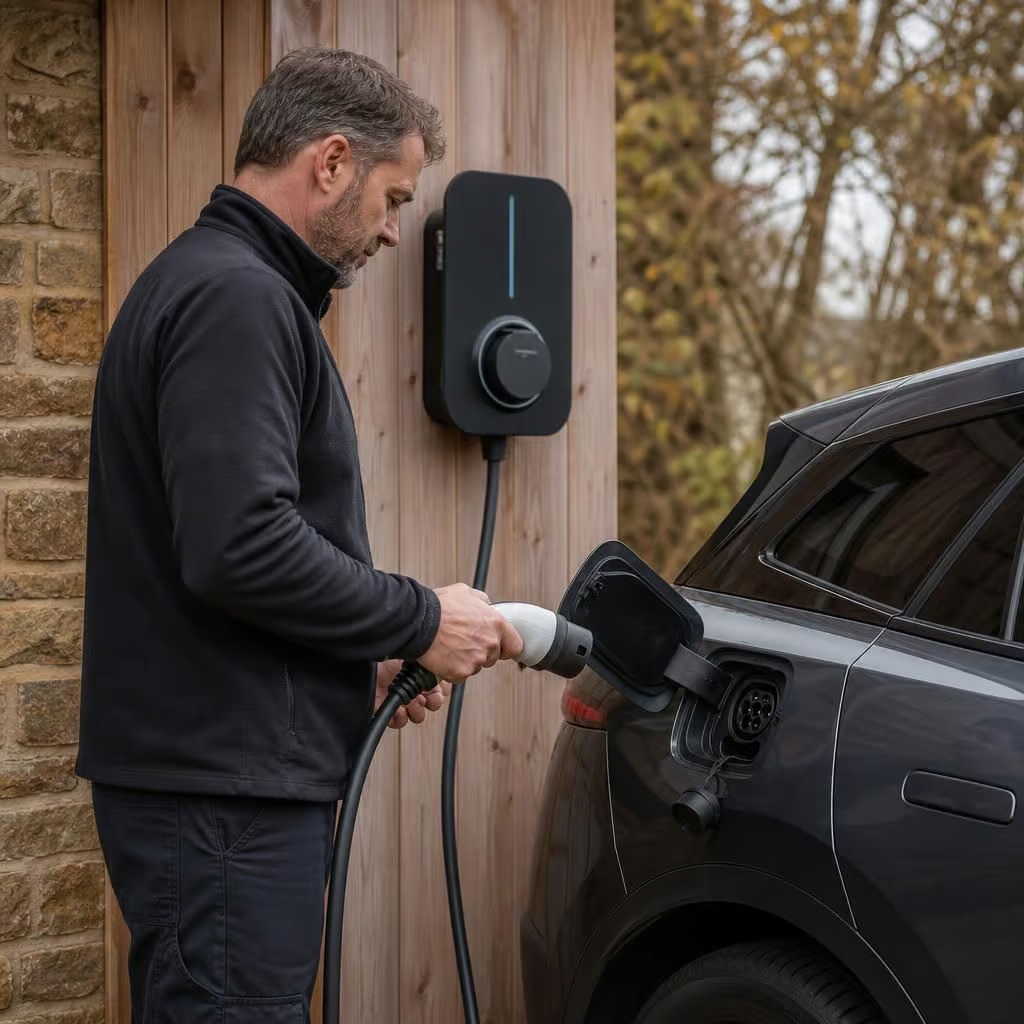
Your charger can support the right network protocols and still need the correct physical connection for your car. We check the vehicle’s charging inlet before specifying the unit, rather than treating software compatibility as the whole answer.
For home charging, you may choose a tethered cable for convenience or a socketed unit if you want to use different cables later. We also consider where the cable will be stored and whether its length suits the parking position. That leaves you with a charger that works with the vehicle you have, without making the network standard do a job it cannot do.