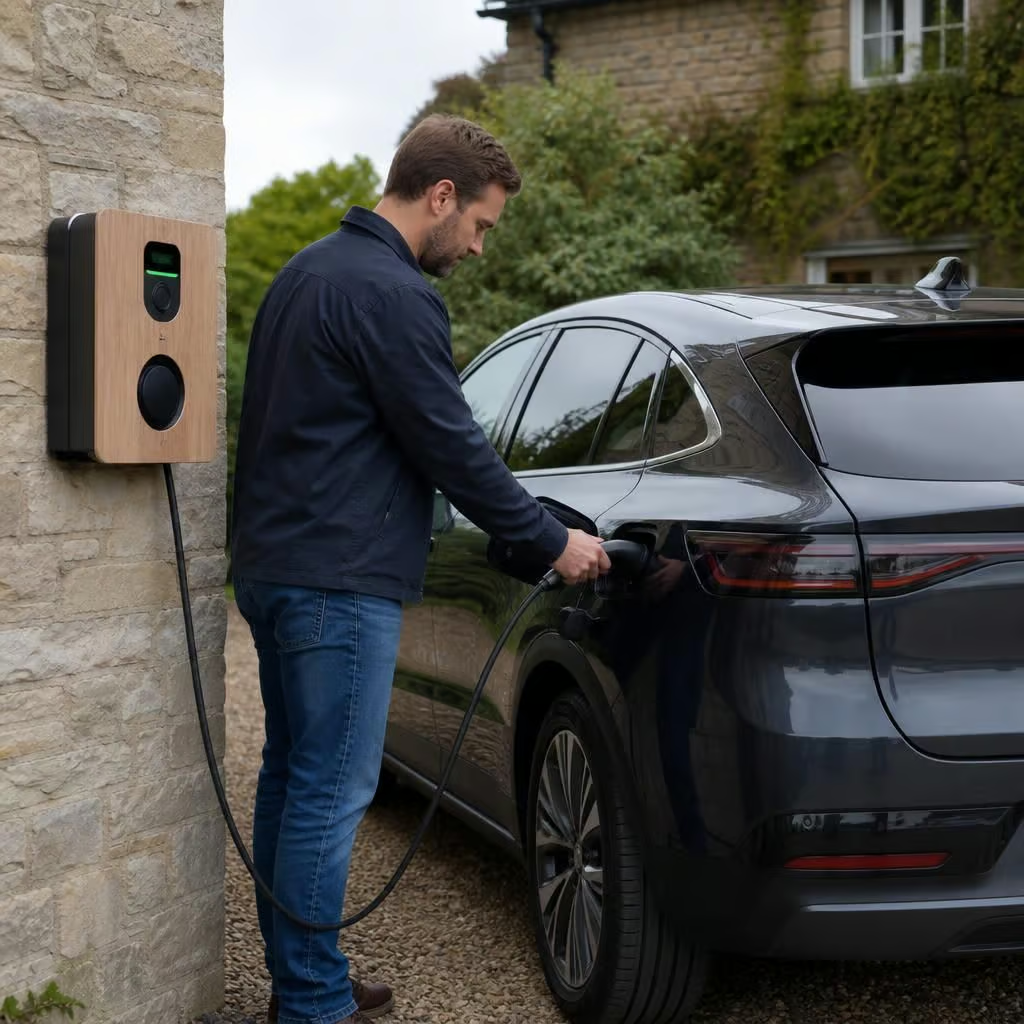
Will the chosen EV charging network remain suitable if you change cars?
Usually, yes: most home EV chargers can charge different electric cars, but the available speed, app features and smart-charging functions may vary between vehicles. Before you choose a network, we check the charger’s connector, software compatibility and likely future requirements so changing cars doesn’t leave you with a system that no longer suits your needs.
Most EV charging networks will remain usable when you change cars, but their long-term suitability depends on how the network handles accounts, charging hardware and vehicle-specific features. A network that works well with one car may offer a different experience with another if the new vehicle uses different charging functions or needs longer sessions.
A public charging account is usually linked to the driver rather than one particular vehicle. That means you can normally keep the account, payment details and charging history after changing cars. Some operators also link registration numbers, vehicle details or membership benefits to the account. You may need to update those details before using a new car.
This matters particularly when a network offers discounted rates, fleet access or automatic vehicle recognition. If the old car remains registered, a session may fail to identify the new vehicle correctly or the wrong tariff may apply. Check how easily the operator lets you add, remove or replace vehicles.
The charging point at home is a separate consideration. A wall-mounted charger is not normally locked to the car that was used with it. However, a tethered unit has a permanently attached cable, so its connector must suit the replacement vehicle. An untethered unit lets you use the cable supplied with each car, which can be more flexible when a household changes vehicles or has two different EVs.
We also look at the charger’s control system rather than assuming the existing unit will provide every feature on a replacement car. Firmware, load management, tariff integration and vehicle data links may affect scheduled charging or automatic control. A new vehicle may support features that the existing charger cannot use, or the charger may offer functions that the new vehicle does not accept.
Smart charging is a good example. The car, charger, energy tariff and network platform all need to communicate correctly for automatic scheduling to work as intended. Changing the car may mean reconnecting the vehicle account, granting permissions again or choosing a different control method. The charger may still provide ordinary charging even when a particular smart feature is no longer supported.
Charging speed can also change the practical value of a network. A replacement car may accept power at a lower rate than the charger can provide, so a higher-powered session will not necessarily be faster. Another car may have a larger battery and spend longer at a charging point. The network remains available, but the time and cost of each visit may change with the vehicle.
Pricing arrangements deserve a fresh check before committing to a long subscription. A monthly plan that suited a car with frequent long journeys may not suit a replacement used mainly for local trips. Look at the operator’s current session charges, membership conditions, roaming arrangements and cancellation rules. These terms can change independently of the car.
Some newer functions depend on several compatible parts. Plug and Charge, vehicle-to-home use and vehicle-to-grid export all require support from the vehicle as well as the charger and network platform. Changing cars can remove access to one of these functions even though the account and physical charger remain in place. Treat these features as vehicle-dependent rather than assuming they transfer automatically.
Before changing vehicles, check:
- how the replacement vehicle is added to the charging account;
- whether the existing cable or home charger suits the new vehicle;
- which smart-charging functions work with that vehicle;
- whether any subscription, discount or fleet arrangement must be changed;
- whether the charger needs a firmware update or configuration change;
- whether the network’s terms allow you to keep the account when the old car is sold or returned.
If a home charger was installed for an earlier EV, we can check the unit, cable, protective devices and load-management settings before the replacement car arrives. That identifies whether a simple configuration change is enough or whether the charger needs upgrading. Our electrical work is covered by NICEIC and ECA standards, so the assessment includes the installation as well as the vehicle connection.
The safest choice is a network and charger that do not depend heavily on one vehicle, one manufacturer or one short-term tariff. Clear account controls, widely supported charging arrangements and replaceable cables make a future change simpler. No network can guarantee compatibility with every future vehicle feature, so check the specific car and charger combination before signing up or replacing equipment.
If you’re installing a home charger before changing cars, ask us to assess the electrical capacity and cable route for the property you have now. We can position the unit and set the load management around the existing supply, so a replacement car doesn’t automatically mean redoing the installation.
The car will still control how much power it accepts. We explain which parts belong to the vehicle and which belong to the charger, so you know what should carry over and what may need changing when the new car arrives.