
Can an EV charger be installed where I park at home?
Usually, yes. We assess where you park, the cable route, the available electrical supply and how the cable will reach the car safely, then recommend a wall-mounted charger or dedicated post where appropriate.
The parking arrangement matters as much as the charger itself. A practical installation leaves the charging cable clear of doors, wheels and walking routes, while keeping the charger protected and accessible.
Driveways and forecourts
A driveway beside the house is usually the simplest arrangement. We can position the charger on a suitable external wall, with the cable entering from behind or through the wall rather than hanging across the front of the property. The final position depends on where the car normally sits, the wall construction and the route back to the electrical equipment.
If the parking space is in front of a side entrance, gate or garage door, the charger needs careful positioning. A cable that crosses a doorway or lies where people walk will become a nuisance and a trip risk. We look at how the space is used in practice, not just where the car sits during the survey.
Where the charger cannot go directly beside the parking bay, we can consider a longer cable route or a suitable mounting arrangement. The route still needs protection from vehicles, garden equipment and accidental impact.
Garages and carports
A garage can provide a tidy location, particularly if the car is parked inside overnight. We check whether the charger can be mounted without interfering with the garage door, storage or vehicle doors. The charging lead also needs enough room to reach the car without being trapped or sharply bent.
For a carport, the charger may be mounted on a wall, post or another suitable structure. The equipment must remain protected from impact and weather, and the cable route must be fixed securely. A detached garage or outbuilding may need a longer cable run, with the route assessed for underground or external installation.
Parking away from the house
A parking space at the end of a garden or beside a detached outbuilding can still be considered. The distance does not automatically rule out a charger, but it may affect the cable route, excavation and the equipment needed to protect the circuit.
Where a cable needs to cross a driveway, we plan the route so vehicles do not run over it. Where it would cross a pavement or another public walking route, trailing a domestic charging cable is not an appropriate arrangement. A fixed charger needs to serve the vehicle without creating an obstruction for other people.
Shared drives need an additional check. The charger position, cable route and any work on shared land may require agreement from the person who owns or manages that area. We can identify the practical installation requirements, but the property owner remains responsible for obtaining any permission that applies.
Choosing the charger position
The best position is not always the closest point to the car. We consider:
- where the vehicle is normally parked;
- which side of the vehicle has the charging socket;
- whether the car can be approached from either direction;
- the position of doors, gates, windows and pedestrian routes;
- the wall material and available fixing points;
- how exposed the charger would be to vehicles, weather or garden equipment; and
- the route back to the consumer unit and any need for additional protection.
A socketed charger keeps the lead separate when it is not being used. A tethered charger keeps the lead attached to the unit, which can make regular charging more convenient. The choice depends on storage, cable reach and how the parking space is used.
Older homes and unusual buildings
Older properties can have solid walls, limited cable routes, detached outbuildings or electrical equipment in a distant part of the building. Those features do not automatically prevent installation. They may mean that we route the cable externally, use an existing service route or plan protection around the structure.
On a listed building, barn conversion or property with carefully finished external walls, the visual impact matters. We can discuss positions that keep the equipment and cable route as unobtrusive as practical. Any separate planning or property consent is considered alongside the installation rather than assumed.
What happens during the assessment
We examine the parking space and ask how you expect to charge the car. We then trace a workable route from the proposed charger position to the electrical supply, noting walls, floors, outbuildings and areas exposed to damage.
The quotation sets out the proposed charger position, cable route and any work needed to prepare the installation. If the preferred location would create a trip risk, require unsuitable access across shared land or involve disproportionate building work, we explain the issue and discuss a safer alternative.
This approach means the charger is planned around the way you park, rather than leaving you to manage an awkward cable after installation.
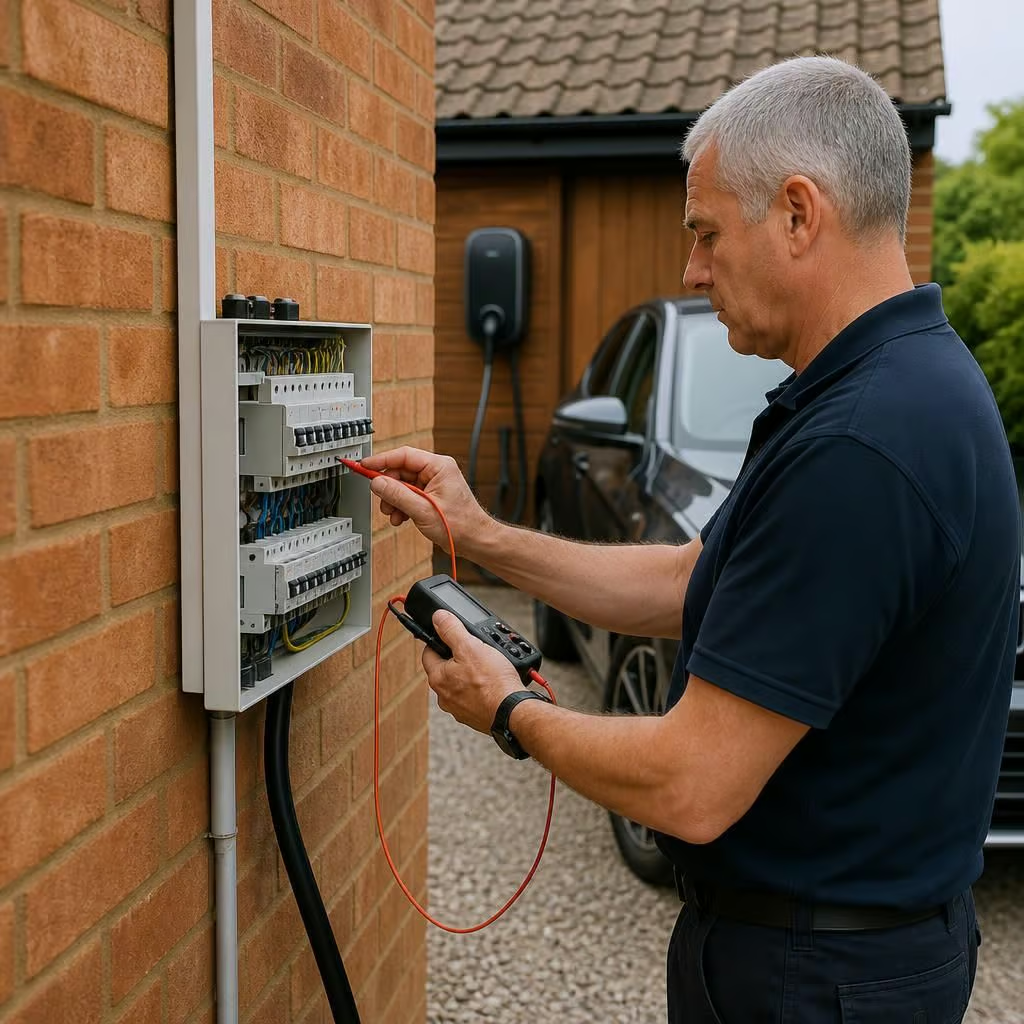
If the consumer unit is older or already heavily used, the parking position alone doesn’t decide whether a charger can be fitted. We check the available capacity and the condition of the existing electrical equipment before confirming the design.
Where the supply needs work, the quotation explains whether that means a consumer unit upgrade, additional protection or a different cable route. You’ll know what needs changing before installation starts, rather than discovering extra electrical work on the day.