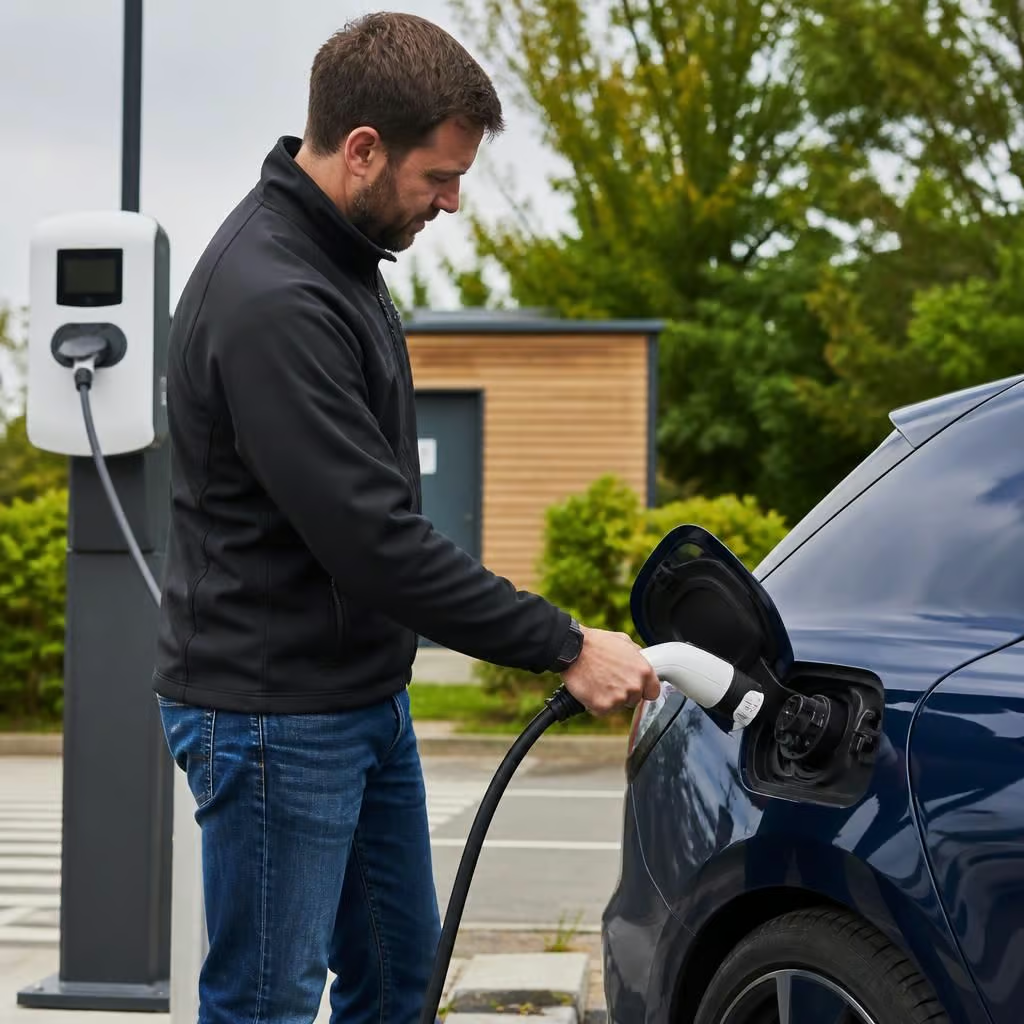
Can my car use a public EV charging station?
Usually, yes, provided the station has a connector and charging type your car supports. Check your vehicle’s handbook or charging app for its socket type, then match it with the station’s Type 2, CCS or CHAdeMO connector before setting off.
Most electric cars can use public charging, but the station must support both your car’s charging standard and its charging speed. Plug-in hybrids have more limited options, especially at rapid chargers.
Start by checking the charging information in the handbook or the vehicle manufacturer’s app. Look for the car’s inlet type and the maximum power it can accept. A station may offer more power than the car can use, but the car will only draw what its onboard charging system allows.
- Type 2 AC: This is the common connection for slower and faster public charging in the UK. Some stations have a socket, so you need a Type 2 charging cable. Others have a cable already attached.
- CCS: Most newer fully electric cars use CCS for rapid and ultra-rapid charging. The upper part uses the Type 2 connection, with two additional contacts below it for direct-current charging. The station normally has the CCS cable attached.
- CHAdeMO: Some older electric cars use this rapid-charging connection. Check the station details carefully, as not every rapid charger supports it.
- AC-only charging: Many plug-in hybrids can charge from Type 2 AC points but cannot use DC rapid chargers. Their inlet may look similar to a full electric car’s, so check the lower contacts rather than relying on appearance.
A station with the right connector may still be unsuitable if it is a DC-only unit and your car accepts AC charging only. The reverse also applies: an AC post will not provide rapid charging to a car that needs a DC connection for higher-power charging.
For an untethered AC point, carry the cable supplied with the car or a compatible replacement. Check both ends before travelling: the vehicle end must fit the inlet, and the charger end must fit the station socket. Do not force a connector or use an unapproved adaptor to make different systems fit.
For rapid charging, check the station listing for the connector rather than assuming that every rapid unit serves every electric car. The cable is usually attached to the charger, and it may be heavier than an AC cable. Make sure it reaches the car without putting strain on the inlet.
The car’s maximum charging rate also affects the result. A car limited to a lower AC or DC rate can still use a more powerful compatible station, but it will not charge at the station’s advertised maximum. A plug-in hybrid may also charge more slowly because of its smaller battery and onboard charger.
Before setting off, check these details in the charging network’s app or website:
- the connector type available at the specific bay;
- whether the point is AC or DC;
- the station’s maximum power;
- any restrictions for your vehicle type; and
- whether the cable is attached or needs to be brought with you.
Vehicle compatibility is separate from payment and access. A car may be technically compatible even if you need the network’s app, a contactless card or another payment method to start the session. Check those requirements before arriving.
If you are unsure, take a clear photograph of the car’s charging inlet and note the make, model and model year. We can use those details when advising on charging equipment, so you can choose a public-compatible connection without relying on guesswork.
A compatible connector is only part of the check. Your car and the charging station also exchange information before charging starts, including the available power and the car’s charging limits. If those systems cannot establish the right connection, the session will not begin.
That’s why a plug should never be forced into place or modified with an unapproved adaptor. If the listing, inlet markings and vehicle handbook do not agree, choose another bay and check the car’s details before travelling.