
What safety standards should public EV charging stations meet?
Public EV charging stations should meet UK electrical safety, building, accessibility and fire-safety requirements, with protection against faults, weather and unauthorised access. The equipment must also be correctly installed, tested, commissioned and maintained so drivers can charge safely and operators can demonstrate compliance.
A safe public EV charging station is more than a certified charge point fixed to a wall or post. The complete installation must protect people from electric shock, overheating, mechanical damage and misuse, while giving operators a reliable way to monitor and maintain it.
The relevant requirements depend on the charger’s power, connection method, location and intended users. A competent designer considers the whole installation, from the incoming supply and distribution board to the socket, cable, parking bay and surrounding surface.
- The charge point equipment: Public equipment should be suitable for its charging mode and use compatible plugs, sockets and control systems. The equipment should carry the appropriate conformity marking and be installed in line with its manufacturer’s instructions.
- The electrical supply: The existing supply must have enough capacity for the planned chargers. We check the connection, cable size, protective devices and prospective fault conditions rather than assuming that spare space in a consumer unit means spare electrical capacity.
- Protection against faults: Each charging circuit needs protection suited to the equipment. This can include residual-current protection, protection against direct-current leakage, overcurrent protection and local means of isolation. The arrangement must prevent one fault from creating a dangerous condition for the next vehicle or user.
- Protection against PME and earthing risks: Some installations connected to a supply using a protective multiple earth arrangement need additional measures for EV charging. We assess the earthing arrangement and use the required protective method for the site, rather than treating every car park as electrically identical.
- Surge and lightning considerations: Long outdoor cable runs and exposed equipment can increase the consequences of electrical surges. The design should consider surge protection and the building’s existing arrangements, especially where chargers connect to a larger commercial distribution system.
Public equipment also has to withstand the environment around it. A charger beside a rural car park faces different conditions from one in a covered multi-storey facility. The enclosure should have suitable resistance to water, dust and impact, with materials and fixings appropriate to the site. We also consider standing water, salt or chemical exposure, vehicle movements and accidental impact from parking.
The cable and connector need a safe place when they are not in use. A loose lead across a pedestrian route can create a trip hazard, while a cable hanging at vehicle height can be damaged by passing traffic. Good layouts keep charging leads away from walkways, provide suitable cable management and protect the equipment with barriers where vehicles could strike it.
Access around the bay matters as much as the electrical installation. A public charger should not force drivers to step into moving traffic or cross an unsafe surface to reach the connector. The bay, kerbs, lighting and pedestrian route should suit the site and allow people to use the equipment without stretching a cable across an obstruction. Operators should also consider accessible parking arrangements and the height and reach of controls.
Users need clear information before they begin charging. Instructions should explain how to start and stop a session, what the connector is for and what to do if the charger does not release the cable. Pricing and payment information should be easy to find, with any applicable contactless or digital payment method working as described. Public charge point rules also place requirements on pricing information, payment access, roaming and customer support, depending on the type of installation.
The emergency arrangements should be obvious to the person responsible for the site. Staff need to know how to isolate the affected equipment, prevent further use and report a fault. An emergency stop or isolation method must not create a new hazard by disconnecting equipment in an unsafe sequence. The exact arrangement depends on the charger and the site design.
Commissioning is where the installer proves that the design works safely. We test the protective measures, polarity, continuity, insulation, earthing and charger operation. We also check communications, load management and the interaction between the charger and the wider electrical installation where those features are present.
The operator should receive electrical certification, test results, equipment information and maintenance instructions. Labels should identify circuits and isolation points clearly. A site without accurate records can be difficult to make safe after a fault, particularly when several chargers share a distribution board.
Maintenance should cover more than whether the screen turns on. The operator needs a planned process for checking physical damage, connectors, cables, protective devices, isolation equipment, drainage, signage and the condition of the parking area. Fault records can reveal recurring problems, such as impact damage, water ingress or a supply that is regularly overloaded.
For a landlord, business or site operator, the useful question is not simply whether a charge point has a recognised safety mark. Ask who designed the electrical connection, which protective measures were used, what tests were completed and what records will be handed over. Ask also how faults are reported and who is responsible for keeping the installation safe after it goes live.
We plan and test EV charging installations as electrical systems, not as standalone appliances. For electrical work, our NICEIC and ECA registrations reflect the standards expected of a properly designed and documented installation. The result should be a charging area that protects drivers, staff, vehicles and the building throughout its working life.
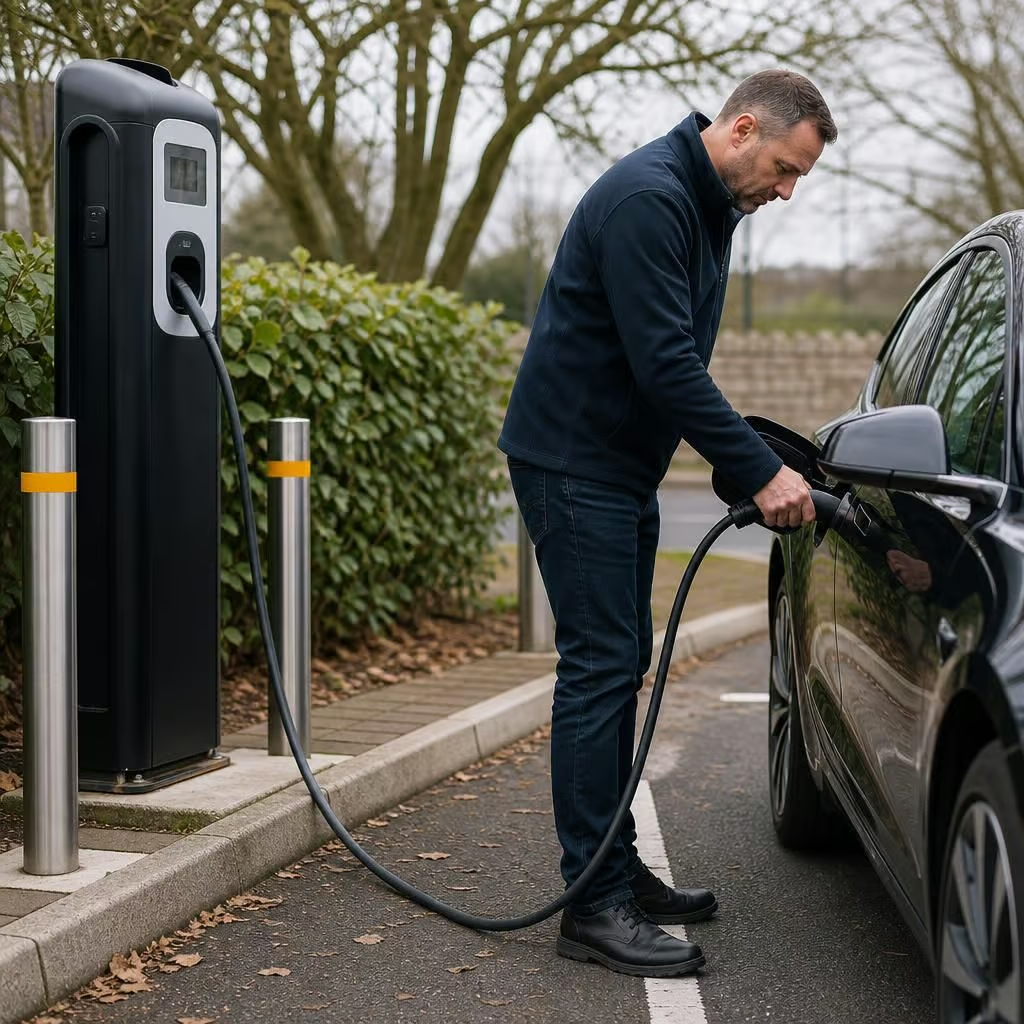
A public charger may sit beside a road, car park or footpath, so the cabling needs protection beyond the charge point itself. We plan underground routes around vehicle loading, drainage and likely future maintenance, then use suitable ducts, mechanical protection and clear records where cables pass below ground.
If another contractor later repairs the surface or installs signage, accurate cable information helps them avoid damaging the supply. We also position bollards and other protective measures where vehicles could strike the equipment, without narrowing the route for people using the parking area.
Discuss your public EV charging station safety requirements
If you’re planning a public charging site, contact us to discuss the electrical design, protective measures and records needed before installation begins. We can review the site requirements and provide a written quotation before work starts.