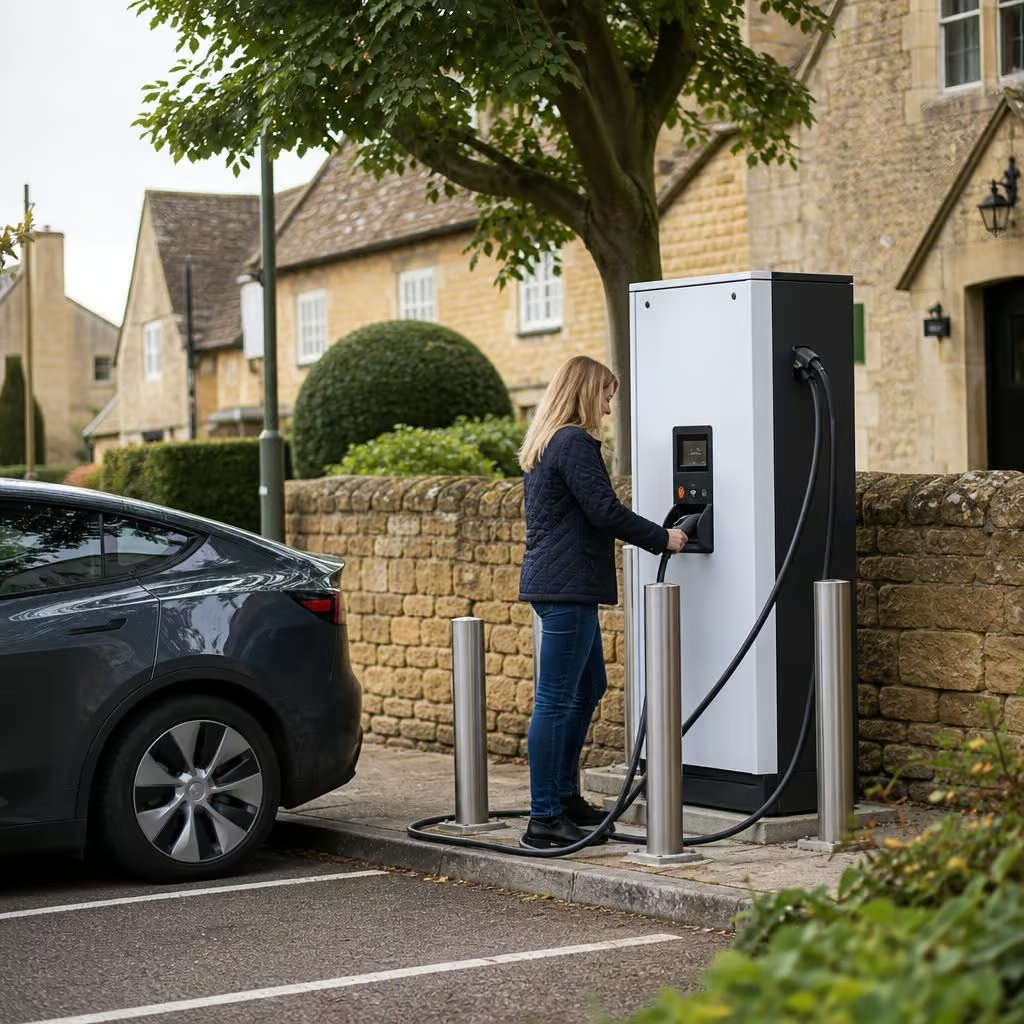
Will a rapid EV charging station need planning permission?
A rapid EV charging station may need planning permission; permitted development rights cover some installations but not every site or charger. We check the equipment, location, access and any listed-building or conservation-area restrictions before confirming whether an application is required.
Rapid charging does not automatically mean planning permission is needed. The requirement depends on the charger’s size, position, access arrangements and the use of the site. A charger serving a house with off-street parking may fall within permitted development rights. A larger installation in a car park, business premises or public-facing location is more likely to need formal approval.
The planning rules are concerned with more than charging speed. A rapid unit may be taller or bulkier than a domestic wall box, and it may need protective bollards, a new electrical cabinet, lighting, signs, parking bays or changes to the entrance. Those additions can affect the planning position even when the charger itself appears straightforward.
At a domestic property, the main checks include:
- Whether the charger can be placed within the property’s curtilage under permitted development rights.
- Its distance from the highway and whether the equipment projects from a wall or stands on a separate base.
- Whether the installation would alter the appearance of the house or front garden.
- Whether the property is listed or lies within a conservation area.
- Whether a cable, bollard or other equipment would occupy land outside the property boundary.
Older homes often need closer consideration. A charger fixed to a listed wall, placed in a historic courtyard or positioned beside a boundary may need listed building consent, planning permission or both. Conservation-area controls can also restrict permitted development rights. We check the property’s designation and proposed equipment before treating permitted development as available.
At a commercial or shared site, planning permission may be required for the wider installation. The local authority may need to consider the charger cabinet, parking layout, access, lighting, signage, noise, drainage and the effect on neighbouring properties. A site that changes from private parking to a public charging facility may also raise questions about the use of the land, particularly where customers will visit specifically to charge.
Existing petrol stations, workplaces, farms, retail sites and private car parks can each have different planning histories. Permission for the building or car park does not automatically authorise every new piece of charging infrastructure. We review the existing consent, the site layout and any conditions attached to it.
Highway issues are separate from planning permission. A cable must not create a trip hazard across a public pavement, verge or access route. The council or highway authority may require a separate consent for work affecting the highway. We also check vehicle access, visibility at the entrance and whether the proposed bays can be used without obstructing pedestrians or other traffic.
Planning permission is not the same as approval for the electrical work. The installation may also require:
- Confirmation that the local electricity network can provide the required capacity.
- Building control involvement where structural work, foundations or alterations to a building are involved.
- Landowner, landlord or freeholder consent.
- Agreement from a management company where the parking area is shared.
- Separate consent for signs, lighting or illuminated advertisements.
A rapid charger can therefore be acceptable in principle but still need a different approval for its power supply, access or signage. We explain which permission applies to each part instead of treating planning as the only consideration.
Before recommending an application, we inspect the proposed location and gather the information the council will need. This normally includes the charger dimensions, cabinet position, cable route, parking layout, distance from boundaries and highway, and photographs of the surrounding area. For a commercial site, we also consider how vehicles will enter, turn and leave the charging bays.
If the installation falls within permitted development rights, we can identify the conditions that must be met and record the agreed layout. Some owners still choose to seek a lawful development certificate for written confirmation that the proposed work is lawful. That certificate is not the same as planning permission, but it can provide useful evidence for future sale, refinancing or property records.
If an application is needed, the planning drawings must match the installation. Moving the charger later, increasing the cabinet size or adding lighting can create a different planning issue. We therefore settle the equipment position, cable route and access arrangements before work is scheduled.
For a property with historic restrictions, shared ownership or a public-facing site, we recommend checking with the relevant local planning authority before ordering equipment. We can identify the likely route and provide the technical information needed for the planning discussion, while the authority makes the formal decision.
A conservation area does not automatically mean that planning permission is required. However, an Article 4 direction may remove the permitted development rights that would normally cover a charger.
Local restrictions can also apply to a property with a previous planning condition or unusual permitted development history. We check the council’s planning records and the property’s designation before relying on an exemption, so the installation follows the rules that apply to that site.