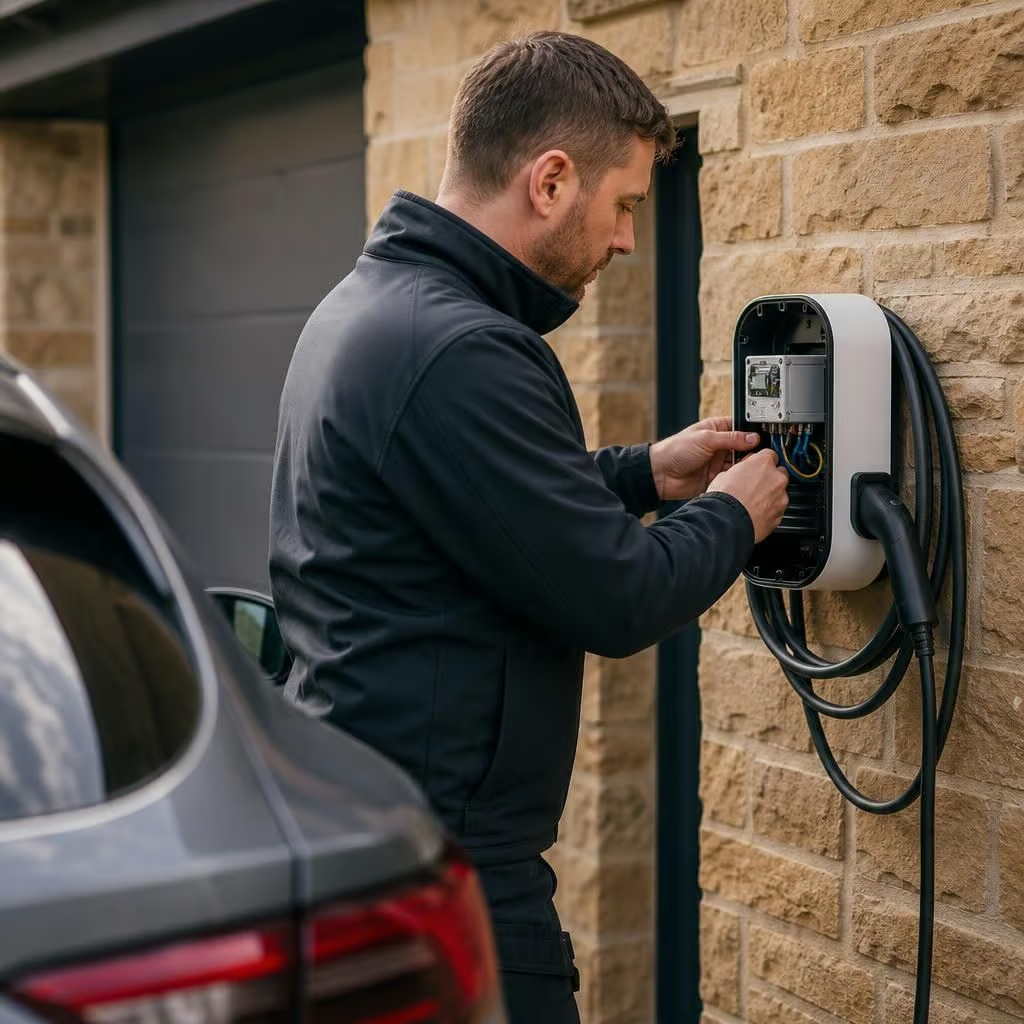
What certification should an EV charging station installer provide?
A suitable EV charging station installer should hold recognised electrical registration, such as NICEIC or ECA membership, and have specific competence in EV chargepoint work. After installation, we should provide the electrical installation certificate, test results and any required building-regulations notification, so you have a clear record of safe, compliant work.
The installer should be able to prove three things: that the electrician is competent to design and test EV charging circuits, that the installation follows current electrical requirements, and that the finished work has been properly recorded.
A logo on a website is not enough. Ask for the installer’s registration details and check that the registration is current and covers domestic or commercial EV charge point work, as appropriate. A general electrical registration does not automatically show that someone understands every issue associated with vehicle charging.
Your installer should also have relevant EV charging training. This should cover the design of dedicated charging circuits, protective devices, earthing arrangements, cable sizing, load management and the risks associated with charging for long periods. Ask what training the electrician has completed and who will carry out the design and testing.
Check the design before the installation starts. A competent installer should assess the property rather than select a charger from a catalogue. The survey should consider:
- the distance between the consumer unit, cable route and charge point;
- the condition and spare capacity of the existing consumer unit;
- the earthing arrangement and whether the property has a PME supply;
- the protective devices needed for the charger and the rest of the installation;
- the available electrical supply and whether charging could overload it;
- the need for dynamic load management where other large electrical loads are present; and
- the position of the charge point, cable protection and any work needed through walls or outside surfaces.
These checks matter in older houses, converted buildings and properties with limited electrical capacity. A charger may fit physically but still need changes to the consumer unit, earthing or cable route before it can be used safely.
Ask which rules the design follows. The installer should work to the current edition of BS 7671 and the relevant IET guidance for electric vehicle charging equipment. That does not make the installation automatically suitable, but it gives you a clear standard against which the design and testing can be judged.
The completed records should contain more than a tick box. They should identify the property, charger and circuit, and show the test results and protective measures used. Where the installation includes load management or special settings, the records should explain how those controls operate. Keep this information with the charger instructions, because it will help another electrician understand the work later.
Make sure the paperwork relates to the actual installer and address. The person who designs or carries out the work should be identifiable. The documents should show the installation date, the equipment fitted and the person responsible for inspection and testing. Generic paperwork, missing test results or certificates issued for the wrong address are reasons to stop and ask for clarification.
Some work also involves notifying the electricity network operator or meeting building regulations requirements. The installer should explain what applies to your property and confirm how the required notification or compliance evidence will reach you. You should not have to guess whether an obligation has been dealt with after the electrician leaves.
Manufacturer approval is useful, but it is not a substitute for electrical competence. An installer may have product training for a particular charger. That can help with setup, software and warranty support. It does not replace the responsibility to design, install and test the electrical circuit correctly.
Ask separately about the charger’s manufacturer warranty and the installer’s workmanship terms. The manufacturer’s warranty covers the equipment under its stated conditions. The installer’s terms should explain what happens if a cable, connection or installation fault needs attention. These are commercial documents rather than electrical certificates, but they clarify who deals with a problem later.
Be cautious if the installer:
- cannot provide a registration number or explain what its registration covers;
- offers a price without inspecting the supply, consumer unit and cable route;
- treats the charger as a simple outdoor socket with no discussion of protection;
- cannot explain how the property’s earthing arrangement affects the design;
- refuses to identify who will test the work; or
- says the paperwork can be arranged later without explaining the process.
For your records, expect a written quotation, a clear description of the proposed circuit and equipment, and the completed test and commissioning information after the work. We explain the design before installation, record the checks carried out and leave the paperwork with you, so you know what was fitted and how it was tested.
If your home already has solar panels or a battery, the charger forms part of a wider electrical system. We record how the equipment was connected and commissioned, including any settings used to control charging alongside generation or storage.
That gives you a useful handover record if the system is altered later. Another electrician can see what was installed, which circuit supplies the charger and how the controls were set at commissioning.