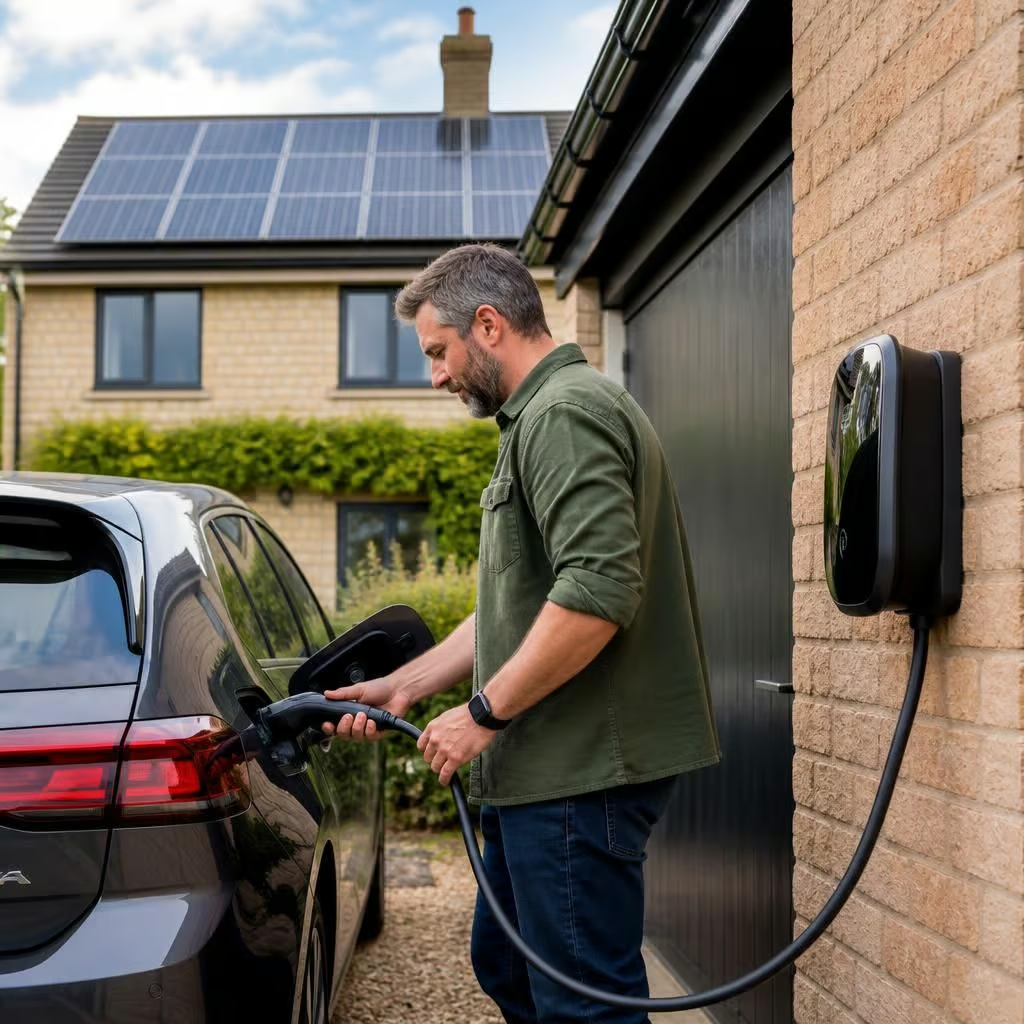
Can my home EV charger work with solar panels?
Yes. A compatible home EV charger can use surplus electricity from your solar panels, with the grid supplying extra power when there is not enough solar generation.
Solar panels can charge an electric car through a home EV charger, but the charger needs to communicate with the solar system. It monitors the electricity flowing between the panels, the house, the battery and the grid, then uses available surplus for the car.
Solar panels produce electricity as direct current. The inverter changes it to alternating current for use in the home. The EV charger then supplies that electricity to the car. In most installations, the car does not connect directly to the panels. The house electrical system and the charger manage the energy flow instead.
When the panels produce more electricity than the house is using, a compatible charger can direct the excess to the car. A monitoring device, often fitted near the electricity meter, tells the charger whether the property is importing or exporting electricity. The charger can then adjust the charging level to match the available solar generation.
This matters because solar output changes throughout the day. A cloud can reduce generation, while kettles, ovens and heat pumps increase the home’s demand. If the charger only used a fixed charging level, it could draw the balance from the grid or repeatedly stop and start. A charger with a suitable solar mode can respond to those changes more smoothly.
Solar charging usually works in one of two ways:
- Solar-only charging: the car charges when enough surplus electricity is available. The charger pauses when the home would otherwise import electricity.
- Solar-assisted charging: the panels provide what they can and the grid supplies the balance when necessary. This gives more consistent charging but does not use solar electricity alone.
The right setting depends on how you use the car. If charging cost is the priority, solar-only charging may suit you. If the car needs to be ready by a particular time, solar-assisted charging or a scheduled grid charge may be more practical. A charger can often combine these approaches, but the available controls depend on the equipment.
Your battery storage system also affects the result. If the battery has priority, it may store surplus generation before the charger receives any. That can leave little solar power for the car during the day. If the car has priority, the battery may charge later or rely more on grid electricity. We set the controls around your driving pattern, household demand and preferred battery behaviour rather than assuming that one order suits every home.
A solar system does not need to be installed at the same time as the EV charger. An existing installation may work if its inverter, monitoring equipment and control system can provide the information the charger needs. We review the solar equipment, consumer unit, meter position and cable route before recommending how the charger should connect.
Older homes can still be suitable. A solid-wall house, barn conversion or rural property may simply need more attention to the route from the consumer unit to the parking space. If the car is parked beside a detached garage or outbuilding, we look at the cable length, ground conditions and protection required. We also check whether the existing electrical supply can support the charger alongside the home’s other equipment.
The solar panels themselves do not determine whether the charger will work. We also need to consider:
- the inverter and its communication options;
- the monitoring equipment at the meter;
- the battery’s charge and discharge settings, if storage is installed;
- the charger’s solar-management function;
- the consumer unit and protective devices;
- the distance between the electrical equipment and the parking space;
- the household’s existing electrical demand; and
- the way you want the car to charge when solar generation is low.
We do not treat a solar-compatible charger as a separate appliance that can simply be added to the wall. The charger, solar generation, battery and electrical supply need to work together. Our electricians assess the complete arrangement and explain what will happen before work starts.
On installation, we fit the charger in a suitable position, connect it to the electrical installation and set up the solar monitoring controls. We test the protective devices and charging operation, then check that the system responds correctly when the property is using electricity and when the panels are producing surplus power. You should know which charging mode is active and how to change it for different journeys.
Solar charging is not necessarily free charging. The electricity has a value if you could export it, and the car may need grid electricity when generation is low. We can help you compare the likely use of your solar generation with your driving pattern, battery settings and electricity arrangements. That gives you a property-specific view instead of assuming that every unit of charging will come directly from the roof.
We provide a written quotation once the installation requirements are clear. It sets out the charger work, any consumer unit or cabling changes and the equipment needed to connect the solar controls, so you can decide with the full scope in view.
Solar generation doesn’t remove the need to check the home’s electrical capacity. Your charger still needs correctly sized cabling, protection and a suitable connection to the consumer unit, even when most charging comes from the panels.
If several appliances run while the car is charging, we can assess whether the charging rate needs to adjust automatically. That prevents the home from drawing more electricity than the supply can safely provide. It also means solar charging continues sensibly when household demand changes, rather than relying on an assumption that the panels will always cover the car.