
What electrical standards should a home EV charger installation meet?
A home EV charger installation should comply with BS 7671, including the EV-specific requirements in Section 722, with correctly sized cabling, earthing, isolation and overcurrent protection. We also fit the required residual-current protection and check the property’s electrical supply and earthing arrangement before testing and certifying the installation.
A compliant home EV charger installation is more than fixing a chargepoint to the wall. The complete circuit, consumer unit, earthing arrangement, protective devices, equipment settings and installation paperwork must all be suitable for regular high-current charging.
The charger needs its own properly designed circuit. Sharing a circuit with sockets, an immersion heater or an electric cooker can leave the cable and protective device carrying more load than they were designed for. We assess the route from the consumer unit to the chargepoint, then select the cable and protective equipment for the installation method, length, environment and expected charging load.
Your cable may run through a loft, along an outside wall, into a detached garage or underground to a parking space. Each route creates different requirements. External and underground sections need protection from weather, impact and damage. A cable in a loft must be positioned and supported appropriately. Where the route passes through walls, we seal and protect the openings so the finished installation remains safe and tidy.
The existing consumer unit needs checking, not assuming. An older board may have no spare capacity, outdated protective devices or an enclosure that is unsuitable for the new circuit. We inspect the board, main switch, bonding and incoming supply before deciding whether the charger can be connected safely. An upgrade may be needed before the charging circuit is installed.
A new consumer unit is not automatically required in every home. Equally, fitting a charger beside an unsuitable board is not a proper installation. The decision depends on the condition and arrangement of the existing electrical system, the charger’s requirements and the findings from testing.
Earthing arrangements need particular care on some properties. A supply using PME earthing can require additional protection against an open PEN conductor fault. This is especially important where the chargepoint is outdoors or connected to exposed metalwork that someone could touch while standing on the ground. We identify the supply arrangement and choose the protective method required for that installation, which may involve the chargepoint’s built-in protection or another approved arrangement.
That assessment matters in rural properties as well as suburban homes. A long supply route, an outbuilding or a separate earth arrangement can change how the installation must be designed. We do not treat the location of the parking space as an afterthought.
The chargepoint must be installed where it can operate safely. The mounting surface needs to support the equipment, and the cable or socket must not create a trip or vehicle-damage hazard. We consider water exposure, impact from vehicles, access for isolation and the position of the charging lead. A unit near a driveway entrance may need more physical protection than one mounted inside a garage.
The installation also needs a suitable means of isolation. If the charger develops a fault or the property needs electrical work, an electrician must be able to disconnect it safely. We position isolation and protective equipment so it can be reached and identified without dismantling the charger or moving the vehicle.
Protection against faults must match the charger. EV charging equipment can produce smooth DC fault currents that affect conventional protective devices. The arrangement must therefore match the chargepoint manufacturer’s requirements and the applicable installation rules. Some equipment includes the required DC fault detection; other installations need additional protection upstream. We check that the complete combination works together rather than selecting a device by appearance or price.
Testing does not stop when the charger powers up. We check the circuit, protective measures, polarity, disconnection and charging operation. The charger’s controls should respond correctly, and any scheduled or managed charging settings should not prevent the safety devices from operating as intended.
Smart charging features are part of the installation in many cases. A home chargepoint may need to manage charging around the household’s electricity demand and follow the requirements that apply to smart chargepoints. We set up the equipment in line with the manufacturer’s instructions and explain how the owner can use scheduled charging, override a schedule and reconnect the unit if the home network changes.
Internet access is useful for app-based monitoring, but the electrical safety of the charger must not depend on a Wi-Fi signal. A lost connection should not turn a wiring fault into a safety issue. We separate the charger’s electrical protection from its communications features.
The finished installation should leave a clear record. We provide the relevant electrical documentation and explain any limitations or recommended follow-up work. Where notification to the electricity network operator or building control is required, we deal with the appropriate process rather than leaving the homeowner to work out what happens next.
Using an installer registered with NICEIC and ECA gives you a route to competent electrical work and the correct certification process. We design the installation around the home’s actual supply and parking arrangement, not just the chargepoint model. That is what determines whether the charger is safe to use and remains suitable when the rest of the household is drawing power.
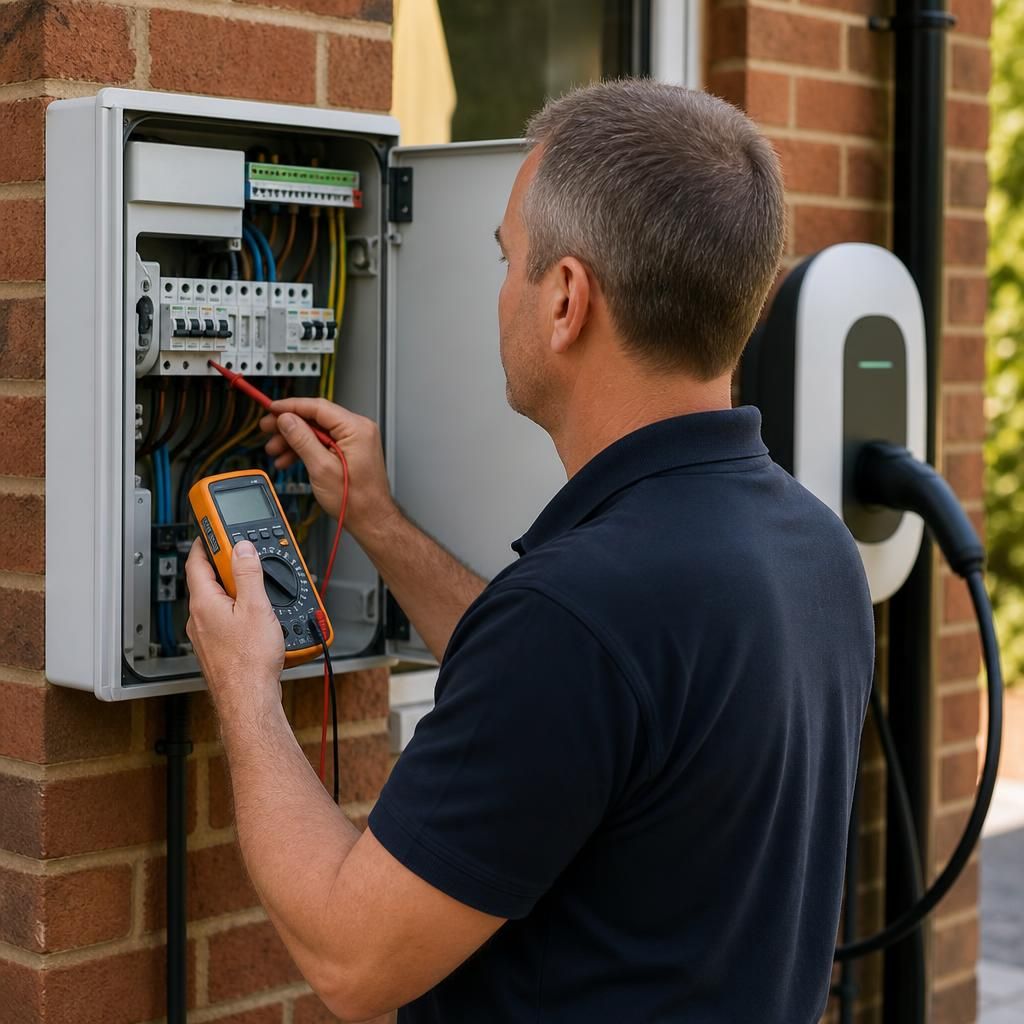
An older home may have an electrical fault that a charger installation would expose. During the survey, we test the existing circuit and earthing rather than connecting new equipment to an unknown system.
If we find a defect or remedial work that affects compliance, we explain it before installation starts. You receive a written quotation for the agreed work, so the charger is connected only when the complete installation meets the required standard.