
Will an energy supplier EV charger work with home solar panels?
Yes, an energy supplier’s EV charger can work with home solar, but solar charging depends on the charger, inverter, energy tariff and any home battery communicating correctly. We check the existing system before installation so the charger can use surplus solar where its controls support it, rather than relying on grid electricity.
The charger’s ability to use solar power depends on its controls, the solar inverter and how the system measures electricity flowing through the house. A charger that only follows a timed schedule may still charge the car from the grid, even when the panels are generating.
For solar charging to work properly, the installation normally needs a way to measure surplus generation. A meter or current sensor monitors the electricity moving between the property, the panels and the grid. The charger can then reduce or pause charging when there is not enough surplus, rather than importing electricity unnecessarily.
Your solar output changes with the weather and the time of day, so charging rarely stays at a constant rate. On a bright day, the car may take more of the available generation. Under cloud, the charger may slow down, stop or take some power from the grid, depending on its settings. That behaviour is normal and should be explained before the system is commissioned.
The charger also needs to communicate with the solar system in a way its software supports. We check the inverter, the charger’s monitoring method and the available connection before recommending a setup. Compatibility is not determined by the energy supplier alone. The particular charger model and the existing solar equipment both matter.
A solar-compatible charger may offer settings such as:
- Solar-only charging: the car charges from surplus generation and pauses when the property would otherwise import electricity.
- Solar-priority charging: the charger uses available solar first but can draw from the grid when a scheduled charge needs to finish.
- Scheduled or tariff charging: the charger charges at selected times, which may use grid electricity even when solar generation is low.
The right setting depends on what matters most to you. Solar-only charging can minimise grid imports, but it may leave the car partly charged if the weather changes. A scheduled charge gives a more predictable result, but some of that electricity may come from the grid. The app should make this choice clear rather than hiding it behind a single automatic mode.
If the property has a home battery, the charging order needs checking as well. The battery may be set to store surplus solar before the car receives it. Alternatively, the charger may take the available generation first. We review those priorities so the battery and car do not continually compete for the same electricity.
Smart energy tariffs can add another layer. A supplier’s charger may use tariff information to schedule charging at cheaper times, while the solar controls are trying to wait for daytime generation. Those instructions can conflict. We check which system has control and explain how the schedule behaves when solar production, battery storage and tariff charging overlap.
Internet access may also be part of the setup. Some supplier chargers rely on an app or online account for solar settings, monitoring and scheduled charging. If the connection drops, the charger may revert to a basic charging mode. The car can still charge in some installations, but it may not follow the solar-priority setting until communication is restored.
Older solar installations deserve particular care. The panels may be working well, but the inverter may not provide the communication or export data that a newer charger expects. That does not automatically rule out solar charging. It means we need to establish how the system can measure surplus power and whether an additional control device is required.
During the assessment, we look at the consumer unit, cable route, charger position, solar inverter, battery if present and the way electricity is measured at the property. We also check the electrical capacity and whether the proposed charging arrangement fits the existing installation. You receive a clear explanation of what the charger will do in solar-only, scheduled and grid-assisted modes before work starts.
When the installation is complete, we configure the controls and test how the charger responds to changing generation. The aim is not simply to connect the car. It is to leave you knowing when the charger is using surplus solar, when it is importing from the grid and which setting to change when your priorities alter.
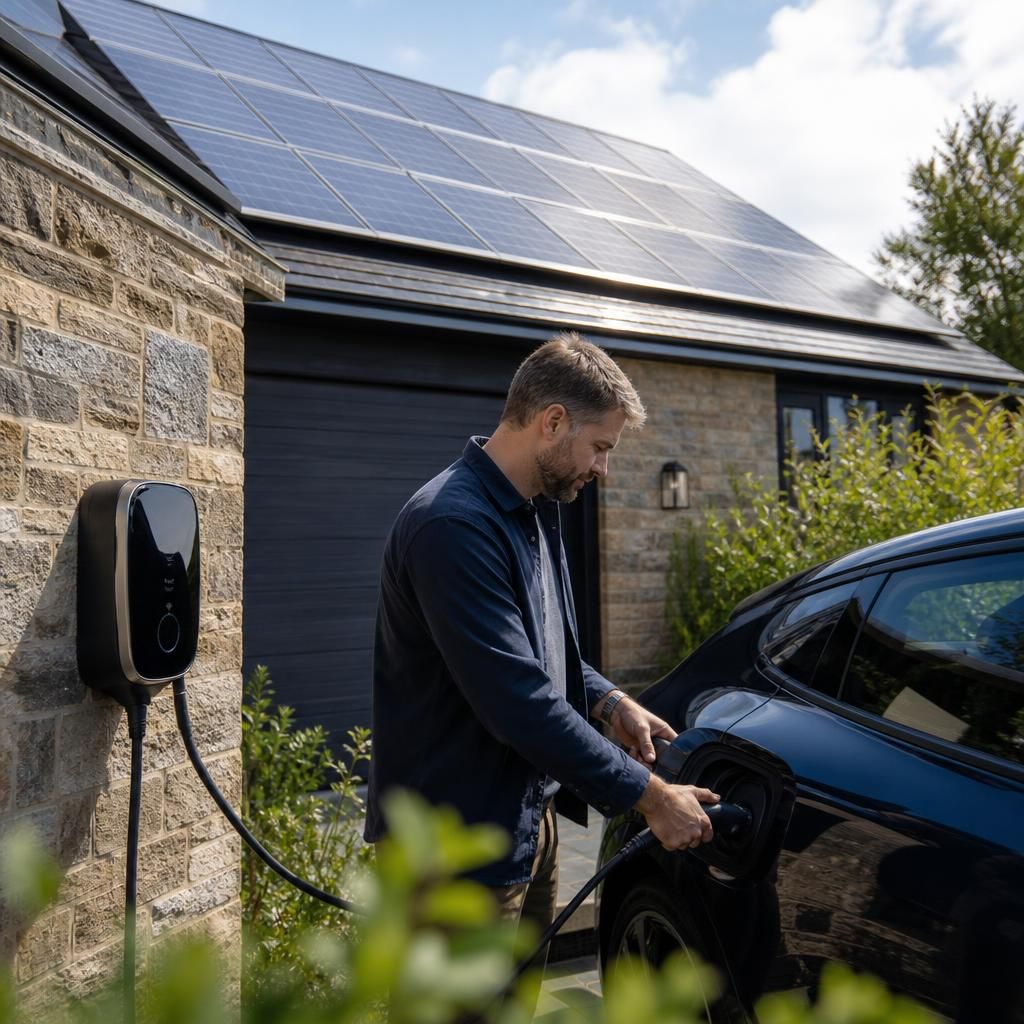
Home solar panels do not normally connect directly to the car charger. The panels feed the property through their inverter, while the charger connects to the electrical installation and responds to the surplus available there.
That means existing panels can often remain in place when an EV charger is added. We check how the inverter, consumer unit and export meter are arranged, then set the charger to respond to the electricity available at the property rather than treating the panels as a separate supply.
This arrangement also keeps the system safe when household demand changes. If the oven, immersion heater or other large appliance starts, the charger can reduce its demand instead of assuming all solar generation is available for the car.