
Does my electric car need a specific home charger?
Most electric cars do not need a brand-specific home charger: the important checks are the vehicle’s charging connector, whether it needs a tethered cable or socketed unit, and its maximum charging rate. We match the charger and installation to your car and electrical system, so you get a compatible setup without paying for charging capacity the vehicle cannot use.
Most electric cars can use a standard domestic AC home charger. The right choice depends on the car’s charging inlet, its onboard charger and the electrical supply at your property.
The car controls how much power it accepts. A home charger provides the available AC supply, but the vehicle’s onboard charger sets the actual charging rate. Fitting a higher-rated charger will not make a car charge faster than its own onboard system allows.
This matters when you compare chargers. A unit with a higher maximum output may still be suitable, but the extra capacity may not benefit your current car. It could become useful if you change vehicle later, provided the electrical installation can support it.
Check the connector before choosing the charger. Most cars sold for the UK market use the same general AC connector arrangement, but the charging cable may be attached to the unit or supplied separately. A tethered charger is convenient because the cable is always there. A socketed charger gives you more flexibility if you need to use different cables or vehicles.
Some imported or older vehicles may have a different inlet or charging arrangement. The make and model therefore still matter, even though you do not normally need a charger made specifically by the car manufacturer. We confirm the vehicle connection before recommending equipment.
A home charger is different from the portable cable supplied with some cars. A portable cable can use a standard socket, but it normally charges more slowly and places a sustained load on that circuit. A dedicated charger has its own circuit and protective equipment, making it the more suitable arrangement for regular home charging.
Direct-current rapid charging is mainly found in public charging locations. Home chargers use alternating current, so the relevant specification is the car’s onboard AC charging capability rather than its public rapid-charging speed.
Your existing electrical system also affects the choice. Before we recommend a unit, we look at:
- the consumer unit and the available space for protective equipment;
- the earthing arrangement and the condition of the existing installation;
- the route from the consumer unit to the parking space;
- the distance and whether the cable needs to pass through walls or around the outside of the property;
- other significant electrical loads in the home; and
- any solar panels, battery storage or other equipment that may share the available supply.
An older home is not automatically unsuitable for a charger. A property with an older consumer unit, long cable route or limited electrical capacity may need preparatory work first. We explain that before work starts, rather than treating an unsuitable circuit as a minor detail.
The parking position matters as much as the car. If the car is parked away from the house, the cable route may affect the charger position, cable length and appearance of the installation. On a rural property, detached garage or outbuilding, we may need to consider the supply to that building and whether it can support the charger safely.
Smart functions are optional rather than vehicle-specific. Some chargers can schedule charging, respond to tariff periods or coordinate with solar generation. The useful features depend on how you use the car and what other equipment is installed. A basic charger may be enough if you simply plug in after driving and leave the vehicle to charge. A more advanced unit may be worthwhile if you want to make better use of solar generation or control when charging takes place.
Smart charging still needs to work with the home’s electrical design. We consider the charger alongside solar panels, a battery or other large loads, so the equipment does not operate as though it were the only demand on the property.
Installation involves more than mounting a box on the wall. We install a dedicated supply, fit the required protective devices, connect the charger and test the completed circuit. Our NICEIC-registered electricians check that the installation is safe and compliant, then explain the controls and hand over the relevant paperwork.
Before we prepare a quotation, it helps to have the car’s make and model, the location of the parking space, a photograph of the consumer unit and details of any solar or battery system. We can then allow for the actual cable route and identify any work needed before installation. Our written quotation sets out the work and cost before anything starts.
So, you usually do not need a charger made for one particular car brand. You do need a charger that matches the vehicle’s inlet and charging capability, works with the features you want and suits the electrical system and layout of your home.
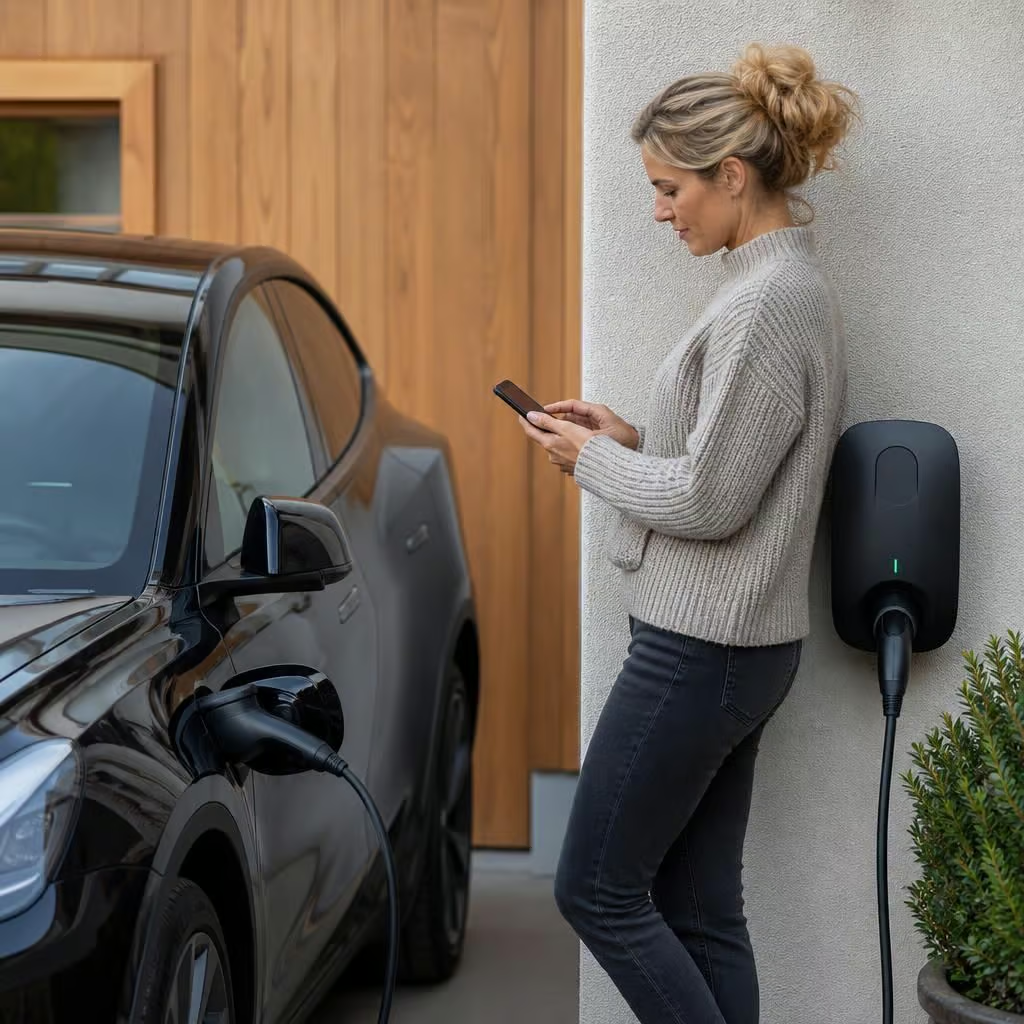
Your car’s charging settings can matter as much as its connector. If the vehicle already schedules charging, adding a separate schedule in the charger app can create conflicting instructions.
We check how you want to control charging before recommending the unit. That leaves one clear way to set charging times and avoids confusion when you want to charge overnight or use surplus solar generation.