What information do I need for a home EV charger quote?
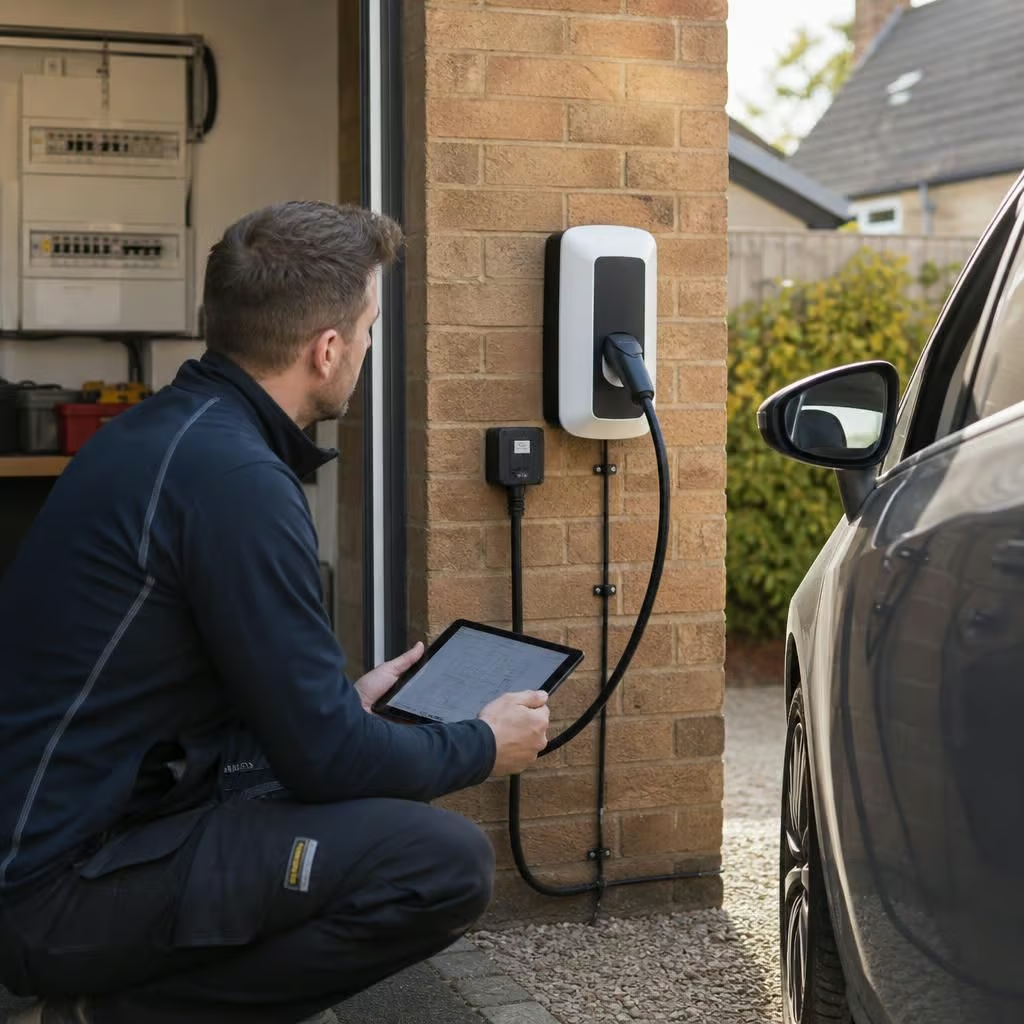
For an accurate home EV charger quote, tell us about your car, parking space, cable route, property and electrical supply, including the consumer unit and meter position. Photos of the parking area, cable route and consumer unit can help us judge the installation requirements before we arrange any further assessment.
The most useful information for a home EV charger quote is how you plan to charge, what features you need and what else is connected to the property’s electrical supply. Those details help us recommend a suitable charger and identify any electrical work that may be needed before installation.
Tell us how you expect to use the charger
- How many miles you typically drive between charges.
- Whether you usually charge overnight, during the day or at irregular times.
- Whether more than one electric vehicle may use the charger.
- Whether you need a tethered charger with a fixed cable or an untethered unit that uses your vehicle’s charging lead.
Your charging pattern affects the features that are worth paying for. For example, scheduled charging can help you use a cheaper electricity period, while access controls may be useful if other people can reach the charger. We can also discuss solar charging if the property has, or may later have, solar panels or a battery.
Explain what you want the charger to do
Let us know if you want app control, charging schedules, usage monitoring, solar-surplus charging or the ability to manage charging across two vehicles. If you already have solar panels, a home battery, an electric heating system or other high-demand equipment, include that information. We need to consider how the charger will operate alongside it rather than assessing it in isolation.
It also helps to mention any planned changes to the property. A future heat pump, battery or additional electrical equipment may affect the sensible charger rating and the way the supply is managed. Planning this together can avoid paying for changes twice.
Include useful information about the electrical installation
We need to know anything you already understand about the incoming supply, such as whether the property has single-phase or three-phase electricity, or whether the supply has had capacity problems before. You do not need to identify this yourself if you are unsure. We can establish it from the available information and during the assessment.
Tell us about any recent electrical work, an older consumer unit, repeated tripping or other faults. These points do not automatically prevent a charger installation, but they may mean that protective equipment or an upgrade needs to be included in the quotation.
Tell us about access and permissions
If the property is rented, leasehold or part of a managed development, tell us whether a landlord, freeholder, management company or another party must approve the installation. Shared access, communal electrical supplies and restrictions on external equipment can change the work involved.
For a listed property, conservation area or building with unusual construction, mention this before we quote. It may affect how we fix the charger, route the cable and carry out any external work. We can then identify questions about consent rather than assuming a standard installation applies.
What we include in the quotation
A useful quotation should cover more than the charger itself. We assess the proposed equipment against the vehicle, the intended charging pattern and the electrical installation. The quotation may also need to account for protective devices, an isolator, consumer unit work, cable protection, drilling, external fixings or other access requirements.
If the proposed route involves unusual construction, concealed services or work that cannot be confirmed from the information provided, we explain this before work starts. A quotation based on photographs and details may still need a site assessment where the installation is not straightforward.
We provide a written quotation before work begins, setting out the recommended equipment and any associated electrical work. If the installation needs a change from the original scope, we discuss it with you rather than adding an unexplained charge.
What happens after you send the information
- We review the charger requirements and the information about the property.
- We identify whether the electrical supply appears suitable and whether further checks are needed.
- We confirm any questions about permissions, existing equipment or planned electrical changes.
- Where necessary, we arrange an assessment so the installation can be priced against the actual conditions.
- We recommend equipment that matches the way you intend to charge, not simply the highest available charging rate.
Electrical capacity matters because a charger can place a substantial additional load on a home. If the supply or consumer unit needs attention, we explain why and separate that work from the charger cost. Our NICEIC and ECA electrical registration reflects the standards applied to the assessment and installation, so the quote covers the electrical work as well as the charging unit.
A photo of the proposed charger position is most useful when it shows the parking space, wall and likely cable route together. If the route turns a corner, passes through a garage or reaches an outbuilding, include each section. We can then identify cable protection, drilling or other access work that may affect the quote.
Take separate clear photos of the consumer unit and meter with their covers closed. Include the surrounding wall and any labels. If the photographs leave an important detail unclear, we may need to assess the installation before confirming the final price.