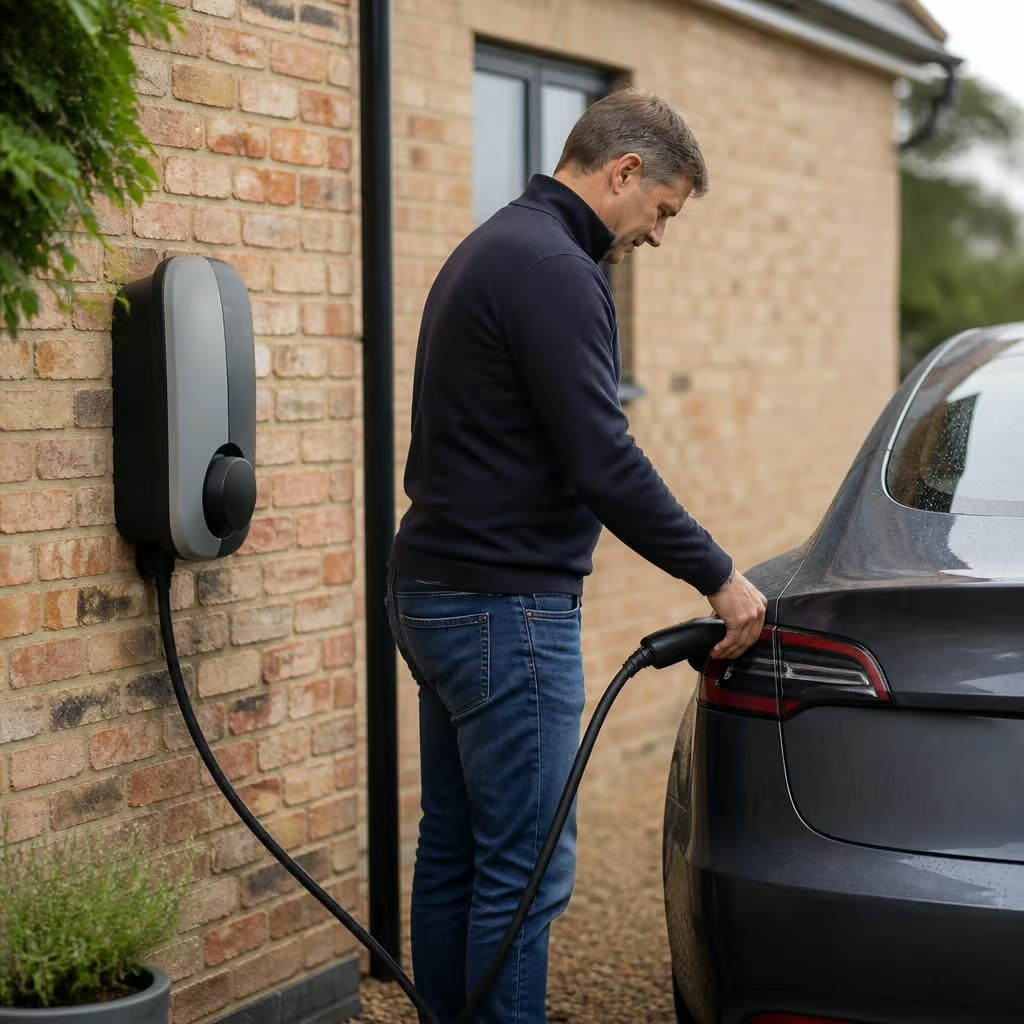
Can any home charger charge a Tesla?
Yes. Most modern home chargers can charge a Tesla because they use the standard Type 2 connection for home charging, but the charger, cable and electrical supply must suit your particular model and installation.
In the UK, most home chargers can charge a Tesla, provided the charger uses the right connection and the installation is suitable for the vehicle. The Tesla Wall Connector is one option, not a requirement.
Most Tesla cars use a Type 2 connection for AC charging at home. An untethered charger needs a separate Type 2 charging cable, while a tethered charger has the cable attached. We check which arrangement suits the car and how you expect to use it before recommending equipment.
The car’s inlet matters more than the badge on the charger. A Tesla brought in from another market, an older model or a car using an adapter may need a different cable or additional checks. The vehicle handbook and inlet are the reliable reference points, rather than assuming every Tesla has the same charging arrangement.
A public rapid charger is different from a home charger. Rapid charging uses the car’s DC connection and equipment, whereas a domestic unit normally supplies AC through the car’s onboard charger. A home charger therefore needs to match the vehicle’s AC charging capability. Installing a higher-rated unit will not make the car charge faster than its onboard charger allows.
The electrical supply also affects compatibility. We assess the consumer unit, earthing, cable route, available capacity and the proposed charger’s protective requirements. If the existing installation needs work, we explain that before installation rather than treating it as an unexpected extra.
Some chargers can manage charging around household demand, planned charging periods or on-site generation. That can matter if the home has solar panels, a battery or a restricted electricity supply. We look at how the car will actually be charged, not just which connector fits it.
- Tethered charger: the cable stays attached, so charging is quick to start but the cable needs a suitable place to be stored.
- Untethered charger: the unit looks neater when not in use, but you need to keep a compatible Type 2 cable available.
- Connected charging: some units allow schedules, monitoring or control through an app. These features are useful only if they match the way your household charges.
A Tesla Wall Connector may be sensible if you want a Tesla-branded unit or prefer its particular controls and appearance. A different home charger may be more suitable if you want another cable arrangement, energy-management feature or a setup that can serve a future electric car as well.
Before fitting any unit, we confirm the car’s inlet, the cable arrangement, the charger’s electrical requirements and the route from the consumer unit. You then have a clear choice based on the vehicle, the property and the way you plan to charge, rather than on the charger’s name alone.
A non-Tesla charger can charge your car without changing anything in the vehicle. Once the installation is commissioned, you use the charger and the car’s normal charging controls to start or schedule a session.
We also test the completed installation before you use it. That means checking the protective devices, earthing and cable route, then explaining the charger’s controls so you know how to charge safely at home.