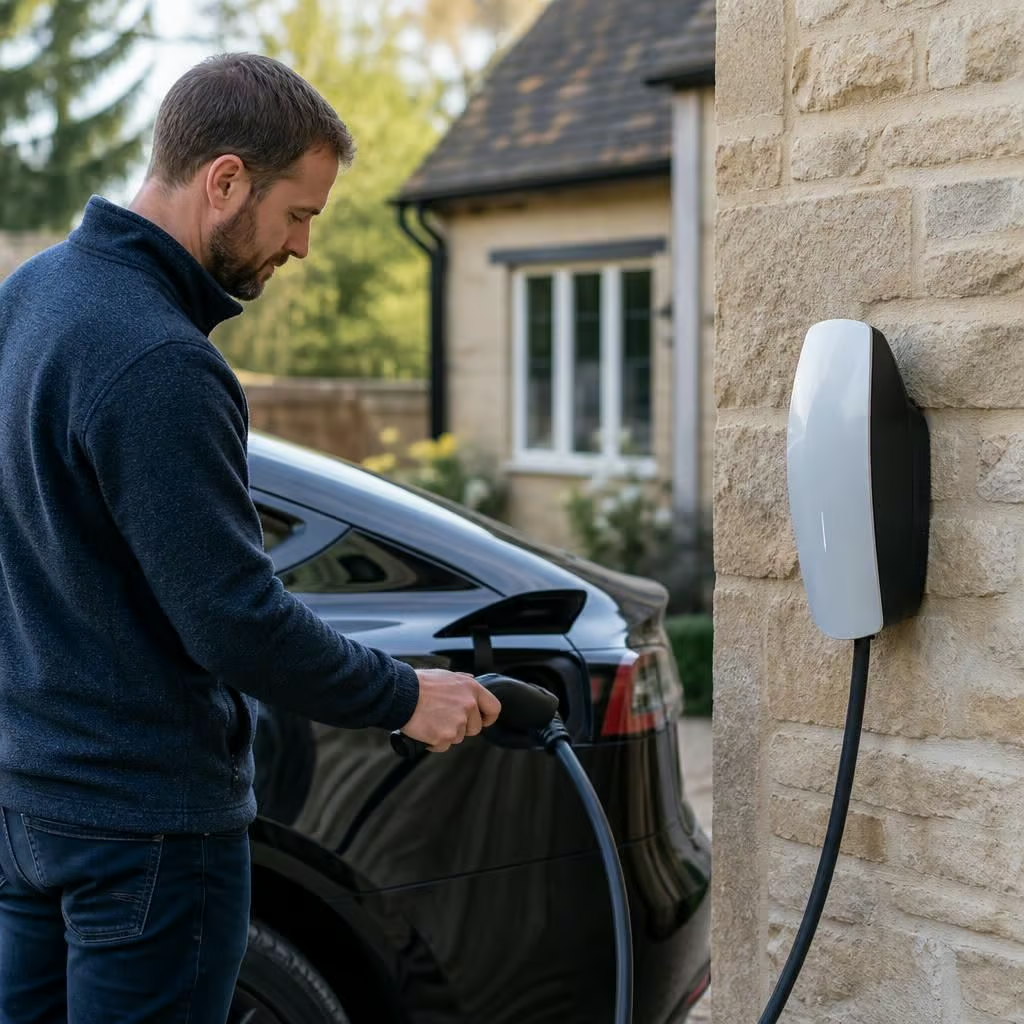
What charging speed can I expect from a Tesla home charger?
A Tesla home charger can deliver much more power than a standard three-pin socket, but the charging speed depends on the vehicle, the charger, the home’s electrical supply and the installation. We assess those factors before fitting it, so you know how quickly your Tesla can charge and whether any electrical upgrades are needed.
The charging speed you can expect is the lowest limit set by the Tesla home charger, the car’s onboard AC charger and the electrical supply to your property. A higher-rated charger cannot make the Tesla charge faster than its onboard charger allows.
Charging speed is measured in kilowatts. The higher the available kilowatt rate, the more energy the car can take on during the same period. The actual time also depends on how much energy the battery needs. A battery that is nearly full needs less energy than one that is close to empty, while a larger battery takes longer at the same charging rate.
Most homes have a single-phase electrical supply, so the charger’s available rate is limited by that supply and by the circuit serving the charger. The property may also have other significant electrical loads, such as an immersion heater, electric heating, an oven or a battery system. If the total demand becomes too high, load management can reduce the car’s charging rate temporarily to protect the incoming supply.
Your Tesla may also limit the rate itself. Its onboard charger controls how much AC power it accepts, and the car can reduce charging power when the battery is cold, when it is nearing full, or when its battery management system requires a slower charge. These limits are normal and do not indicate a fault with the home charger.
The rate can change during one charging session. The car may begin at the highest available level, then reduce the rate as the battery fills. Charging losses also mean that the power drawn from the home is not transferred to the battery in full. For that reason, a simple calculation based only on battery size and charger output gives an estimate rather than an exact time.
- The charger: its maximum AC output sets the upper limit.
- The Tesla: its onboard charger determines how much AC power it can accept.
- The electrical supply: the incoming supply and consumer unit must support the additional demand.
- The circuit: cable length, cable size and protective equipment affect how the installation can be configured.
- Other appliances: load management may reduce charging temporarily when the home is using more electricity.
- The battery: temperature and state of charge can lower the rate during part of a session.
During the survey, we look at the incoming supply, consumer unit, cable route and likely household demand. We also confirm which Tesla model will use the charger and check its AC charging capability. That gives us a realistic expected rate instead of quoting the charger’s maximum in isolation.
A long cable route or an outbuilding installation can affect the design. We may need to consider voltage drop, the position of the protective equipment and how the cable will be routed without unnecessary disruption. These details do not automatically mean slower charging, but they must be accounted for before the installation is configured.
Electrical work for the charger is carried out by our NICEIC- and ECA-registered electricians. If the home already has solar panels, battery storage or other high-demand equipment, we can include those loads in the assessment rather than treating the car charger separately.
We explain the expected charging rate, any factors that may reduce it and the work needed before installation. That leaves you with a clear comparison between the charger’s theoretical maximum and the rate your Tesla is likely to receive at home.
If the preferred charging rate depends on changes to the electrical installation, we explain that before work begins. An older consumer unit, a long cable route or limited supply capacity can affect the design, even when the charger itself is capable of more.
You’ll receive a clear explanation of the expected rate, the electrical work involved and any household loads that may affect charging. That lets you compare the practical result with the charger’s stated maximum before deciding how to proceed.