
Are Wallbox, Pod Point and other chargers compatible with every home?
No. Wallbox, Pod Point and other home chargers can suit most properties, but compatibility depends on the available electrical capacity, consumer unit, parking position and cable route. We check those points before recommending a charger and installation method for your home.
No. Wallbox, Pod Point and other home chargers are not automatically suitable for every property, although many homes can accommodate one after the installation has been checked. Compatibility depends on the vehicle connection, the available electrical supply, the position of the parking space and the route between the charger and the house.
Your car may use a different charging connector from another vehicle, so we first confirm which cable or tethered connection it needs. The charger must also support the charging rate your vehicle can accept. A higher-rated charger will not make a car charge faster if the vehicle or the home’s electrical supply limits the rate.
Your electricity supply may need more careful planning if the home has several large electrical loads. Electric heating, an immersion heater, an electric cooker, a heat pump or another charging point can all operate alongside the car. We assess how the installation will behave when these loads overlap, then specify suitable load management where necessary. This can reduce the chance of the charger drawing more power than the property can safely support.
An older installation may need work before a charger can be connected. The consumer unit, earthing arrangement, meter tails and protective devices all have to suit the proposed equipment. Some properties also have an older supply arrangement that needs the electricity network operator to review it. We explain any required change before work starts rather than treating it as an unexpected extra.
The parking arrangement matters just as much as the charger itself. A driveway beside the house is usually simpler than a space at the end of a long garden, across a shared accessway or beside a detached garage. If the cable crosses a path, we plan a route that does not leave a trip hazard or rely on a loose extension lead. A detached garage may need its own supply assessment, and an existing outbuilding circuit may not be suitable for vehicle charging.
Rural and older homes can have less straightforward cable routes. Thick walls, outbuildings, rendered elevations, listed features and concealed services can affect where the cable can run. We discuss the visible parts of the installation and protect the building’s fabric where possible. Listed or otherwise restricted properties may also need planning or landlord approval before external equipment is fitted.
Smart functions are another part of compatibility. If you want scheduled charging, tariff-linked charging or control through an app, the charger needs a suitable internet connection and the correct electrical configuration. A weak signal at the parking space does not necessarily prevent installation, but it may affect which features work reliably. We separate essential charging from optional connected features when discussing the equipment.
Shared parking creates a different set of checks. If you live in a flat, rent the property or park on communal land, you may need consent from a freeholder, landlord, management company or highways authority. We cannot approve access across land that you do not control, so permission should be established before the installation is booked.
During the survey, we look at:
- the car’s charging connector and the charging rate it can accept;
- the incoming supply and the demand already placed on it;
- the condition and capacity of the consumer unit and earthing arrangement;
- the parking position, cable length and route into the property or garage;
- possible load management and smart-charging requirements;
- planning, listed-building, landlord or shared-access restrictions; and
- the position of the charger, isolation equipment and protection from accidental damage.
If the existing installation is suitable, the charger can be fitted without changing the rest of the home’s electrical system. If it is not, the work may involve upgrading protective equipment, improving the supply arrangement or changing the cable route. We set out those requirements in the quotation, so you can decide whether the proposed charger and any associated work are worthwhile for the property.
The result is not determined by the Wallbox or Pod Point name alone. It is the match between the charger, the car and the electrical installation. Our NICEIC-registered electricians design and test the connection so the finished charger suits the way you park and use the vehicle.
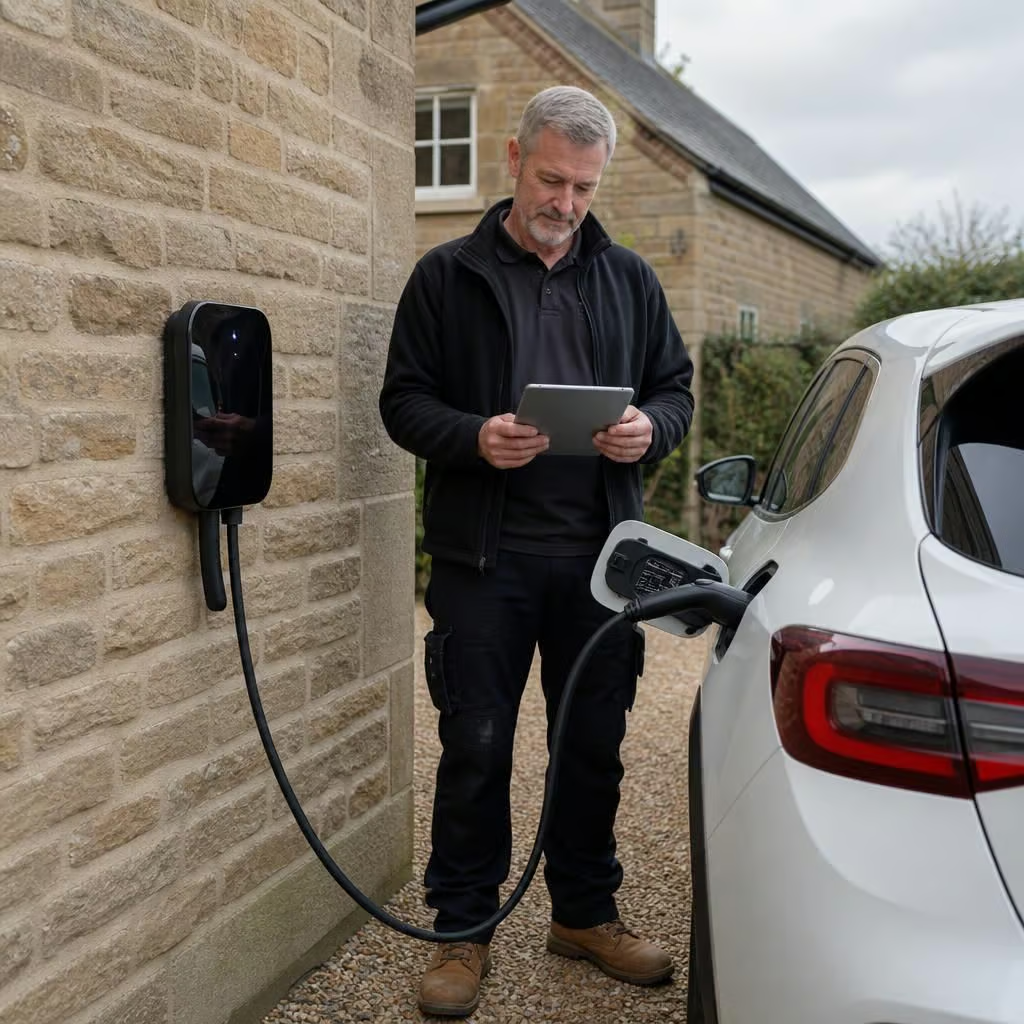
A charger can be electrically suitable but still impractical in its proposed position. We consider how you will connect it in everyday use, including where the cable rests when the car is parked and how the unit is protected from knocks, standing water and passing vehicles.
If the best location is not on the house wall, we explain the implications before choosing the equipment. A garage, boundary wall or external post may need a different mounting arrangement and additional protection. That keeps the finished installation usable rather than simply making the charger fit on paper.