Does an EV wallbox need its own electrical circuit?
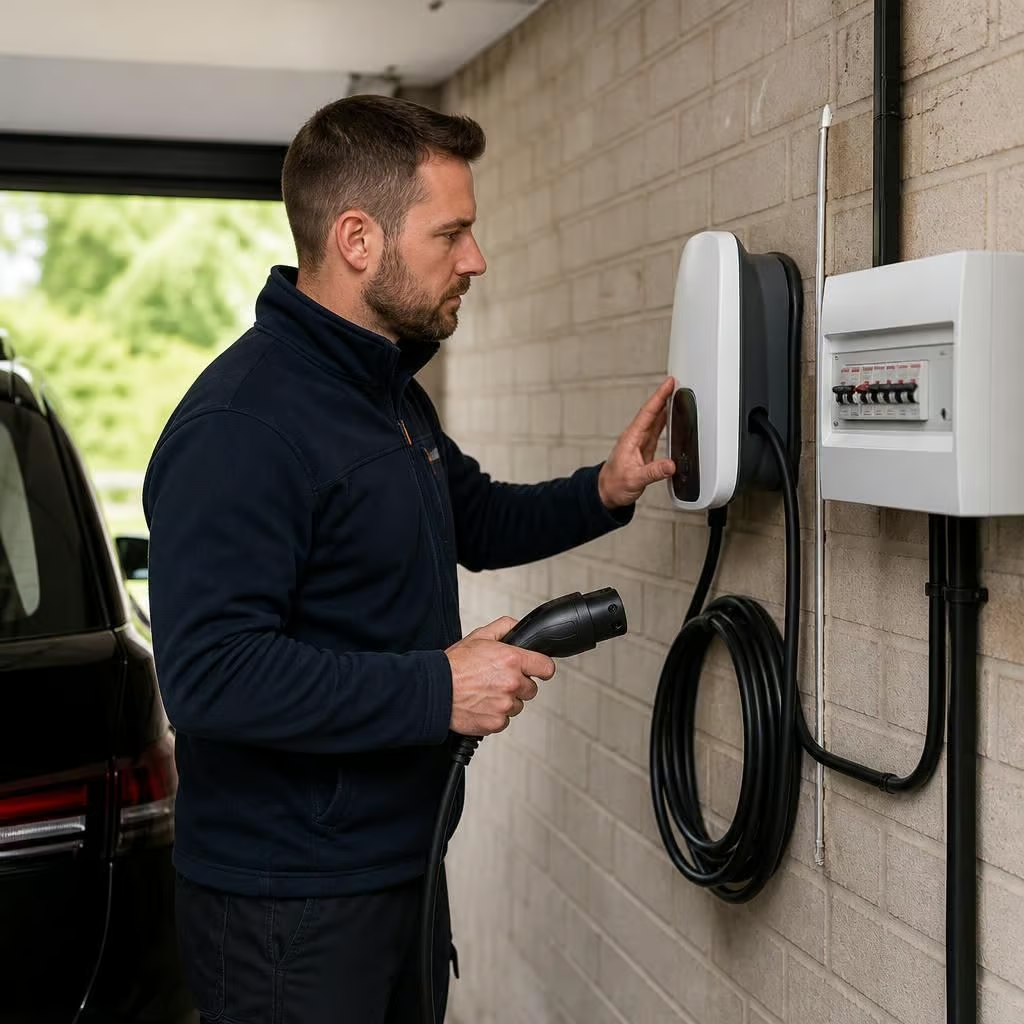
Yes. A home EV wallbox normally needs its own dedicated circuit from the consumer unit, with correctly sized cable, protective devices and earthing for the charger’s power demand.
Yes, a home EV wallbox normally needs its own circuit. The circuit runs from the consumer unit to the charger and is designed for the charger’s maximum demand. It should not share a final circuit with household sockets, an electric cooker or other fixed appliances.
EV charging can draw a high current for several hours. Sharing the circuit could overload the cable or protective device, particularly when other appliances are running. A separate circuit lets us size the cable, breaker and protection for the charger, rather than relying on wiring designed for general household use.
A dedicated circuit does not always mean the charger works at full power continuously. A compatible smart charger can use load management to reduce or pause charging when the home’s demand rises. That helps a property with limited electrical capacity, but it does not remove the need for correctly sized wiring and protection.
What the circuit normally includes
- A suitable protective device at the consumer unit.
- Cable sized for the charger’s output, route, installation method and length.
- Residual current protection appropriate to the charger’s design.
- Protection against direct current leakage where the charger requires it.
- A local means of isolation so the charger can be safely switched off for inspection or maintenance.
The charger’s built-in protection affects the equipment we specify at the consumer unit. Some wallboxes include direct current detection, while others need additional protection in the installation. We follow the charger manufacturer’s instructions and the requirements of BS 7671 Section 722, which covers supplies for electric vehicle charging equipment.
The consumer unit and earthing arrangement also matter. Older consumer units may need upgrading before a wallbox can be connected. We check the condition of the board, spare ways, earthing and bonding, and the rating of the incoming supply. An installation using a PME earthing arrangement may need additional measures where a damaged supply conductor could create a dangerous voltage at the vehicle. The correct approach depends on the property and the charger.
A garage or driveway does not make the circuit exempt. If the cable passes through an outbuilding, outside wall or buried route, we select cable and mechanical protection for that environment. The route also affects voltage drop, physical protection and the final position of the isolator and charger. We agree those practical details before the work starts, so the installation does not depend on an unsuitable existing cable.
There are limited alternatives to a separate circuit. A portable charger connected to a suitable domestic socket is a different arrangement and must be used within the limits of that socket and circuit. It is not the same as connecting a wallbox to an existing socket circuit. A professional load-management system may allow more than one controlled load to use available supply capacity, but the wallbox still needs an installation designed for EV charging.
Before fitting the charger, we assess the consumer unit, supply capacity, cable route, earthing and proposed charging load. If the existing board cannot provide the required protection, we explain what needs changing and why. Depending on the property, that could mean a consumer unit alteration, a new board, a longer cable route or load management.
After installation, we test the circuit and charger, check the protective devices and provide the relevant electrical certification. NICEIC and ECA electrical work procedures give you a record that the installation has been inspected and tested, rather than leaving you with a charger that has simply been connected and switched on.
For an older or rural property, the main question is not just where the wallbox will hang. The supply, earthing, consumer unit and route back to it determine whether the installation is suitable and what work is needed.
A dedicated circuit doesn’t mean a second electricity supply or a separate meter. In most homes, the wallbox remains part of the existing installation, so its electricity appears on the normal household bill.
The charger has its own protective device and can be isolated without switching off the rest of the house. That makes inspection and maintenance more straightforward, while keeping the charging equipment separate from everyday socket use.