
What electrical safety standards should a home EV wallbox meet?
A home EV wallbox should meet BS 7671, including the requirements in Section 722 for electric vehicle charging installations, and comply with the manufacturer’s instructions. We check earthing, RCD and PEN-fault protection, cable sizing and isolation, then test the completed installation and provide the appropriate electrical certificate.
A safe home wallbox needs more than a recognised brand name. The charging unit must meet the relevant product standards, and the installation must be designed around the home’s supply, earthing arrangement and cable route. The finished work should leave you with a tested installation certificate and clear instructions for using the charger safely.
The wallbox itself
Look for equipment manufactured to the standards that apply to electric vehicle charging equipment, including BS EN IEC 61851-1 for charging systems and BS EN 62196 for plugs, socket outlets and vehicle connectors where relevant. The unit should also carry the appropriate UKCA or CE marking for the market in which it is supplied.
Those markings relate to the product. They do not prove that the charger is suitable for a particular house. The installer still needs to check the unit’s rated output, connection method, software requirements and installation instructions against the property.
The supply must be suitable for the charging load
A charger draws a substantial load for several hours, so the existing electrical installation matters. An older consumer unit, a long cable run, a shared supply or limited incoming capacity may need attention before the wallbox is fitted.
We assess how the charger will work alongside the cooker, immersion heater, heat pump, storage heaters and other high-demand equipment. Where the supply cannot support every load at once, a compatible load-management system can reduce the charging rate rather than allowing the installation to overload.
This is particularly important in rural properties with older wiring or a supply that has been extended over time. A survey should identify that issue before the cable is installed, not after the charger has been mounted.
Protection against faults
The protective equipment must match both the wallbox and the way it is connected. The installation needs suitable overcurrent protection, an accessible means of isolation and protection against residual current. The charger may include some protection internally, while other arrangements require protective equipment at the consumer unit.
DC leakage is a specific consideration with EV charging. A charger must either detect and disconnect the relevant DC fault current itself or be installed with the correct external device. This prevents a fault from affecting the operation of other protective equipment upstream.
Where a property has a PME earthing arrangement, the installation also needs a suitable method of dealing with a broken protective neutral conductor. The correct method depends on the equipment and the supply. It is not something that should be bypassed because the charger appears to operate normally.
Outdoor installation needs its own checks
A driveway wallbox is exposed to rain, dust, frost, impact and sunlight. The enclosure and cable entry must be suitable for the position, with the manufacturer’s required clearances and sealing maintained after installation.
The charging lead should not create a trip hazard or lie where vehicles can crush it. The wall needs to support the equipment securely, and the isolator should remain reachable without requiring someone to work close to moving traffic.
We also consider the route into the house. A neat external cable run is not safe if it passes through an unprotected area or leaves a penetration vulnerable to water. The final arrangement should protect the cable from mechanical damage and keep the property weather-tight.
Smart charging requirements
Many new domestic wallboxes are smart charge points. These must meet the requirements of the Electric Vehicles (Smart Charge Points) Regulations where those rules apply. Features can include scheduled charging, demand-side response, charge data and safeguards against remote access.
Smart functions should not make basic operation dependent on a home internet connection. If communication fails, the charger should behave in accordance with its design and the manufacturer’s instructions. Ask how the unit starts a charge, what happens during an outage and how access is controlled.
Testing does not end when the charger powers up
A charger starting a vehicle is not proof that the installation is safe. We carry out the required electrical tests, check the protective devices and confirm that the equipment disconnects correctly when a fault is simulated. We record the results and provide the relevant electrical certification.
The paperwork should identify the circuit, protective measures, test results and any limitations. Keep it with the home’s electrical records. It can help a future electrician understand the installation and show what was tested if the consumer unit or vehicle charger is later changed.
Our electrical work is carried out through a NICEIC- and ECA-recognised approach to installation and certification. For you, that means the work is assessed against recognised electrical requirements rather than treated as a simple appliance connection.
What to ask before choosing an installer
- Which product standards does the wallbox meet?
- What protective equipment is included in the charger, and what will be installed at the consumer unit?
- How will the installation deal with the home’s earthing arrangement?
- Has the available supply capacity been assessed alongside the property’s other large electrical loads?
- Will the installation include testing and an electrical installation certificate?
- What happens if the internet connection or smart-charging service is unavailable?
A proper assessment should answer these points before work starts. If the existing installation needs an upgrade, the quotation should explain why, what it changes and how it affects the total work.
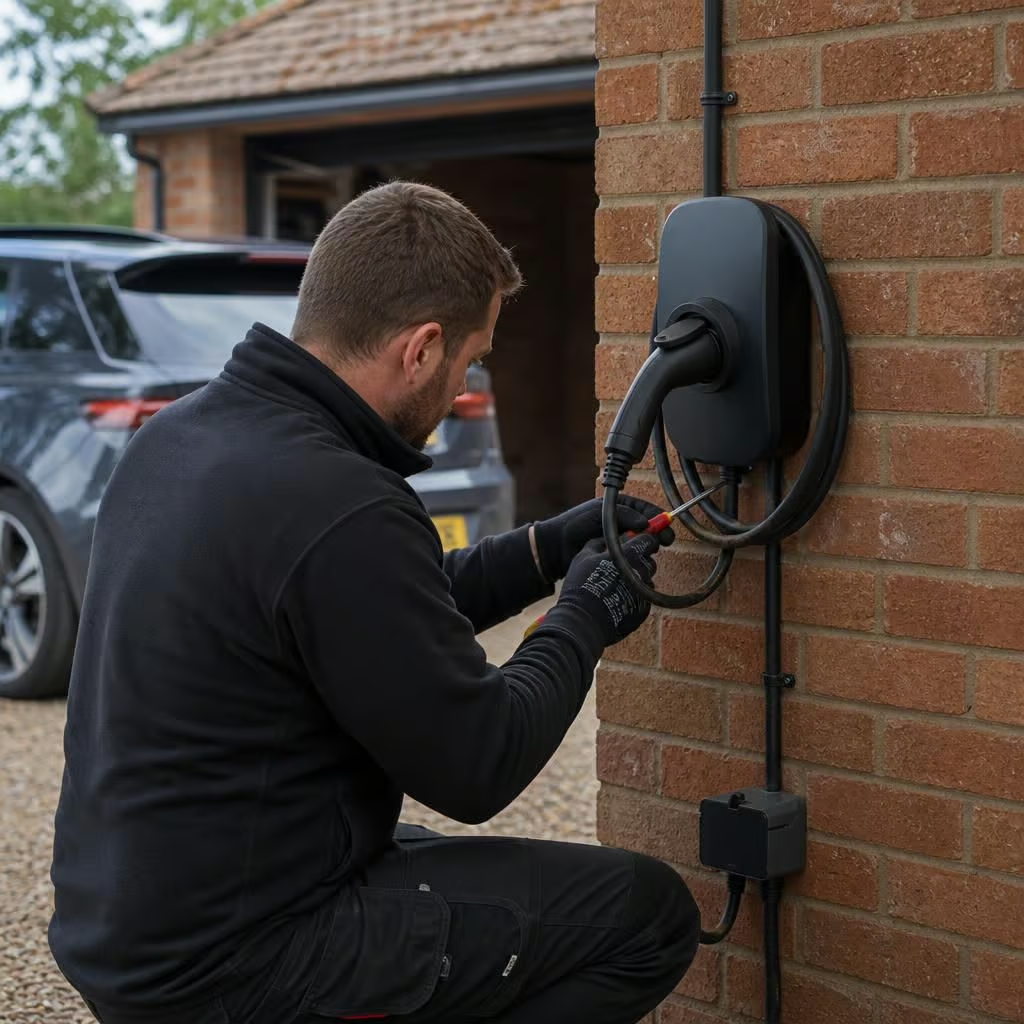
If the wallbox is going on a detached garage or outbuilding, the cable route needs particular care. The building may have its own earthing arrangement, a long underground cable or older wiring that was never designed for sustained charging loads.
We assess the connection between the house and outbuilding before choosing the protective arrangement. The buried cable needs suitable mechanical protection and warning measures, while the charger needs a local means of isolation. This prevents a fault at the wallbox from creating a wider electrical risk and gives the homeowner a clear way to disconnect it safely.
For rural properties, that assessment is more useful than assuming the newest charger will fit the existing supply. The installation should be designed around the actual buildings, cable route and earthing system, then tested and recorded once complete.