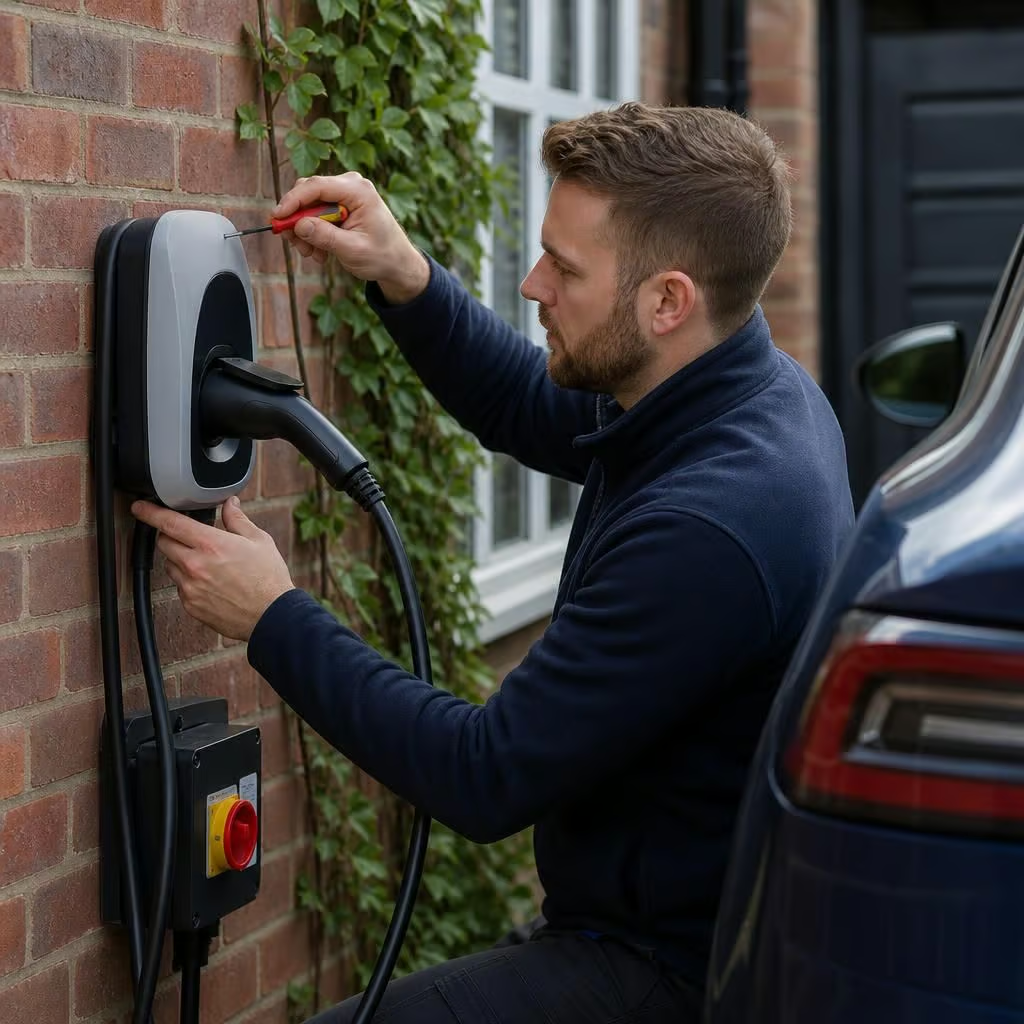
What warranty comes with a home EV charger installation?
A home EV charger usually has separate cover for the charger itself and for the installation work, with the length and exclusions depending on the equipment and quotation. We explain what each warranty covers before work starts, including who to contact if the charger develops a fault.
A home EV charger warranty should cover defects in the charger for the manufacturer’s stated period, while the installation warranty should cover faults caused by our workmanship. The quotation should identify both forms of cover, when each begins, what they exclude and who handles a claim.
What the manufacturer’s warranty normally covers
The manufacturer’s warranty applies to the charger itself. It may cover an internal component failure, a fault with the charging control equipment or a defect that was present when the unit was made. The manufacturer usually decides whether to repair the unit, replace it or provide another remedy under its terms.
The warranty may apply to the main charger but not to every associated item. The charging cable, tethered plug, mounting parts, software features and communications equipment can have different terms. We check the relevant conditions rather than treating the whole installation as one product.
The cover can also depend on correct installation, product registration and evidence of purchase. Keeping the quotation, invoice, serial number and electrical installation paperwork makes a future claim easier. If registration is required, we explain who completes it and what information the manufacturer needs.
A warranty normally deals with a manufacturing defect. It does not usually cover accidental impact, vandalism, unauthorised alterations, incorrect use, water ingress caused by external damage or faults in the property’s electrical supply. It may also exclude damage caused by work carried out by someone who was not authorised to modify the charger.
Software and internet-based features need separate attention. A charger may still deliver power even if an app, Wi-Fi connection or cloud service has a problem. The product terms should make clear whether those services are included, supported for a defined period or outside the hardware warranty.
What the installation warranty covers
The installation warranty relates to the work carried out at the property. It should cover defects in items such as the cable route, terminations, protective devices, mounting and configuration where those form part of the quoted work.
If a loose connection or poor termination causes the charger to stop working, that is different from an internal product failure. We investigate the cause first, then put the fault with the correct party. That avoids sending you between the installer and manufacturer without a clear next step.
The installation warranty does not normally extend to the house wiring or consumer unit as a whole if those items were not part of the work. Later alterations, damage from building work and faults that develop elsewhere in the electrical system can also sit outside it. A clear quotation should separate the charger, the installation and any remedial electrical work.
Where the existing supply needs changes, the quotation should state which upgrades are included. For example, a new protective device or consumer unit work may have its own scope and paperwork. The warranty then relates to the work actually described, rather than to every electrical component in the property.
How long does the cover last?
There is no single warranty period for every home EV charger. The manufacturer sets the product terms, and the installer sets or states the cover for the installation work. The start date may be the date of installation, commissioning, delivery or registration, so the paperwork matters.
Ask the installer to state the period in writing instead of relying on a general product description. Check whether the cover applies to the charger, cable, accessories, labour and call-out costs separately. Also ask whether a replacement unit receives a new warranty period or only the balance of the original term.
If you sell the property, ask whether the warranty can pass to the next owner. Some warranties follow the product, while others require registration or proof that the installation has not been altered. This is worth checking before you need to make a claim.
What happens if the charger develops a fault?
- Stop using it if there is visible damage, burning, overheating or a persistent electrical fault. Do not remove covers or attempt a repair yourself.
- Record what happened. Note any warning light, error message, app notification or change in charging behaviour. A photograph can help identify the problem.
- Contact the installer first when the cause is unclear. We can check the charger, cable, protective equipment and supply rather than assuming that the product itself has failed.
- Use the correct warranty route. We deal with installation defects under our workmanship cover and explain the manufacturer’s process where the charger needs product support.
- Keep the fault reference and outcome. This creates a record if the same problem returns or a replacement unit is supplied.
A charger that trips the protection repeatedly should not be reset over and over. The cause could be the charger, the circuit, another appliance or the property’s supply. Testing identifies the source and reduces the risk of turning a simple fault into damage elsewhere.
Warranty, guarantee and electrical certification are different
A warranty is a set of written promises about defects and the process for dealing with them. A guarantee may be used in similar language, but its meaning depends on the document. Neither replaces your statutory rights as a consumer.
The electrical installation certificate is separate again. It records the installation and test results; it is not a promise that the charger will never develop a fault. We provide the relevant electrical paperwork for the work completed, so you have evidence of how the circuit was installed and tested.
Points to check before accepting a quotation
- The manufacturer’s warranty period and the date it starts.
- The installation warranty period and the work it covers.
- Whether labour, inspection and removal costs are included if a product is replaced.
- Which parts have separate terms, including the cable, mount, isolator and communications equipment.
- Any registration requirement and who completes it.
- Exclusions for misuse, impact, water ingress, unauthorised changes and supply faults.
- The contact route for a fault and whether the installer or manufacturer manages each type of claim.
- What happens to the cover if the property changes hands.
We set these details out in the quotation before work starts, with the scope of the electrical work and the paperwork you will receive. That gives you a practical record of what is covered, rather than leaving the warranty to a leaflet or an app after the charger is fitted.
For an installation in an older home, the condition of the existing consumer unit and wiring is especially important. If testing shows that remedial work is needed, we explain why before proceeding and identify it separately from the charger warranty. The result is clearer responsibility if a problem later appears.
A slower charge does not automatically mean the charger has developed a warranty fault. The car may reduce its charging rate, or the charger may be responding to load management, a scheduled tariff or limited supply capacity.
We check the vehicle settings, charging cable, circuit and charger readings before treating reduced performance as a product defect. If the equipment is operating within its specification, we explain the cause. If a component or connection has failed, the written warranty shows which party handles the repair and any associated labour.