
Can my electricity supply support a home EV charger?
Your home EV charger may be suitable for the existing electricity supply, but we need to check the incoming supply, main fuse, consumer unit and other electrical demand first. We then explain whether the supply can support charging as it stands, needs load management, or requires an upgrade.
Most homes can support an EV charger, but the answer depends on the whole electrical installation rather than the charger alone. A charger adds a substantial load, so we calculate how it will work alongside the appliances already using the supply.
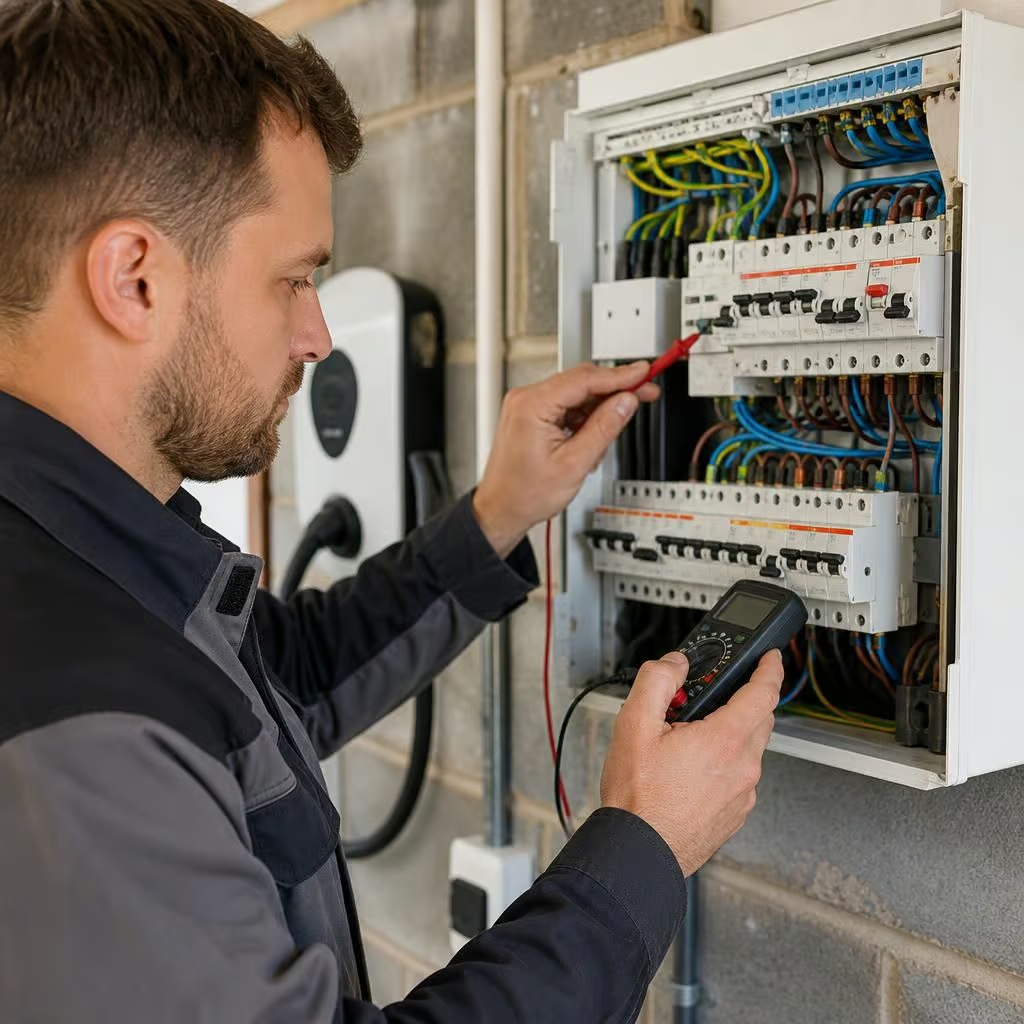
Your main fuse sets the maximum current available to the property. We check its rating, the incoming supply, the meter tails, the consumer unit and the earthing arrangement. We also consider existing demand from electric heating, an immersion heater, an electric cooker, a heat pump, solar panels or battery storage. A home with gas heating may have more spare capacity than a property that already relies heavily on electricity.
The charger’s advertised power is not the same as the power your home always needs to provide. A charge point with load management can reduce its output when the cooker, shower or heating is running. It can then increase the charging rate when demand falls. That may allow the charger to work from the existing supply without affecting the rest of the house.
Load management is useful where demand varies, but it does not correct an unsafe or inadequate installation. We still check that the consumer unit, protective devices, cabling and earthing can support a dedicated EV charging circuit. If the existing board has no suitable space or protection, we explain the required electrical work before installation.
- The incoming supply: We check the main fuse, supply arrangement and capacity available to the property.
- The consumer unit: We check its condition, spare capacity and suitability for the protection required by the charge point.
- The earthing: Some properties need additional protection because of the type of supply or earthing arrangement. This is particularly important where the installation uses a PME supply.
- Existing electrical demand: We assess equipment that could operate at the same time as the charger, including electric showers, storage heaters, heat pumps, cookers and immersion heaters.
- The cable route: A long route to a detached garage or driveway can affect the cable size, voltage drop and installation method.
Older homes can still be suitable. A dated consumer unit, limited cable route or outbuilding supply may need attention, but that does not automatically rule out home charging. We identify the constraint and separate essential safety work from optional improvements, so you can make an informed decision.
Properties with electric heating or several high-demand appliances may need a managed charging arrangement. The charger can be set to draw less current, or a dynamic system can monitor the property’s demand and adjust charging automatically. The car may take longer to charge at busy times, but the supply is less likely to be overloaded.
Solar panels and a home battery change the way charging can be planned, but they do not remove the need to check the incoming supply. We can consider how the charger, generation and battery interact. Depending on the equipment and your charging habits, the car may charge from the grid, from solar generation, or from stored electricity. We explain the limits rather than assuming all available solar power will go into the vehicle.
If the existing supply cannot support the charger, there are usually three routes. We may specify a charger with controlled output, install load management, or discuss a supply upgrade with the electricity network operator. An upgrade can involve changes outside the property, so we identify that possibility before work starts. We do not treat a network upgrade as a reason to install equipment that the existing supply cannot safely support.
The installation also depends on where the car will be parked. A driveway beside the house is usually simpler than a detached garage, outbuilding or parking area reached by a long trench. We assess the route, wall construction, access and position of the charger. The final cable size and protective equipment depend on those details.
Before quoting, we assess the installation requirements and explain any work needed to make the supply suitable. You receive the proposed charger arrangement and price in writing before work begins. If the existing installation needs upgrading, the quotation shows what that work achieves and why it is needed.
We carry out testing after installation and provide the relevant electrical paperwork. Your charger should be left with clear operating instructions, including any current limit or charging schedule set during commissioning. If the supply cannot support unrestricted charging, you will know how the control system manages it and what a future upgrade would involve.
Our electricians carry out the electrical assessment and installation as part of the same job. NICEIC and ECA registration means the work is assessed against the standards that apply to domestic electrical installations, not simply connected to the nearest circuit. The result may be unrestricted charging, controlled charging or a clear recommendation for a supply upgrade, depending on the evidence from the property.
A high electricity bill doesn’t necessarily mean your home needs a supply upgrade. The important question is how much power the property may draw at the same time.
For example, charging the car while an electric shower, cooker and heating system are running creates a different demand from charging overnight when most appliances are off. We assess those likely combinations and set the charging arrangement around the way your home is used.