
Do I need permission to install a home EV charger?
Planning permission is not usually needed for a standard home EV charger, but listed buildings, conservation areas, flats and properties without a private parking space may have extra requirements. We check the charger position, cable route and property restrictions before installation, and tell you if planning or another form of consent is needed.
Usually, you can install a home EV charger without applying for planning permission if the charger serves off-street parking and the installation stays within permitted development rules. The position of the unit, the building’s status and the route for the cable still matter. Other approvals may also apply, even where planning permission does not.
Planning permission is separate from other consent. A charger may be permitted development but still need approval from someone who controls the property. This can include:
- A landlord, if you rent your home.
- A freeholder or managing agent, if you live in a flat or leasehold property.
- A conservation officer, where the building is listed or has protected features.
- The local authority or highway authority, if the cable would cross a pavement or other public route.
A charger fixed to a house wall is generally simpler than one mounted on a separate post. The post, its base and any trenching can create additional planning considerations. A new driveway or dropped kerb is a separate matter from the charger itself and may require highway approval.
Listed and historic properties need more care. A listed building may need listed building consent before we fix equipment to an external wall, even when ordinary planning permission is not required. The building’s special features must be protected, and the council may prefer a less visible position or a reversible fixing method. Conservation area restrictions can also affect external equipment, particularly where local planning controls have removed normal permitted development rights.
That does not mean an older property cannot have a charger. It means the installation needs to respect the building and its setting. We can identify the practical issues before equipment is ordered, so you are not left with a charger that cannot be installed in the chosen position.
Flats and shared parking raise different questions. If your parking space is allocated but not directly beside your own electricity supply, the cable route may pass through communal areas or land owned by somebody else. You may need written consent for the fixings, cable containment, drilling and access to the consumer unit. A lease may also restrict changes to the outside of the building.
Communal parking can create an extra issue. A charger must be positioned so that the lead does not create a trip hazard or obstruct other residents. A cable laid across a public pavement is not an acceptable substitute for a suitable installation. In some cases, a shared charging arrangement or a dedicated parking-space supply is more appropriate.
Your electrical supply must also be suitable. Planning permission does not confirm that the home can safely support an EV charger. We assess the consumer unit, earthing, available capacity, cable route and the proposed charger’s protection requirements. Older installations may need improvements before a new circuit can be added.
The assessment may identify the need for a consumer unit upgrade, additional protective equipment or a different cable route. These are electrical safety matters rather than planning matters. NICEIC-registered electricians can test the completed installation and provide the relevant electrical certification.
The electricity network operator may also need to be notified, depending on the charger and the supply arrangement. We check the requirements that apply to the installation rather than assuming the existing connection can accept any charger. If the supply needs alteration, that should be dealt with before the installation date.
Building regulations and electrical certification still apply. A compliant installation should use the correct protection for EV charging and comply with the current wiring requirements. The electrician should explain which certificates and notifications apply to the work. Keep this paperwork with the property records, particularly if you sell the home or have work carried out later.
Landlord approval is not the same as planning permission. If you rent, obtain the landlord’s written agreement before fixing a charger or running a cable through the building. The agreement should cover the equipment, the electricity supply, maintenance, removal and responsibility for making good any damage. A landlord may also want the charger connected through a separately metered supply.
For a homeowner with a private driveway, an ordinary external wall and a suitable consumer unit, the process is usually straightforward. We agree the charger position, cable route and protective equipment before work starts. The quotation sets out any remedial electrical work separately, so you can make an informed decision about the total installation.
If consent is needed, do not order the charger first. Send the installer photographs, the property address, details of the parking arrangement and any listed-building or lease information. We can then distinguish between planning permission, landlord or freeholder consent, highway approval and electrical requirements, and explain what needs to happen before installation.
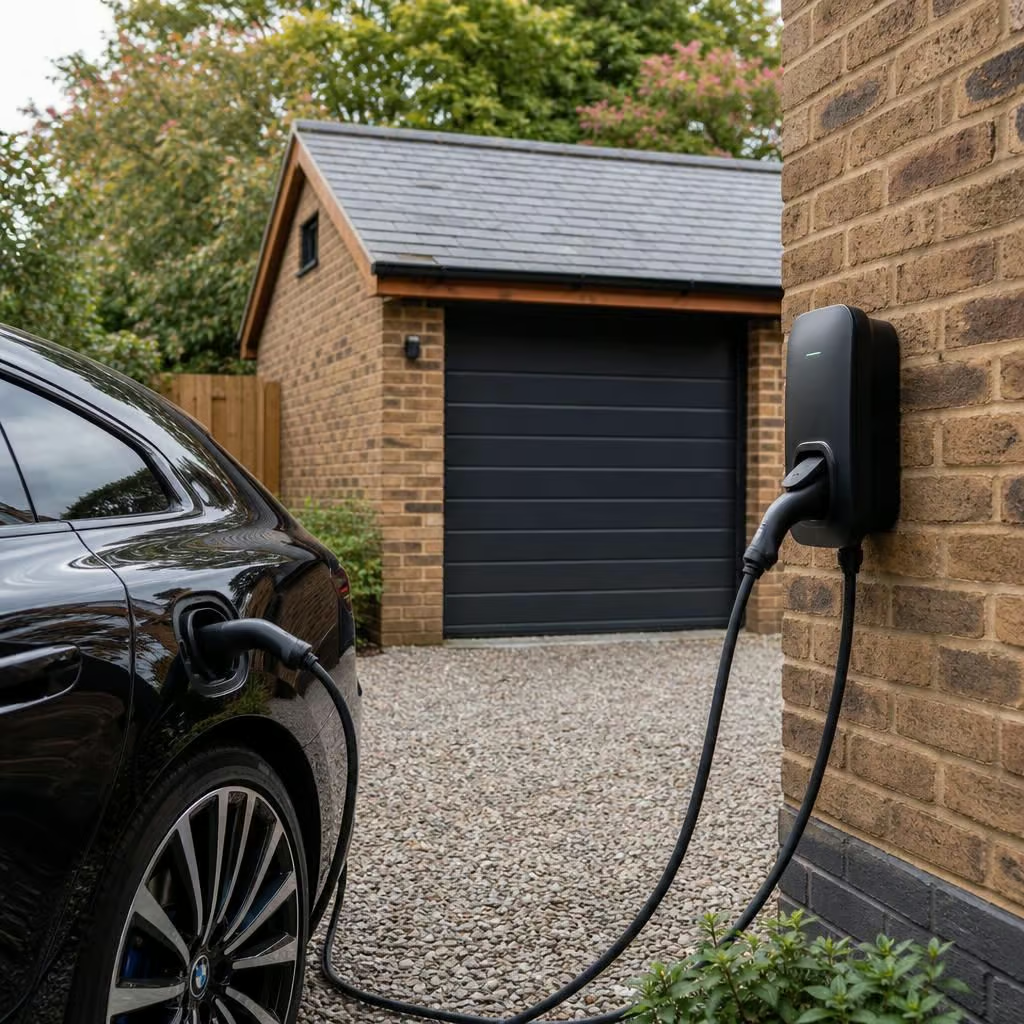
A detached garage can make the charger position look simple, but the route between the house and garage still needs checking. We assess whether the existing supply can support the charger and how the cable will be protected underground or along the building. That work may be needed even when no planning application is required.
If the preferred position changes after the survey, the approval position can change with it. Moving equipment away from a listed wall, shared boundary or public-facing elevation may reduce planning concerns, but it does not remove the need for a safe electrical design.