
How long does electric car charger installation take at home?
A straightforward home EV charger installation can usually be completed in one visit. The time increases if we need to upgrade the consumer unit, extend the cable route or carry out other electrical work before commissioning the charger.
For many homes, fitting the charger is a single-visit job when the existing electrical supply and cable route are suitable. The full timescale depends mainly on the distance from the consumer unit to the parking space, access to the cable route and whether the electrical installation needs upgrading first.
Your charger may be close to the consumer unit with a clear route through a garage or utility area. In that case, the work is relatively straightforward. A longer route around the outside of the house, a buried cable or difficult access adds preparation and installation time.
Before we confirm the timescale, we look at:
- the proposed charger position and distance from the consumer unit;
- whether the cable can run through a loft, garage, crawl space or external wall;
- the condition and capacity of the consumer unit;
- earthing, protective devices and the available electrical supply;
- the position of the meter, parking space and any outbuildings;
- any existing solar panels, battery storage or other high-load equipment.
An older property does not automatically need major work. If the consumer unit and earthing arrangements meet the requirements, we can usually connect the charger without changing the wider installation. If they do not, we explain the necessary upgrade before work starts. That might involve adding suitable protection, improving earthing or replacing an outdated consumer unit.
Your parking space may be some distance from the house, or the cable may need to cross a wall, garden or driveway. We discuss the route with you before installation and explain any extra excavation, ducting or surface-mounted cable work. This avoids turning up with an assumption about access that does not match the property.
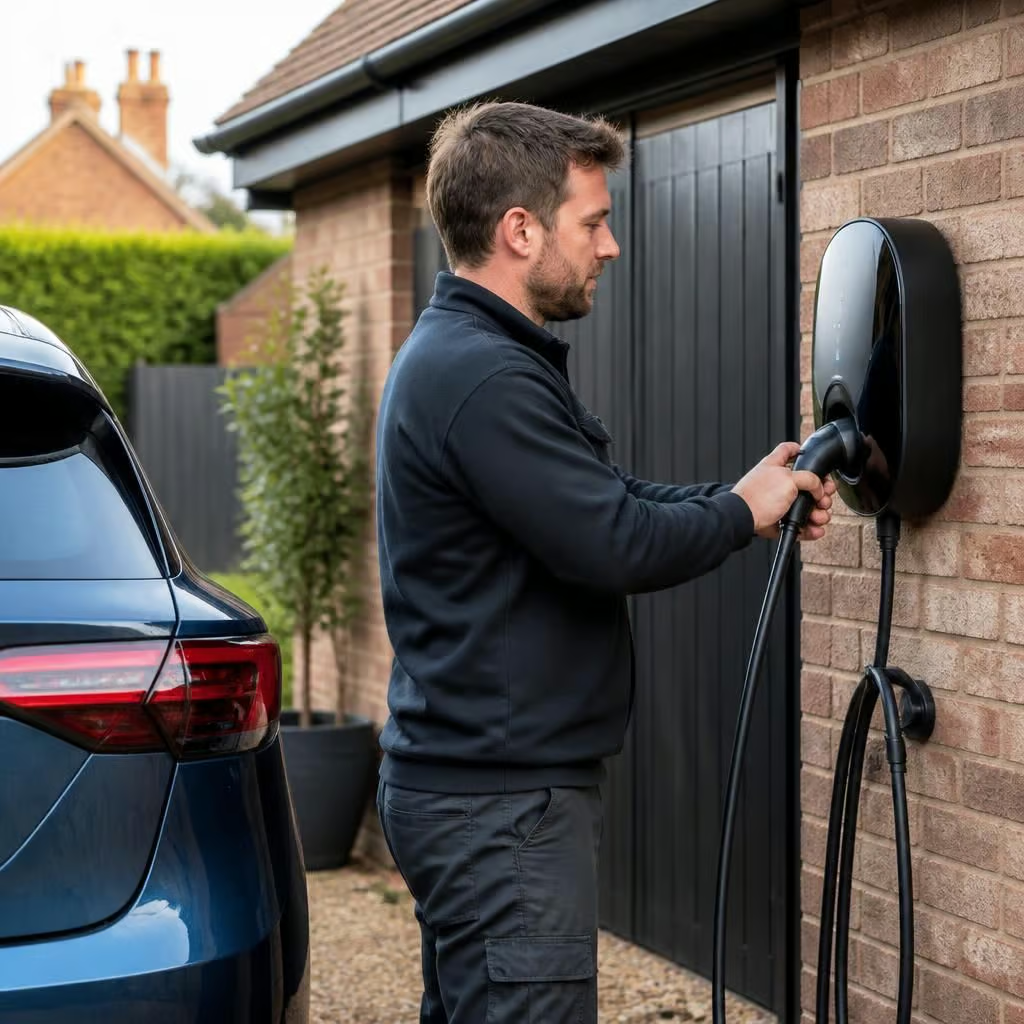
On installation day, we mount the charge point, install and protect the cable, connect it to the electrical supply and test the complete circuit. We then check that the charger communicates correctly with the vehicle and explain the controls, charging settings and any connected app. We keep disruption to the work area and leave it tidy.
If the supply needs approval or notification, that can add time beyond the physical fitting. We tell you if this applies during the assessment rather than leaving it as an unexpected delay. You receive the relevant electrical paperwork once the work has been tested and completed.
Our NICEIC-registered electricians carry out the electrical work to the required standard, with the testing and certification needed for the installation. You receive a written quotation before work starts, so the price and expected timescale are clear. If the survey identifies an issue, we set out the options instead of adding unplanned work to the bill.
The quickest way to establish the likely timescale is to assess the charger position, supply and cable route together. We can then confirm whether the installation should be completed in one visit or needs electrical preparation first.
If your home already has solar panels or a battery, the charger must be considered alongside that equipment. We check how the systems are connected and explain whether any additional controls or electrical changes are needed before the installation date.
That preparation helps avoid finding an unexpected compatibility issue at the wall. It also means we can allow for any extra setup and testing when we confirm the likely timescale for the work.