
How much does home EV charger installation cost?
Home EV charger installation cost depends on the charger, cable route, distance from the consumer unit and any electrical upgrades needed. We assess those points before giving you a written quotation, so the price reflects your home rather than a misleading standard figure.
There is no reliable single 2026 price for a home EV charger installation. The final cost comes from the equipment selected and the electrical work needed to connect it safely. A proper quotation should separate those parts, so you can see what you are paying for rather than comparing headline prices that exclude essential work.
The charger itself forms one part of the total. Basic smart chargers usually cost less than models with features such as solar integration, multiple-user access, advanced energy monitoring or built-in load management. Tethered chargers include a permanently attached charging cable. Untethered chargers have a socket and use the cable supplied with the vehicle. The right choice depends on where the car is parked, how often you charge and whether you want the cable stored on the charger or in the car.
The cable route often has the biggest effect on installation work. A charger beside the consumer unit may need a straightforward internal cable run. A detached garage, rear parking space or outbuilding can require a longer route, external protection, underground ducting or trenching. Walls, paving, gravel and landscaped areas all affect how the cable reaches the parking position. We explain the route before work starts and identify any excavation or making-good that the installation requires.
Your existing electrical installation also matters. We check the consumer unit, earthing arrangement, spare capacity and the proposed circuit protection. Some properties need an additional protective device or an upgrade before the charger can be connected. Older installations may need remedial electrical work first. That is not an unnecessary add-on: the charger must have suitable protection and the installation must pass the required safety tests.
Homes with older wiring, long supply cables or certain earthing arrangements may need extra protection against a fault on the incoming supply. We assess this during the electrical survey rather than assuming that every house can accept the same charger installation. If the existing consumer unit is unsuitable, we explain the reason for the change and how it affects the overall price.
Other items that may appear in a quotation include:
- the charger and its mounting equipment;
- cable, containment and protective equipment;
- additional circuit protection or consumer unit work;
- trenching, ducting or external cable protection;
- testing, certification and commissioning;
- app setup and connection to the home network, where the charger requires it; and
- repairs to the surface or building fabric where the cable route makes them necessary.
Solar panels can change the charger you choose. If you already generate electricity at home, a charger with solar charging controls may help you use surplus generation rather than sending it to the grid. That feature can add to the equipment cost and may need integration with the existing energy system. We look at the charger, inverter, battery and electricity meter together before recommending how they should work.
Load management can also affect the price. A charger does not always need the full available electrical capacity at once, particularly where the home has an electric shower, heat pump, battery or other high-demand equipment. A suitable control system can adjust charging when other loads are running. We only recommend it where the property and the charging pattern make it useful.
Grants and other support should be checked separately. Eligibility depends on the property, the applicant and the scheme rules in force at the time. Some support is aimed at particular types of resident or property rather than every homeowner. We do not deduct a grant from the expected cost unless the application criteria have been checked and the support is available for that installation.
Installation by a NICEIC-registered electrician gives you an electrical installation completed under the relevant requirements, with testing and certification included as part of the work. We use the survey to identify the actual requirements of the property, including older homes and detached parking areas, rather than pricing from the charger model alone.
When comparing quotations, check that each one includes:
- the exact charger model and included cable arrangement;
- the length and route of the charging cable;
- all protection, isolation and consumer unit work;
- any excavation, ducting or surface reinstatement;
- testing, certification and commissioning; and
- the assumptions that could lead to extra work.
The lowest initial price is not always the lowest complete installation cost. A quotation that leaves out protection, cable routing or testing may increase once the electrician sees the property. We set out the work needed for the charger to operate safely and leave you with a clear basis for comparing the total cost.
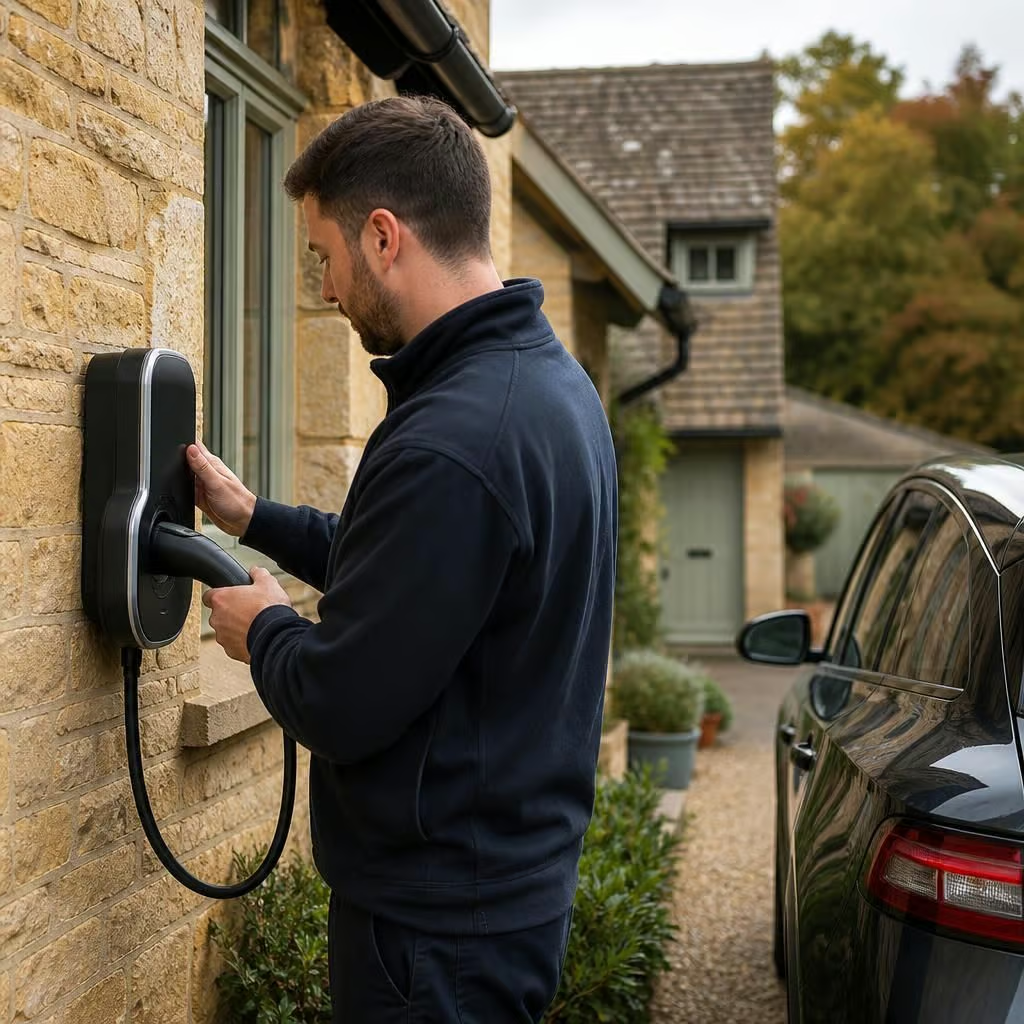
An older home does not automatically mean an expensive EV charger installation. The cost depends on the condition of the electrical installation and the distance to the parking space, not simply the age of the building.
Where the wiring is sound, we can often install the charger without disturbing other parts of the house. If we find an issue that needs attention, we explain it before any extra work takes place. That gives you a clear choice: address the safety issue now, or postpone the charger until the installation is ready for it.
Get a clear quote for your home EV charger installation
If you’re planning a home EV charger installation, contact us to arrange an electrical assessment of the charger position, cable route and existing installation. We’ll then explain the work required and provide a written quotation for your property.