
Is my home suitable for an electric vehicle charger?
Most homes are suitable for an electric vehicle charger if you have off-street parking and a suitable electrical supply. We assess the parking position, cable route, consumer unit and earthing arrangements before recommending the right installation for your home.
The deciding factors are the parking arrangement, the condition of the electrical installation and the route from the supply to the charger. A home does not need a new consumer unit or a large driveway in every case, but the installation must be planned around the property rather than treated as a standard fit.
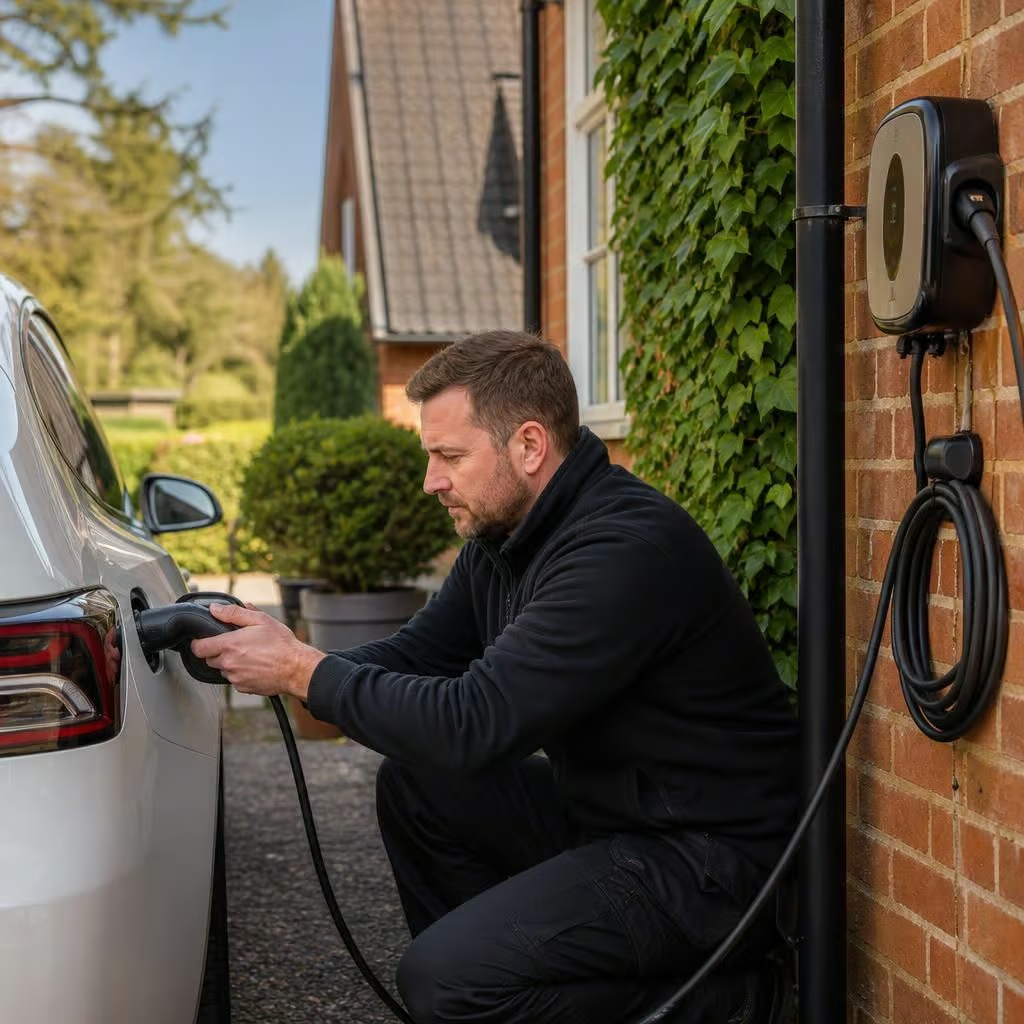
Private parking makes installation much simpler. A driveway, garage or other parking space within the property boundary gives us a clear place to mount the charger. If the car is parked on the road, a charger cable must not create a trip hazard or obstruct pedestrians. We can explain what is practical for your parking layout, but we cannot run a cable across a public pavement as a general workaround.
A garage can be a good charger position if the car can be parked close enough and the walls allow a safe cable route. The charger may be fitted outside instead if that makes connecting the car easier. We choose a position that leaves the cable protected, avoids damage from vehicles and keeps the unit accessible for isolation and maintenance.
The electrical installation needs to be suitable for a dedicated circuit. We inspect the consumer unit, earthing, protective devices and available ways to connect the charger safely. Older installations may need an RCBO, additional protection or improvements to the earthing arrangement. Some properties also need protection against a fault in the incoming supply. We explain any required work before installation rather than adding it unexpectedly on the day.
An older house is not automatically unsuitable. Solid-wall homes, barn conversions and rural properties can often have a charger installed, although the cable route may need more care. Where the consumer unit is old or the installation has been altered over time, we may recommend remedial electrical work first. That work protects the wider installation as well as the vehicle charger.
The incoming supply does not need to run the charger at full output all the time. If other equipment uses electricity at the same time, such as an electric cooker, immersion heater, heat pump or battery system, we can consider load management. This allows the charger to adjust its demand so the home’s supply is used sensibly. It can be particularly useful where upgrading the incoming supply would be disproportionate.
Some homes have a single-phase supply and others have three-phase equipment or unusual arrangements. That does not decide suitability on its own. We look at the actual supply, the charger’s requirements and the rest of the electrical load before recommending how the connection should be made.
The charger position must also work with the car. We consider where the vehicle’s charging socket is located, how the car is normally parked and whether the cable can reach without being stretched across a route people use. A longer cable is not always the best answer if it creates storage or trip problems. We can discuss the practical difference between a fixed cable and a socketed charger when the parking arrangement is clear.
Properties with solar panels or battery storage need a little more thought. The charger can be considered alongside those systems so that the controls, isolation points and cable routes do not conflict. Solar generation does not make a charger compulsory, and an EV charger does not make solar panels necessary. We assess how the equipment would work together before including it in the design.
Flats and shared parking require additional checks. You may need permission from a freeholder, managing agent or landlord before fixing equipment to a communal wall or running a cable through shared areas. The electricity supply may also serve several homes, so we need to establish which meter and consumer unit can feed the charger. We can identify the electrical requirements, but permission for shared property remains the owner’s or management company’s responsibility.
Listed buildings, conservation areas and properties with protected external features may have restrictions on the charger position or cable route. We aim to keep the installation discreet and avoid unnecessary disturbance, but planning or building permissions may be relevant. We will point out that issue before work starts if the property’s status affects the proposed arrangement.
Our NICEIC-registered electricians inspect the installation, agree the charger position with you and provide a written quotation for any work needed. The quote separates the charger installation from remedial improvements, so you can see what is essential and what is optional. We then install the dedicated circuit, fit the protection, test the system and explain how to use and isolate the charger.
A home is usually a good candidate when there is a lawful place to park, a safe position for the equipment and an electrical installation that can support the connection. If the existing installation needs upgrading, that does not necessarily rule out charging at home; it means the electrical work should be dealt with properly first.
If you rent your home, the electrical installation may be suitable even though you cannot approve the work yourself. Your landlord must agree to the charger position, cable route and any changes to the consumer unit before installation can go ahead.
We can assess the proposed arrangement and identify the electrical work required. You and the landlord can then agree who owns the charger, who pays for the installation and what happens if you move. That avoids disputes over removing equipment or leaving alterations behind.