
Should I choose a tethered or untethered home EV charger?
Choose a tethered charger if you want the cable permanently attached and ready to plug in. Choose an untethered charger if you prefer a neater-looking unit and the flexibility to use or store the charging cable separately.
For most households, the choice comes down to how you use the parking space, not to charging performance. Both types can charge an electric vehicle effectively when the installation is correctly designed. The important differences are cable storage, vehicle compatibility, appearance and how often you may need to change cars.
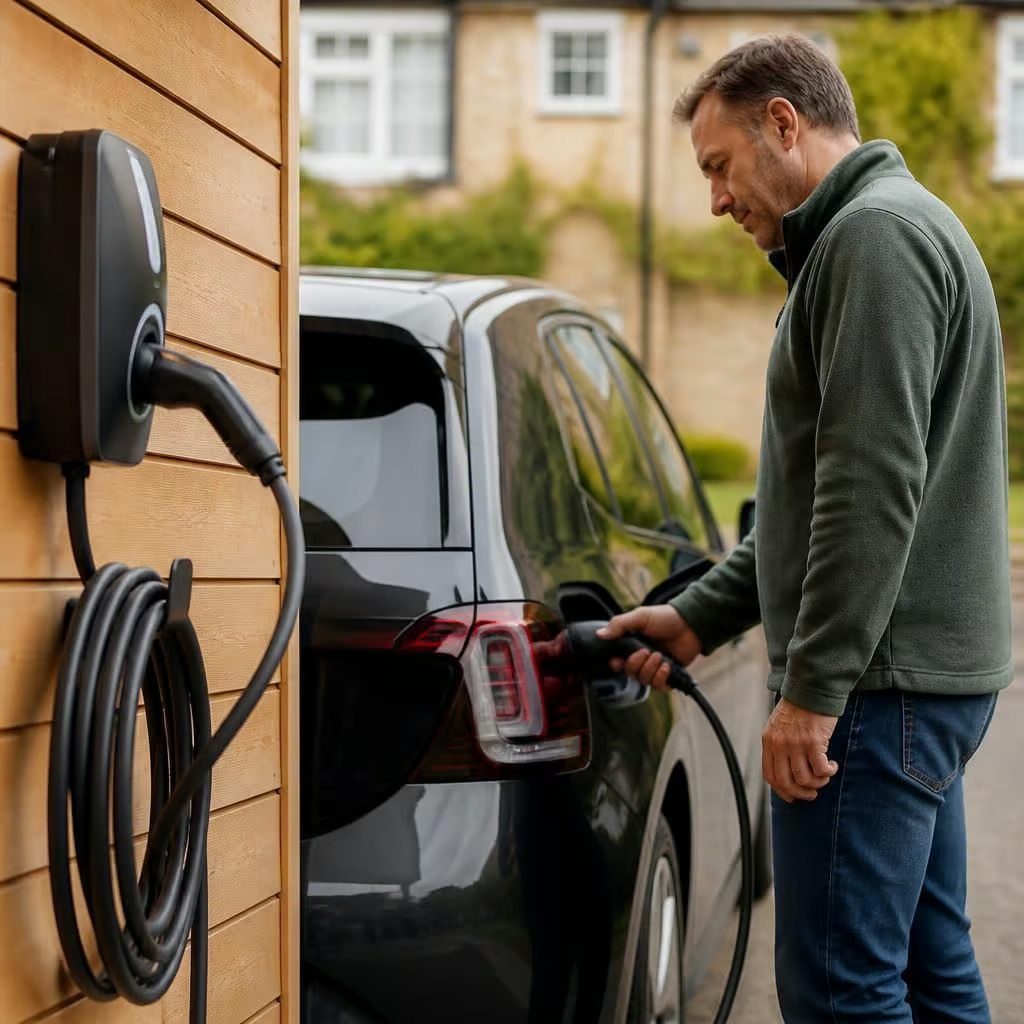
A tethered charger has a permanently attached cable. You lift the cable from its holster, plug it into the vehicle and return it when charging finishes. That suits a dedicated driveway where the same car normally parks. It also means you don’t need to take a separate charging lead from the boot each time.
A fixed cable can be useful in poor weather, particularly if you charge regularly. It reduces the number of separate items to handle and makes the charging routine more predictable. The cable still needs somewhere secure to rest, and it should not lie across a path or driveway where people, vehicles or lawn equipment can damage it.
An untethered charger has a socket instead of a permanent lead. You connect it using the cable supplied with the car. When charging is complete, the cable can go back in the vehicle or into a suitable storage point. The charger itself can look less cluttered when no cable is hanging from it.
Untethered charging can make more sense when two drivers share a charger, when you expect to change vehicles, or when different vehicles may use the parking space. You can replace the separate cable without replacing the wall-mounted unit if it becomes worn or if a future vehicle uses a different lead arrangement. You must, however, remember to keep the cable with you and store it safely.
- Choose tethered when one vehicle uses one parking space, convenience matters most and you want the cable ready at the charger.
- Choose untethered when several vehicles use the charger, you want less visible cabling or you value the option to use different charging leads.
The connector on the vehicle remains important. Most home charging cables use a Type 2 connection, but we check the vehicle details before specifying the charger. A tethered unit must have a lead that matches the car. With an untethered unit, the separate cable must match both the charger socket and the vehicle.
The length of the cable also affects daily use. A lead that reaches comfortably from the charging point to the vehicle’s charging socket is safer and easier to handle than one stretched across a route people use. Parking position, the location of the vehicle’s charge socket and the proposed cable route all matter. We discuss those details during the survey rather than choosing the charger from its appearance alone.
Neither design automatically charges faster. Charging speed depends on the vehicle, the charger output, the electrical supply and the way the installation is configured. A longer cable or a permanently attached cable does not by itself increase the available power.
Security is another practical difference. A detachable cable can be removed and stored when the charger is not in use, which may suit an open driveway. A tethered lead remains outside unless the charger has a suitable locking or cable-management feature. We check how the charger will be positioned and whether the cable can be kept off the ground and away from vehicle wheels.
Appearance can matter on a period property, a shared frontage or a wall beside a public path. An untethered charger leaves less equipment on the wall between charges, but the separate lead still needs somewhere dry and secure. On a long driveway, cable management may matter more than the choice between the two types.
Price should be compared across the complete arrangement. An untethered charger may require a separate charging cable, while a tethered model includes its lead but may need a suitable holster or replacement if the cable is damaged. Installation cost depends more on the cable route, consumer unit, protective devices and any electrical upgrades than on the presence of a lead alone.
We start by checking the consumer unit, the available supply, the parking position and the route to the charger. If the cable would cross a footpath, we identify a safer arrangement before recommending a model. Our NICEIC-registered electricians carry out the electrical work and provide the relevant installation paperwork, so the final choice fits the property as well as the vehicle.
If you already own the car, bring its charging information to the survey. If you are changing vehicles soon, tell us before the charger is selected. That helps us avoid fixing a permanently attached cable or socket arrangement that does not suit the next vehicle.
If you want to charge at cheaper times or coordinate charging with solar generation, the cable type isn’t the deciding factor. Tethered and untethered chargers can support different controls, so check the charger’s features alongside the vehicle’s settings.
Tell us how you expect to charge before we recommend a unit. We look at the car, the electrical supply and any solar or battery system, then help you choose a charger whose controls suit the way you use energy at home.