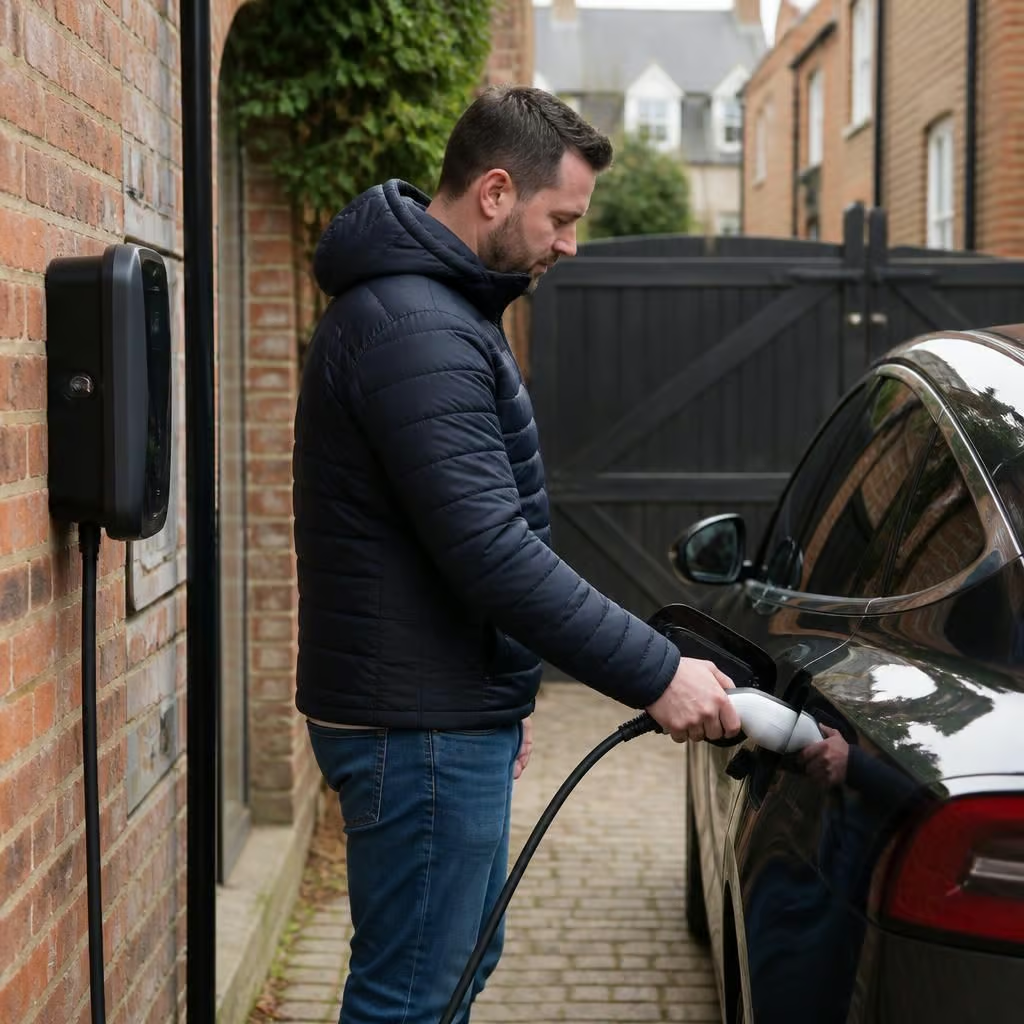
Can a home EV charger be installed without a driveway?
Yes, but only if the charging cable can reach the car without creating a trip hazard or crossing a public footway. We assess options such as a suitable wall-mounted position, off-street parking arrangement or approved cable-management system, along with the electrical supply and any permissions needed.
Yes, but only where the vehicle can be charged without creating a hazard or obstructing public space. A charger can be fitted to a house wall, garage or post on private land. If the car is parked on the road and the cable would cross a pavement, verge or road, a standard home installation is usually not suitable.
The key issue is not the lack of a driveway itself. It is the distance between the charger and the car, who controls the land between them, and whether the cable can stay clear of pedestrians, wheelchairs, pushchairs and other vehicles.
Possible arrangements include:
- A wall-mounted charger beside private parking: A front garden, side passage or hardstanding may provide enough space for the vehicle, even if it is not a conventional driveway.
- A detached garage or outbuilding: The charger can be mounted there if the building has a suitable electrical supply or a new circuit can be run safely to it.
- A charging post: A post may work where the car parks on private land but there is no suitable wall. We still need to protect the cable from impact and keep the parking area usable.
- Rear or shared parking: A route through a private alley, courtyard or parking area may be possible, subject to access rights and the consent of anyone who owns or manages the land.
A long cable from the house to a vehicle on the street is not a safe workaround. It must not be left across a public pavement, dropped into a pedestrian route or run across the road. A loose cable can create a trip and access hazard, and a normal rubber cable protector does not automatically make that arrangement acceptable.
Some local authorities have arrangements for approved pavement channels or cable crossings. These are not available everywhere, and they may require permission, a specific design or ongoing responsibility for the installation. We check the relevant restrictions before recommending this route. If the council does not permit it, the practical choice may be public, workplace or shared charging rather than a charger at the property.
Permission may also be needed from other people. Tenants need the landlord’s agreement. Leaseholders may need consent from a freeholder or management company, particularly where the cable route passes through a shared area. A listed building, conservation area or property with planning restrictions may need an additional check before a wall, post or external cable is installed.
We assess the proposed parking position as well as the electrical installation. Your consumer unit, earthing arrangement and available supply affect which charger and cable route will work. If several large electrical loads operate together, load management may be needed so the charger adjusts its demand rather than placing unnecessary strain on the home’s supply.
Older homes can still be suitable. A solid-wall house, barn conversion or property with no existing driveway may simply need a longer route, surface-mounted containment or an upgrade near the consumer unit. We explain where cable will be visible, what needs lifting or drilling, and whether the proposed route crosses land that is not yours. The quotation covers the work we have identified, so you can decide with the likely disruption in view.
The completed installation must meet the requirements for electric vehicle charging equipment, including the relevant provisions of BS 7671. We test the circuit, protective devices, earthing and charger operation before handing it over. You receive the installation paperwork needed to show what was fitted and how it was tested.
Where there is no private parking and no approved way to cross the pavement, we will say so rather than fit a hazardous arrangement. If a suitable private route exists, we can design the charger position, cable route and electrical work around the way you actually park.
If you park in a shared courtyard or behind a gate, show us how the space is used overnight. We’ll position the charger so the cable doesn’t block another vehicle, gate or access route.
That practical detail can decide whether a charger works without a driveway. We design around where the car actually sits, rather than choosing the nearest wall and leaving you with an awkward cable run.