
What electrical standards should a home EV charging point meet?
A home EV charging point should be installed to BS 7671, including the requirements in Section 722, and the IET Code of Practice for Electric Vehicle Charging Equipment Installation. We check the supply, earthing, cable route and protective devices, then fit the required RCD and PME protection before testing the installation and issuing the relevant certification.
A compliant home EV charging point needs more than a suitable charger on the wall. The complete installation must protect people, manage the charging load safely and remain suitable for the property’s earthing arrangement.
BS 7671 and Section 722
Section 722 of BS 7671 contains the specific requirements for electric vehicle charging installations. It covers the charging circuit, protective devices, earthing, isolation, cable selection, voltage drop and the conditions around outdoor equipment.
The charger also needs to be installed in line with its manufacturer’s instructions. The equipment, circuit and protective devices must work together rather than being selected separately.
RCD and DC fault protection
An EV charger can produce residual direct current during a fault. That can affect the operation of some household RCDs, so the installation needs the correct form of protection.
- A Type A RCD with suitable 6 mA DC residual current detection may be used where the charger provides that protection.
- A Type B RCD may be required where the charger does not provide suitable DC detection.
- The protection must disconnect the charging circuit if a dangerous leakage current develops.
The exact arrangement depends on the charger and the rest of the consumer unit. We match the protective device to both, rather than assuming that an existing household RCD is sufficient.
Earthing and PME supplies
Your home may use a PME earthing arrangement, which is common on UK electricity networks. An outdoor EV charger needs additional consideration because a broken supply neutral can create a dangerous voltage on exposed metalwork.
Where PME conditions apply, we establish which permitted protective measure suits the property. This may involve an open-PEN protective device or another arrangement allowed by the current wiring requirements. We do not treat the presence of an earth connection alone as proof that the charger can be installed safely.
A suitable circuit and consumer unit
Your existing consumer unit may have no spare capacity, outdated protection or no practical way to accommodate the required RCD. We check the board, main supply, tails and available capacity before deciding how the charger should connect.
A dedicated circuit is normally used for the charging point. Its cable size and protective device depend on the charger’s rating, cable length, installation method, ambient conditions and voltage drop. A long cable run to a detached garage may need different treatment from a short run through a house wall.
If the supply cannot support the charger at full output alongside the rest of the home, load management may be appropriate. This allows the charging power to adjust as other electrical demand changes, but the arrangement must be designed and commissioned correctly. It is not a substitute for checking the incoming supply.
Isolation and safe disconnection
The charging circuit needs a suitable means of isolation so that the equipment can be safely disconnected for maintenance or in an emergency. We position the isolation point so it can be identified and reached without unnecessary risk.
The consumer unit should also have clear circuit identification. That helps anyone working on the property understand which protective device supplies the charger.
Cable routes and outdoor installation
Your cable route affects both safety and the finished appearance. We select a route that avoids likely impact, excessive heat, water ingress and damage from vehicles or garden equipment.
Where the cable passes through walls, floors or external areas, we use suitable mechanical protection and seal penetrations properly. The charger’s position also needs enough space for safe operation, maintenance and connection of the vehicle cable.
Outdoor equipment must have protection suitable for its location. Exposure to rain, spray, condensation and sunlight all affect the installation details. A charger rated for outdoor use still needs the cable entry, mounting surface and surrounding installation to be handled correctly.
Smart charging requirements
Many domestic charge points are smart chargers. In addition to the electrical installation requirements, applicable smart charge point rules cover matters such as secure communications, charging controls and default settings. We confirm that the selected equipment and its configuration meet the requirements that apply to the installation.
What the completed installation should leave you with
Your charger should have a correctly rated circuit, compatible residual-current protection, appropriate earthing measures and a clearly identifiable isolation point. The cable should be protected along its route, with the equipment securely mounted and suitable for its location.
We record the relevant installation details and test results on the electrical certificate. Our NICEIC and ECA electrical work follows the requirements that apply to the installation, so you have clear paperwork for future maintenance, alteration or sale of the property.
An older home is not automatically unsuitable for an EV charger. The deciding factors are the condition of the wiring, the earthing arrangement, the consumer unit, the available supply and the route to the proposed charging position. A proper assessment identifies any upgrade needed before the charger is connected.
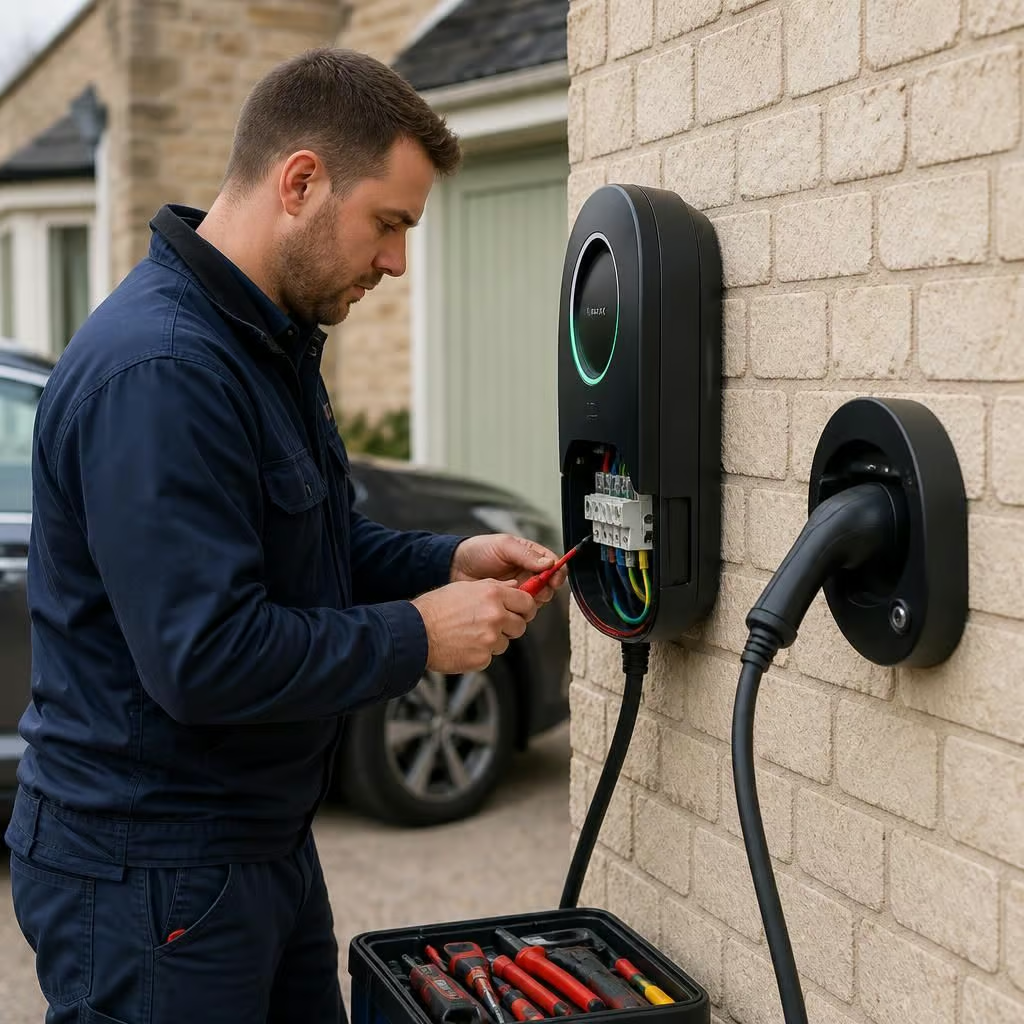
A compliant home EV charging point doesn’t have to run at the highest output advertised for the equipment. The charging current must suit the property’s supply, cable route and protective devices.
If full-power charging would require unnecessary electrical upgrades, we may configure the point to a lower current where the manufacturer permits it. That can affect charging time, but it does not mean the installation falls below the required standard. We record the arrangement clearly so its limits are understood from the start.