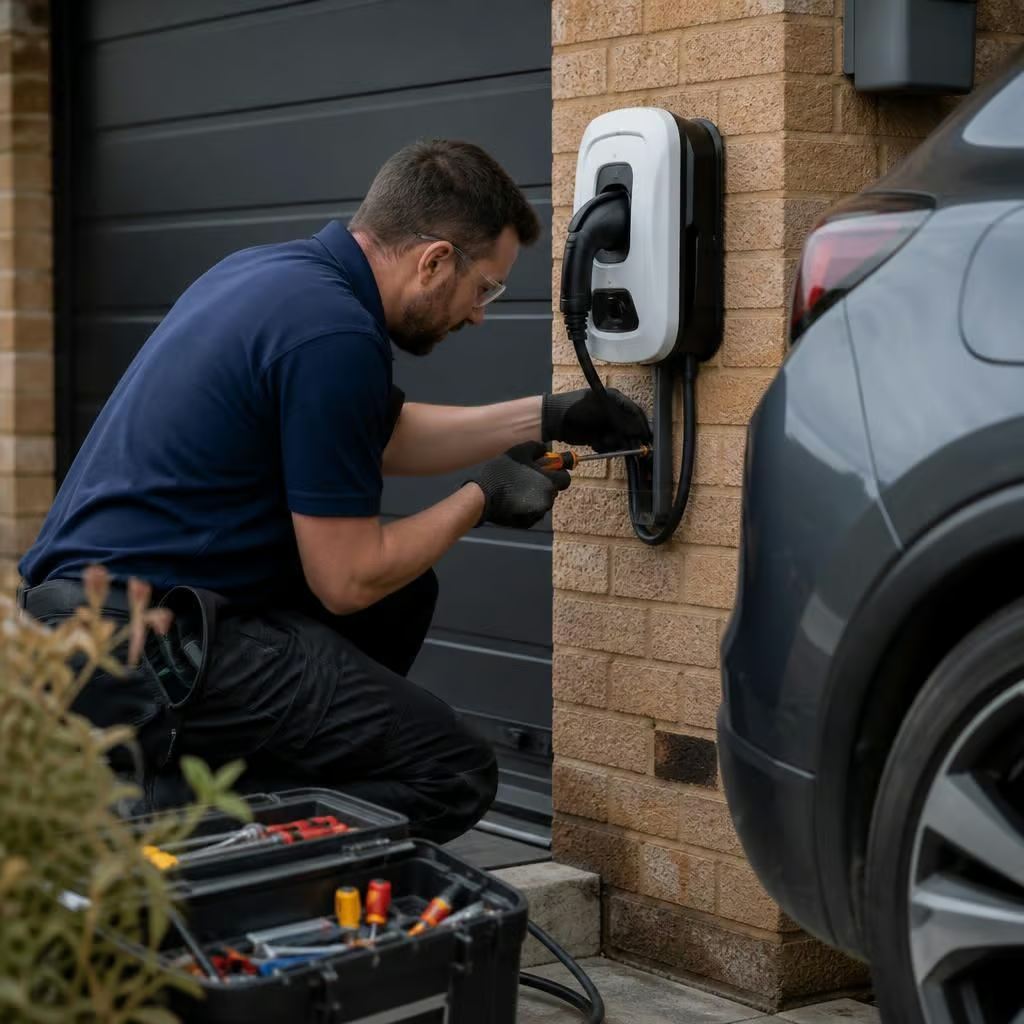
How disruptive is installing an EV charger at home?
Installing an EV charger at home is usually less disruptive than expected: we mount the unit, route the cable, connect it to the consumer unit and test it, with most work confined to a small area. If the cable needs to pass through walls, paving or a longer route, we discuss the work with you first and leave the property tidy.
For most homes, an EV charger installation causes less disruption than other electrical work. The main variables are the distance between the consumer unit and charger, the construction of the walls, and where the car is parked.
A straightforward installation usually involves a survey, a cable route, the charger mounting, electrical testing and commissioning. More work may be needed where the parking space is far from the house, the cable must cross a driveway, or the existing electrical installation needs upgrading.
Before installation, we look at:
- the position of the consumer unit and the available space for new protective devices;
- the distance to the proposed charging position;
- whether the cable can run internally, externally or through a suitable outbuilding;
- the wall, roof, paving or driveway surfaces along the proposed route;
- the earthing and bonding arrangements;
- the capacity and condition of the existing electrical supply; and
- where the charger can be mounted without obstructing doors, paths or vehicle access.
This survey lets us identify the disruptive parts before work begins. It also shows whether the charger can go on the house, garage or another suitable structure. If the cable route needs a longer run or additional protection, we explain that before agreeing the work.
Internal cable routes
Running the cable inside the house can keep the external appearance tidy, but it may involve access through cupboards, loft spaces, floor voids or wall surfaces. We choose the least disruptive practical route rather than simply following the shortest line.
Where a cable passes through a wall, we make the opening only as large as needed and seal it afterwards. Surface-mounted cable may be suitable in a garage, utility area or plant room. In finished living spaces, we discuss how the cable will look and where any containment will sit before fixing it.
Older properties need a little more care. Solid walls, thick masonry, exposed beams and listed features can limit the available routes. We take those details into account rather than assuming that a modern cavity-wall installation method will work.
External cable routes and driveways
An external cable can often run neatly along a wall, beneath suitable eaves or through an outbuilding. We use appropriate fixings and protection for the building material and the cable’s position.
A detached garage or parking area may require a longer cable route. If the route crosses a garden or driveway, trenching may be necessary. That creates more disturbance because paving, tarmac, gravel or soil must be lifted and reinstated. We identify this requirement during the survey, so it does not appear as an unexpected part of the installation.
A cable should not be left where tyres, people, garden equipment or standing water could damage it. If the car cannot park close enough to the charger, we discuss a safer fixed route rather than relying on a temporary extension lead.
What happens to the electricity supply?
The supply may need to be isolated while we connect and test the charger. This can briefly affect lights, sockets, appliances, heating controls or other equipment in the property. We tell you before the isolation takes place and check that the installation is safe to re-energise afterwards.
The existing consumer unit may not have suitable capacity or protective devices for an EV charger. In that case, the work could include a new circuit, additional RCD or RCBO protection, a consumer unit alteration, or improvements to earthing and bonding. These changes add work at the consumer unit, but they address safety rather than simply making the charger fit.
If the incoming supply cannot support the proposed charging arrangement, we explain what can be installed without overloading it. A load-management device may help control charging alongside the home’s other electrical demand. If a network operator needs to be involved, we explain that before the installation proceeds.
How long does the work take?
The installation time depends on the route and any electrical upgrades. A charger mounted close to a suitable consumer unit is less involved than one serving a detached garage or a distant parking space.
We can normally complete a straightforward installation in one planned visit. More complex work may take longer where it involves trenching, difficult access, consumer unit alterations or changes to the supply. The survey and quotation set out the expected scope, so you can plan around the work rather than finding out on the day.
Most of the disruption is limited to the area where we are working. We keep tools and materials together, protect surfaces where needed and remove installation waste. Once testing is complete, we show you how to use the charger and explain any app or access settings that apply to the installed model.
Electrical work for an EV charger needs more than simply fixing a box to the wall. Our NICEIC and ECA electrical credentials mean the circuit, protection and testing are handled as part of a properly assessed installation. You finish with a working charging point and the relevant electrical paperwork, without having to arrange separate trades for the charger connection.
The easiest installations are also the easiest to prepare for. Before the installation date, clear access to the consumer unit, the proposed charger position and any garage or outbuilding route. Move stored items that block the wall or loft access, and keep the parking space available for testing.
If the charger is near a driveway, gate or shared access, tell us about any restrictions before we finalise the route. We can then plan where tools, materials and the vehicle need to be during the work, rather than discovering an obstruction on the day. That preparation keeps the work focused on the agreed areas and helps avoid unnecessary disturbance inside the home.