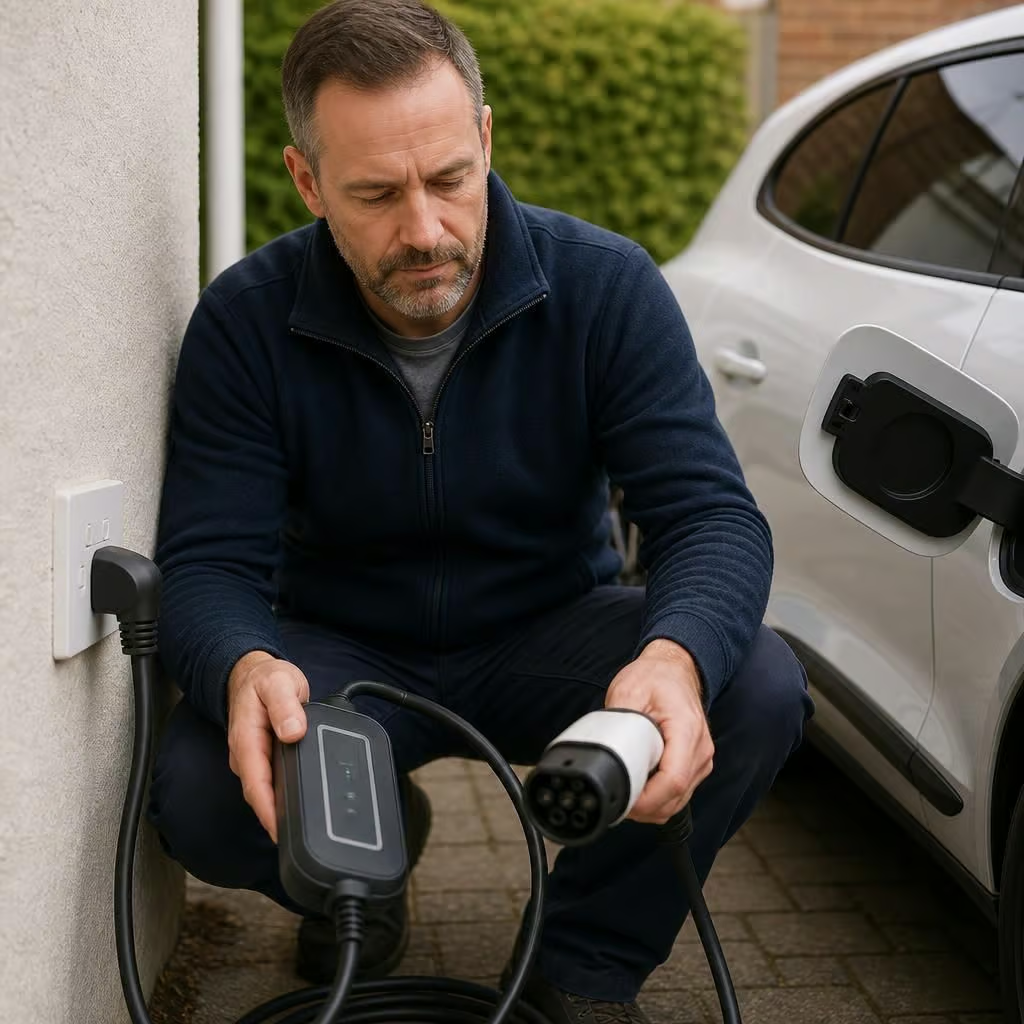
Is a portable EV charger compatible with my electric car?
Usually, yes, provided the portable charger has the correct connector for your car and its electrical supply is suitable. Check the vehicle’s charging socket, the charger’s plug and maximum current, then confirm that the socket or connection point can safely provide that load.
Most portable EV chargers will work with an electric car if the vehicle connector, charging mode and power supply all match. A plug that fits the car is not, by itself, proof that the charger is compatible.
There are three connections to check:
- The vehicle connector: most modern cars use a Type 2 inlet for home AC charging. Some older cars use Type 1. A portable charger with the wrong vehicle plug will not connect without a suitable, approved arrangement.
- The charger supply plug: portable units may connect to a standard domestic socket or another suitable supply. The plug must match the socket, wiring and protective equipment available at the property.
- The charging protocol: a home portable charger normally provides AC charging through the car’s onboard charger. It is not usually a portable version of a rapid DC charger, so a CCS or CHAdeMO connector does not automatically make it suitable for home charging.
Your car may accept a higher charging rate than the portable unit can provide. That is normally acceptable: the car takes only the power the charger supplies and its onboard charger can handle. Charging will simply take longer. The reverse matters more. A charger must not be connected to a supply that cannot safely support its selected current.
Some portable chargers have adjustable current settings or interchangeable supply leads. That flexibility does not remove the need to check the socket and circuit. A domestic socket may be shared with other loads, and an older circuit may not have the protective devices or earthing needed for EV charging.
The car’s handbook and the portable charger’s instructions should confirm:
- the vehicle connector and charging mode;
- the maximum AC charging rate;
- the permitted supply plug and current;
- the required residual-current and earth-fault protection;
- whether the charger can be used outdoors or in wet conditions; and
- whether the vehicle supports charging from the intended type of supply.
A plug adapter needs particular care. An adapter can change the physical connection, but it does not necessarily provide the correct electrical protection, communication or temperature monitoring. Use an adapter only when both manufacturers approve it for that exact combination. Do not assume that a travel adapter or a domestic plug converter is suitable for sustained EV charging.
Portable charging is also affected by the car’s onboard charger. A vehicle may have a single-phase or three-phase AC charger, while the available property supply may be different. The car can often charge at a lower compatible rate, but the charger, cable and circuit must all be rated for the arrangement. The vehicle may also limit charging when its battery is cold, nearly full or outside its normal operating conditions.
If you plan to charge at more than one property, check each supply rather than relying on the same charger everywhere. A unit that is suitable on a tested dedicated circuit may not be suitable from an unknown socket at a holiday cottage, workshop or outbuilding. Long cable runs, shared circuits, loose sockets and poor earthing can all affect safe operation.
We can check the vehicle connector, the portable unit’s specification and the proposed supply together. For a home installation, we inspect the circuit, earthing and protective arrangements before advising whether the existing socket is suitable or a dedicated circuit is needed. That gives you a clear answer before you buy equipment or rely on it for regular charging.
For occasional use, a compatible portable charger can be practical. For regular home charging, a fixed charge point usually gives a more controlled installation and avoids depending on an unsuitable socket. The right choice depends on the car, the property and how you expect to charge.
A household-socket portable charger should include an in-cable control and protection unit. A simple charging lead is not the same thing. The control box manages communication with the car and monitors the supply during charging.
Check the charger’s technical specification for its charging mode, permitted current and protection features. If those details are missing, don’t assume the unit is suitable because its vehicle plug fits. The correct equipment leaves you with a charger that can communicate properly with the car and operate within the limits of the supply.