
How disruptive is installing an EV charger at home?
Installing an EV charger at home is usually a limited-disruption job, with most of the work involving fixing the unit, routing the cable and making electrical connections. We assess the cable route and consumer unit first, so we can explain any drilling, lifting or external trenching before work begins.
For most homes, the installation causes less disruption than other electrical work. The main difference is whether the cable can reach the parking space through an accessible wall, or needs to cross a longer route, garage or driveway.
Before work starts, we look at the position of the consumer unit, the proposed charger location and the route between them. We also consider the construction of the property, the parking arrangement and any obstacles such as extensions, outbuildings, gates or hard landscaping. That lets us explain the work clearly before you decide.
- Charger on an outside wall near the consumer unit: we may only need to drill through the wall and secure the cable neatly along a short route.
- Charger on the opposite side of the house: the cable may need to pass through internal areas, a loft, garage or other accessible spaces.
- Parking away from the house: we may need to route the cable through a garage, along an external wall or below the ground.
- Detached garages and outbuildings: the supply and cable route need checking carefully. The existing electrical arrangement may need changes before it can support a charger safely.
Inside the house, we work around cupboards, flooring and stored belongings wherever practical. Cable routes through lofts, garages and utility areas are usually easier to access than routes behind finished walls. If a concealed route would require more invasive building work, we explain the alternatives rather than assuming that hidden is always best.
External cable can often be fixed neatly to brickwork or other suitable surfaces. We discuss the visible sections with you before fitting them. On a rendered, listed or older property, the construction and appearance need more care. We choose a route that protects the building and avoids unnecessary disturbance.
A driveway or garden route can involve more work. If the cable must cross an open area, we assess the surface and the safest route before installation. Some situations call for a trench or suitable protective arrangement. We explain what needs to be opened, how the cable will be protected and what reinstatement is practical. We don’t assume that a route through paving, tarmac or a planted area is acceptable without discussing it first.
The installation work can include mounting the charger, running and securing the cable, making electrical connections and fitting any required protection at the consumer unit. We then carry out the relevant checks and show you how to use the charger. The time on site depends on the cable length, access, the condition of the existing installation and any changes needed to the consumer unit.
Your household can normally continue using its other electrical equipment, although we may need access to the consumer unit during the work. There can be short periods when the power is isolated while we make and test the connection. We explain this before starting so you can plan around it.
Some properties need extra investigation before installation goes ahead. An older consumer unit, limited capacity, poor earthing or an unsuitable cable route may require remedial electrical work. That doesn’t necessarily prevent a charger being installed, but it can change the scope and the level of disruption. We identify these issues during the assessment rather than leaving them until the installation is under way.
Older rural homes, barn conversions and properties with unusual layouts can present different access challenges. A longer route isn’t automatically a problem, but the survey needs to account for thick walls, solid floors, outbuildings and listed-building restrictions. If the least disruptive position isn’t the most convenient one, we set out the trade-off so you can make an informed decision.
We protect working areas, keep tools and materials controlled, and remove installation waste when the work is complete. Any drilling, surface fixing or excavation is limited to what the agreed route requires. You should know in advance if the work may affect flooring, plaster, paving or decoration.
For a clear idea of the disruption at your home, the useful information is the distance from the consumer unit to the parking space, the type of wall or ground between them, and whether the car will park on a driveway, in a garage or elsewhere. We use those details with the survey to produce a written quotation before work starts, so the proposed route and any additional electrical work are clear.
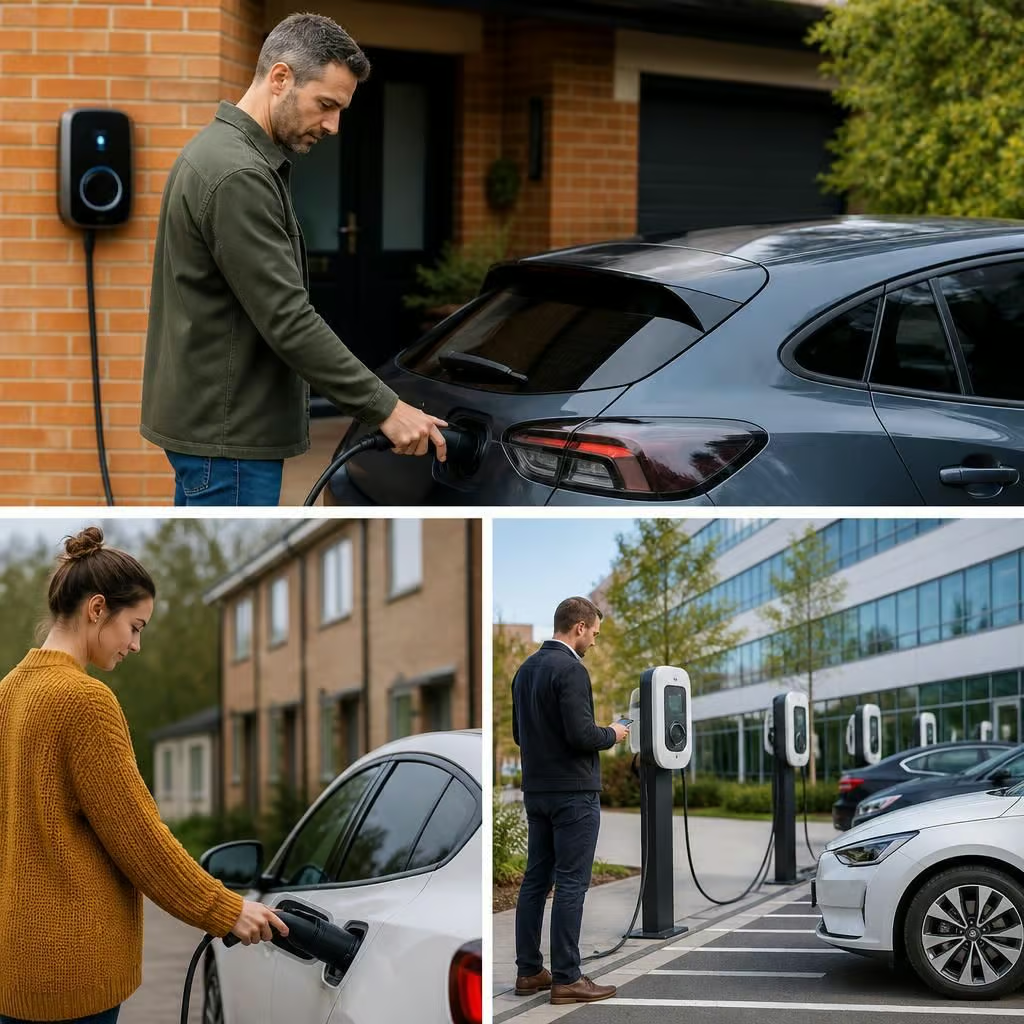
For many homes, the installation itself is completed in one visit. The work becomes more involved when the charger needs a new circuit, the consumer unit needs attention or the cable has to reach a detached parking space.
That distinction matters when you compare quotations. A lower-disruption installation may leave some cable visible, while a concealed route can involve more access work and making good. We set out those choices before work starts, so you can weigh the appearance of the finished installation against the work needed to achieve it.